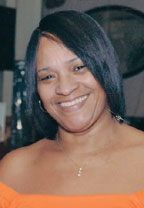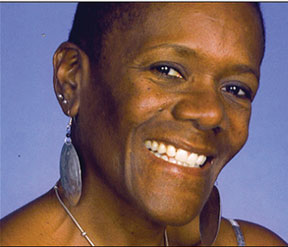
In Treatment: Nancy Asha Molock
Submitted by Nancy Asha Molock
The first in a series of stories about Black people living with HIV/AIDS who are considering treatment, successfully adhering to their regimen and/or getting to undetectable.’
Nancy Asha Molock may be HIV positive, but she’s never felt better in her life.
That’s largely because these days, the 62-year-old grand-mother-to-be treats herself better than she did the first five decades of her life—the years before she learned she was positive.
One reason the retired teacher feels so darn good is that she’s very focused on maintaining good health: She takes three pills every day at dinnertime, her heaviest meal of the day; she is also vegan and works out regularly. She won’t tell you that any of this is easy, but she will say that it is absolutely necessary.
“Once I was diagnosed, I realized that I wasn’t healthy. Period. I started eating a lot more vegetables, and I stopped frying foods,” she says. “I cut out white flour and starches and stopped drinking sodas because after investigating the medications I was taking, I realized that over a period of time they can cause things like your glucose and your cholesterol to go up if your diet isn’t right,” she adds. “So I had to make an adjustment because I didn’t want those things to happen to me later in life. I also made sure to cut back on sugar and salt and became a whole lot more active.
Molock says that her health-focused vigilance has helped her avoid any major HIV-related setbacks. She also credits her decision to go on meds as soon as her doctor suggested them.
“My CD4s were low at one time, but my viral load has al-ways been undetectable,” she says of her status 11 years after her diagnosis. “It takes a lot of discipline to take your pills every day at the same time, but you do it because you don’t want to get sick,” she says of her regimen of Norvir, Reyataz and Epzicom, all of which are covered through her insurance plan.
“I never questioned whether or not I’d go on meds because before I learned I was positive, I found out my fiancé—and later my husband—had full-blown AIDS,” she continues. “He had a cough, didn’t want to go to the doctor and was always tired. So when I tested positive and witnessed how bad his health was, I was like, ‘No, I’m going to go on meds and take care of myself.’ “
This wasn’t easy to do, how-ever. The first combination of drugs that Molock took gave her bad dreams and caused her to fall asleep at inconvenient times. “My first regimen was Sustiva and Combivir,” she says. “I was on that for five years, but the Sustiva knocked me out cold within 20 minutes and gave me horrible night-mares. I also used to wake up like I had a hangover. Even though it did raise my CD4s, I got tired of that, so I made a switch.”
Molock also suffered from side effects with her second regi-men but indicated that they were never a deterrent.
“My doctors told me the side effects would subside, and some of them did,” she says. “Some of them I still have, but I’ve learned to live with it because it all comes with the territory. You have to learn to work around them. I get an upset stomach if don’t eat a substantial meal, so I know I can’t take my meds on a bag of potato chips. But if I cook a good meal, I don’t feel them,” she points out. “Either it’s the side effects or you take the other option, which is death. It’s a no-brainer.”
But just because she was committed to working with her meds doesn’t mean that Molock didn’t struggle with the psychological effects. “For 10 years I hid my meds from everyone I knew,” she admits. “I hid my POZ magazines, too. I was just so ashamed. A long time ago I used to be on the version of Norvir that had to be refrigerated, but I would put a bag on top of it or stick it in the vegetable bin and throw lettuce on top. I didn’t want anyone to know.”
As soon as Molock came clean to family and friends about her status in 2011, she says, she felt as if a gigantic weight had been lifted. Suddenly she was free to focus on her overall wellness—not just the HIV.
“I work out three days a week, I take tai chi twice a week and I swim one day a week,” she says proudly of her weekly workout program. “Lifestyle changes are also really important as you get older. In addition to eating right, you’ve also got to get your sleep and keep your stressors low.”
In addition, Molock belongs to a support group so that she can remain as healthy emotionally and mentally as she is physically. “I go to Bebashi,” she says of the full-service HIV/AIDS case-management agency serving people of color in the Philadelphia area. “It really has been great for me because I was hopping around to a lot of support groups before I found one that was really relevant for me. Sometimes I’ll go with some members for a picnic down at Penn’s Landing or we’ll go out line dancing. It’s nice,” she says.
But what is nicest of all is knowing that if you take good-enough care of yourself, you’ll be around a long time—long enough to see your grandchildren grow. “My daughter is expecting her first baby, which will be my first grand, so I’m really excited about that,” says Molock, who is currently writing a memoir about her life. “I have to keep going. This life is not all about me. It’s about leaving a legacy for my family and for my grandchildren to come.”
Tomika Anderson is a freelance writer based in Brooklyn, New York. Her work has appeared in Essence, POZ, Real Health and Ebony magazines, among others.