
Order bars pastor and deacons from suspensions, removals, and unauthorized financial actions
By Bobby R. Henry, Sr.
BROWARD COUNTY, FL —This case should serve as a sobering lesson—and a clear warning—to pastors and church officers who believe church constitutions, bylaws, and congregational authority can be disregarded without consequence.
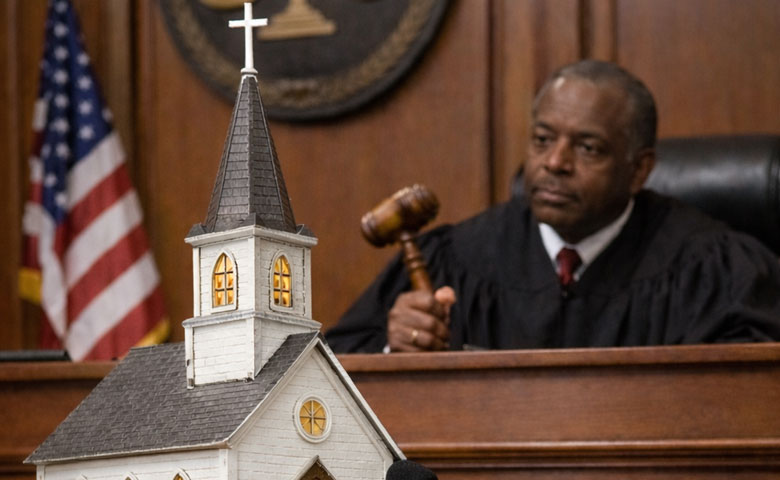
Last Wednesday, a Broward County Circuit Court judge granted a temporary injunction in a lawsuit filed in mid-September 2025 by approximately 50 members of First Baptist Church Piney Grove, Inc. The court determined that the dispute before it did not involve religious doctrine, but rather church governance and financial authority, placing the matter squarely within the court’s jurisdiction.
The plaintiffs sought declaratory and injunctive relief against Pastor Ezra Tillman and church deacons Lester Williams and Bobby Bolden, alleging repeated violations of the church’s constitution and bylaws. Those alleged violations included the improper suspension and removal of deacons and members, governance actions taken without congregational approval, and financial decisions made outside the authority granted by the church conference.
In a 16-page order, the court enjoined (to order, direct, or prohibit someone to do or not do something) Pastor Tillman and the deacons from giving effect to any decision to suspend Deacon Stuart Pinnock and Deacon William Harris. The order also blocked the enforcement of removals of nearly 50 members from the church rolls—removals allegedly based on failure to donate $300 annually or solely because those members were plaintiffs in the pending lawsuit.
The injunction goes further, prohibiting the pastor and deacons from taking any governance actions not authorized by the church’s constitution and bylaws, and barring them from making financial transactions without church conference approval when such approval is required.
Among the most serious allegations—though not the focus of the recent injunction hearing is that approximately $200,000 in church funds was allegedly remitted to Pastor Tillman to assist in the purchase of a personal residence in Palm Beach County without conference approval. Plaintiffs also allege that legal fees approved to represent the pastor and deacons were never presented to the church conference, another claimed violation of the governing documents. These financial issues are expected to be addressed at a final hearing, which has not yet been set.
In granting relief, Judge Daniel A. Casey emphasized a foundational principle of Baptist governance: First Baptist Church Piney Grove is a congregationally governed church, where authority rests with the majority of its members—not with any individual pastor or group of officers. The court cited Florida Supreme Court precedent recognizing Baptist churches as among the oldest democratic institutions in the United States.
The court further found that the plaintiffs demonstrated a substantial likelihood of prevailing on the merits and a clear legal right to injunctive relief, noting that they “have suffered, and are likely to suffer, irreparable harm” as a result of the actions taken by the pastor and deacons.
Attorney Johnny L. McCray, Jr., counsel for the plaintiffs, stated that litigation was not the congregation’s first choice. Many of his clients are long-standing members who attempted repeatedly to resolve the matter internally. “My clients made good-faith efforts to address these issues within the church, but those efforts were futile,” McCray said. “This case is about protecting congregational rights, transparency, and accountability in a historic institution.” He added that he remains hopeful the matter can still be resolved.
The court has retained jurisdiction to enforce the injunction, and the case remains pending in Broward County Circuit Court
.The message to pastors and church leaders is unmistakable.
Pastors are shepherds not sole proprietors of the churches they serve. Church constitutions and bylaws are not optional guidelines; they are binding covenants designed to protect both leadership and membership. When those governing documents are ignored, civil courts will intervene not to decide doctrine, but to uphold governance, financial accountability, and the democratic rights of the congregation.
For churches across Broward County and beyond, this case stands as a cautionary appeal: Honor the constitution, respect the conference, and govern transparently—before the court is forced to remind you.