
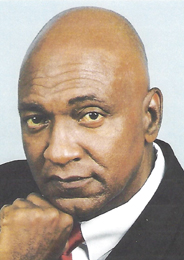
“America has historically extolled its democratic exceptionalism while intervening in the sovereignty of other nations.” John Johnson II 04/22/26
By John Johnson II
America does not whisper its values to the world—it declares them with thunder. Freedom. Democracy. Justice. Yet beneath those declarations lies a foreign policy record that tells a far more unsettling truth: America often exports instability while branding itself the guardian of order.
Nowhere is this contradiction more visible than in its decades-long relationship with Iran.
The hostility did not begin with chants in the streets of Tehran. It began in 1953, when the United States orchestrated the overthrow of Iran’s democratically elected leader, Mohammad Mossadegh, through Operation Ajax. His offense was reclaiming Iran’s oil from foreign control. In response, America replaced democracy with monarchy, installing Mohammad Reza Shah Pahlavi—a ruler whose regime governed through repression while serving Western interests.
That act alone reshaped Iranian history. But it was only the beginning.
During the Iran-Iraq War, the United States supported Saddam Hussein, even as chemical weapons were deployed against Iranian forces. In 1988, the U.S. Navy shot down Iran Air Flight 655, killing 290 civilians. There was no apology that matched the magnitude of the loss—only explanations that failed to heal the wound.
Then came economic warfare. Billions in Iranian assets frozen. Sanctions are designed not merely to pressure a government, but to suffocate an economy. These policies did not just target leaders; they crushed ordinary people, turning medicine into scarcity and survival into struggle.
In 2018, the United States withdrew from the Joint Comprehensive Plan of Action—an agreement Iran had entered to limit its nuclear program—only to later cite that same program as justification for renewed aggression. The contradiction is as glaring as it is dangerous.
In 2020, the assassination of Qasem Soleimani marked a new phase of escalation. Today, continued sanctions, restrictions on oil exports, and military actions have contributed to thousands of deaths and the destruction of civilian infrastructure across Iran.
And still, America asks: Why do they hate us?
The answer is written not in slogans, but in history. To be clear, Iran’s government bears responsibility for its own actions. Its repression of dissent, its treatment of its citizens, and its role in regional violence cannot be ignored. But acknowledging Iran’s wrongdoing does not erase America’s.
Because America does not chant “Death to Iran.” America enforces it—through bombs, covert operations, and economic policies that devastate entire populations.
This is not moral leadership. It is power without reflection.
And until America confronts that truth, its foreign policy will remain what it has too often been: A doctrine of domination disguised as democracy. Since the cold war, America has conducted 64 covert and 6 overt operations to attempt regime change. While tactical success was achieved, like removing the regime, rarely was long-term strategic success achieved. Afghanistan and Iraq are haunting examples!
YOU ARE THE JUDGE!