
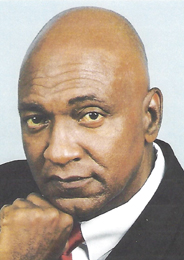
“Willful ignorance allows AI to become an existential threat to humanity rather than its servant.” By John Johnson II
By John Johnson II
Humanity may be approaching one of the strangest crossroads in its history: authentic ignorance confronting artificial intelligence. Yet authentic ignorance must never be confused with stupidity, intellectual incapacity, or the absence of common sense. Authentic ignorance begins with the most consequential confession ever uttered by humankind: “I do not know.” But humanity seldom stopped there. What lies beyond the horizon? What are the stars? What causes disease? What resides inside the atom? What makes us human?
Those questions awakened curiosity. Curiosity produced investigation. Investigation produced knowledge. Authentic ignorance helped propel humankind from the Dark Ages to explorers of the universe, splitters of the atom, and mappers of the human genome. Ironically, humanity’s willingness to question what it did not know eventually helped create Artificial Intelligence itself.
Now imagine AI as a new Greek god—not immortal, not infallible, and certainly not worthy of worship, but endowed with almost mythic possibilities. As the gifted medical doctor, AI could help physicians detect diseases earlier, personalize treatments, accelerate drug discovery, and extend healthy life. As the master teacher, it could place an endlessly patient tutor before every child, adult, and lifelong learner.
As a civil rights forebearer, AI could expose discriminatory patterns hidden inside institutions and records. As an extinguisher of the false ideology of white supremacy, it could confront fabricated racial myths with evidence, history, and uncompromising logic. As a savior of the planet, it could accelerate climate modeling.
The greater danger is not authentic ignorance. It is willful ignorance—possessing the power to investigate, regulate, and protect, yet deliberately choosing paralysis. Republicans presently control both chambers of the 119th Congress. Critics may therefore ask: If lawmakers recognize AI’s expanding power but refuse to establish meaningful safeguards, are they merely inactive, or willful surrenders of their responsibility? -Or are they coconspirators in regulatory paralysis? That is an argument about governmental responsibility, not proof of a secret conspiracy. But the question must remain alive because technology races ahead.
And lurking behind that failure is an even more haunting metaphor. Imagine thousands of Immortality Bounty Hunters—AI systems invisible as personalities yet operating throughout medicine and science, hunting cancers, neurological diseases, failing organs, and hopefully, one day the mechanisms of human aging itself. Their bounty would not be gold. Their bounty would be our lives.
But how can AI, with its magnificent possibilities for uplifting humanity, if left unregulated, acquire the capacity to potentially destroy humanity? The answer may lie in dependence.
The deeper AI becomes integrated into banking, electric and water grids, autonomous nuclear-plant operations, satellite navigation systems, and military-defense systems, the more civilization places its survival inside interconnected machines. Technology powerful enough to paralyze it through error, manipulation, cyberattack, reckless deployment, or autonomous action humans cannot rapidly stop.
Already, AI is becoming less like another appliance and more like the nervous system of civilization—increasingly as important, metaphorically, as the air sustaining humanity.
What happens when machines designed to preserve human life acquire access to systems capable of terminating it? “The only thing that humanity has to fear is unregulated AI autonomous robotic technology itself.”
AI need not become humanity’s enemy. Unfortunately, the greatest danger is not artificial intelligence, becoming too intelligent. It is willful human ignorance becoming too arrogant to regulate humanity’s own creation before meaningful regulation becomes impossible.
“Question: what do you think!”