
Redistricting Fight Reveals Growing Tensions Over Representation, Political Alliances and the Future of South Florida Power
By Staff writer
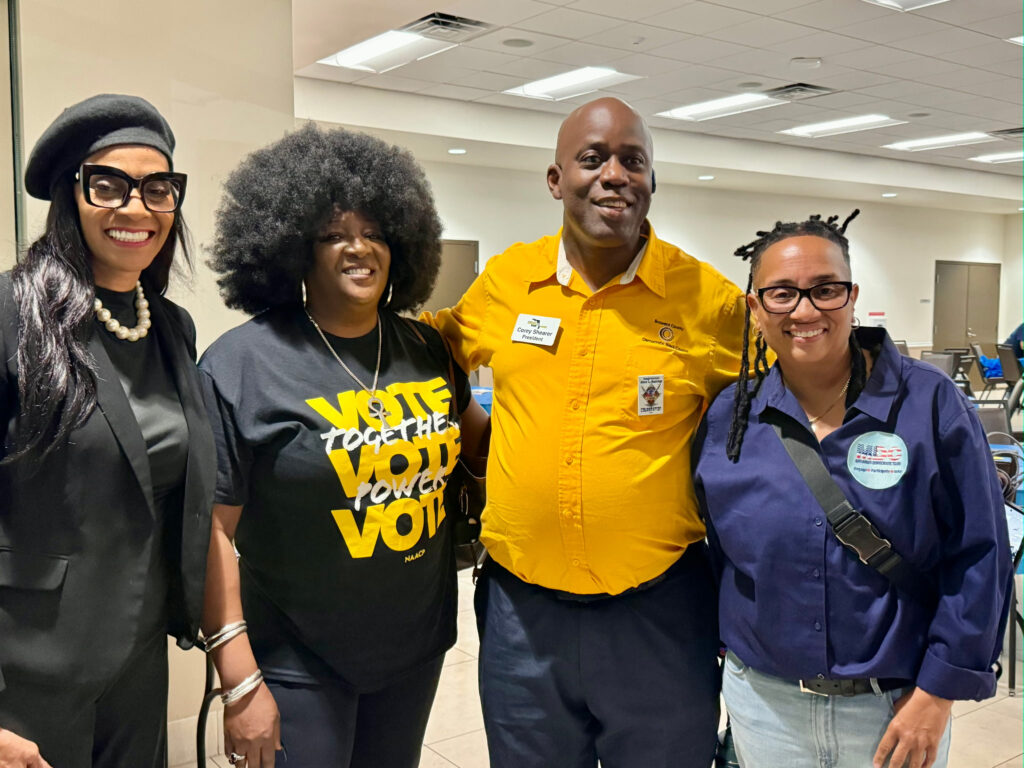
SUNRISE, FL — What was expected to be a routine political gathering Monday night quickly transformed into a passionate and emotionally charged public reckoning over the future of Florida’s Congressional District 20 a historically Black congressional seat now standing at the center of a statewide political storm.
Inside a packed meeting hosted by the West Broward Democratic Club, community activists, elected officials, party leaders, and voters wrestled openly with a question many in the room believe carries consequences far beyond South Florida: Who gets to represent Black political power in Florida now?
But beneath the debate over maps, candidates, and redistricting, another reality quietly surfaced one that some longtime political observers say reflects a growing strain in what had historically been a strong political alliance between Black and Jewish communities inside the Democratic Party.
For decades, Black and Jewish political coalitions often stood shoulder to shoulder on civil rights, voting rights, social justice, and Democratic organizing efforts throughout South Florida and across America. But Monday night’s meeting revealed what some attendees described as a relationship now being politically “pulled and stretched” by changing demographics, redistricting battles, and competing concerns over representation and political survival.
The district, formerly represented by Sheila Cherfilus-McCormick, became vacant following her resignation last month. Yet despite stepping down, Cherfilus-McCormick announced she intends to seek the seat again.
Then came the political earthquake.
Congresswoman Debbie Wasserman Schultz publicly acknowledged she is considering entering the race after redistricting dramatically altered her current congressional district.
That possibility ignited visible tension throughout the meeting hall.
Several attendees wore shirts reading “Protect Black Representation,” while speakers repeatedly returned to concerns about preserving the legacy and purpose of CD-20 as a district historically centered around Black political empowerment.
“This is bigger than one person,” said Broward Democratic Black Caucus President Corey Shearer during the discussion. “This district has historically represented Black political voices, and many people believe experienced Democrats should focus on winning swing districts instead of competing for a historically Black seat.”
State Senator Rosalind Osgood reportedly emphasized the importance of authentic community representation and protecting the political voice of historically marginalized communities.
Meanwhile, Cherfilus-McCormick framed the battle in broader historical terms, warning that the fight over CD-20 reflects larger national struggles surrounding minority voting power and political influence in the South.
“This is not just about lines on a map,” she reportedly told supporters. “This is about whether Black communities will continue to have a meaningful voice.”
Wasserman Schultz defended her right to consider the district while also criticizing the newly approved congressional maps, previously describing the redistricting process as “a completely unconstitutional partisan gerrymander.”
But perhaps one of the most talked-about moments from the meeting came when Florida Democratic Party Chair Nikki Fried reportedly referenced a phrase that immediately sparked conversations throughout the room and afterward online.
According to attendees, Fried stated:
“The Jews are the new South.”
The meaning and intent behind the statement immediately became the subject of discussion and interpretation among those present.
For some, the remark reflected the growing political migration of Jewish voters and leadership into areas once dominated by traditional Southern Democratic coalitions. Others interpreted the statement as symbolic of changing political influence inside the Democratic Party itself where new alliances, demographics, and power centers are reshaping old relationships.
Still others viewed the comment with discomfort, believing it unintentionally highlighted the growing tension now emerging between communities that once marched together during the Civil Rights Movement.
Regardless of interpretation, the moment underscored a larger truth that hovered over the entire evening:
The battle over Congressional District 20 is no longer just about one congressional seat.
It is becoming a referendum on:
- Black political continuity,
- coalition politics,
- changing Democratic power structures,
- minority representation,
- and who gets to define political ownership in rapidly evolving communities.
Activist and congressional candidate Elijah Manley continues positioning himself as part of a younger generation demanding grassroots accountability and community-driven leadership.
Under the newly signed congressional map, CD-20 remains Democratic but absorbs more majority-white areas while redistributing portions of historically Black voting blocs. Critics argue the move weakens the ability of Black voters to elect candidates of their choice.
Supporters of the map insist the redraw reflects population shifts and remains legally race neutral.
But judging by Monday night’s atmosphere, few in attendance believe this battle will end quietly.
One thing became crystal clear: The political fight for Congressional District 20 has officially begun and in the process, long-standing political relationships, alliances, and assumptions are now being tested in public view.