
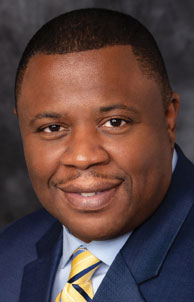
By Vaughn Wilson
Florida A&M University head men’s basketball coach Charlie Ward was recently invited to participate in a committee discussion on the state of college athletics. Ward’s resume alone could justify his presence. As a former college basketball standout and a Heisman Trophy winner in football at Florida State University, he carries one of the most unique athletic legacies in modern sports.
But Ward’s current position as a Division I head basketball coach at an HBCU gives him an even more relevant voice in today’s evolving landscape of college athletics.
The meeting was called by U.S. President Donald Trump — and that is where the controversy began.
Ward traveled with Florida Governor Ron DeSantis to Washington, D.C., less than 24 hours after securing one of the biggest wins of his season. His Florida A&M Rattlers defeated archrival Bethune-Cookman 81–77 in dramatic fashion. The trip came during a hectic window between FAMU’s final regular season game and the team’s travel to Atlanta for the SWAC Tournament.
Ward’s calm and composed demeanor has long defined him, much like the quiet strength displayed by baseball legend Jackie Robinson. While Ward coaches with intensity on the sidelines, off the court he carries himself with a reserved professionalism that has served him well throughout his career.
Still, despite his credentials and character, some criticized him simply for accepting the invitation.
President Trump himself has acknowledged that any executive order aimed at reshaping college athletics would likely face legal challenges. However, he has repeatedly voiced concerns about what he believes is the deterioration of the collegiate sports model due to the NCAA’s handling of Name, Image and Likeness (NIL) policies and the transfer portal.
On that point, many people across the college sports landscape agree that the current system is unstable. The rapid implementation of NIL combined with unrestricted player movement has dramatically changed the structure of college athletics. Universities now struggle to maintain competitive balance while protecting smaller programs and Olympic sports that often rely on revenue from football and basketball.
Whether one agrees with Trump or not is not the central issue. The real issue is representation. Charlie Ward’s presence in that room mattered.
History shows that meaningful change rarely happens without people being present when decisions are made. Civil rights leaders fought tirelessly not only for equality, but for the right to sit at the table where policy and power intersect.
You cannot influence a conversation if you are not in the room.
To many people, President Trump remains a polarizing figure. His communication style and policy positions have sparked division across the country. Polls show declining approval ratings even among some of his traditional supporters. Additionally, broader political concerns, including the implementation of the controversial Project 2025 policy agenda, have heightened tensions within many communities — particularly among Black Americans.
Those concerns are real. But Charlie Ward was not traveling to Washington to join a political campaign or audition for a position in government. He was attending a meeting that he was uniquely qualified to participate in. A meeting that directly affects the future of the athletes he coaches. A meeting that needed voices like his.
From all available reports, Ward may have been the only Black participant in the room. That fact alone underscores why his presence was so important. Today he coaches at a Historically Black College and University — institutions that the NCAA itself classifies as “limited-resource” programs. Who better to speak on behalf of those institutions?
Sometimes leadership requires setting aside emotion long enough to engage in meaningful dialogue. And anyone familiar with Ward understands that his strong faith and steady character would never allow him to compromise his integrity for politics.
If there was someone who deserved to be in that room — someone who could represent athletes, HBCUs, college sports and Blacks with dignity — it was Charlie Ward.