
By Lineth Fernandez
Heart health is often overlooked until warning signs appear. According to the National Institutes of Health, atrial fibrillation (AFib) is the most common heart rhythm disorder, affecting about 1 in 22 Americans and serving as a leading cause of stroke.
AFib occurs when the upper chambers of the heart beat irregularly and often rapidly. Warning signs may include a racing heart, fatigue and chest pain.
As American Heart Month is observed in February, it serves as a reminder to schedule regular cardiac screenings, such as an EKG, and to manage controllable risk factors, including high blood pressure, high cholesterol and smoking.
Listen to Your Body, Early Detection is Important
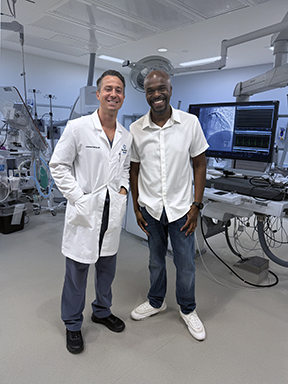
Last year, Coral Springs resident Owen Creighton, 38, was driving to work when he noticed his heart racing. He became dizzy and lightheaded and drove directly to the Emergency Department at Broward Health Coral Springs.
Under the care of Jonathan Nieves, M.D., a cardiologist specializing in electrophysiology with Broward Health Physician Group, Creighton became the first patient to undergo a left-sided ablation at Broward Health Coral Springs.
“Following my procedure, I feel great and have not had any cardiac episodes,” Creighton said. “It’s reassuring to know I no longer have this nagging and debilitating problem.”
Diagnosed with AFib a decade ago, Creighton initially tried blood thinners and medication, but negative side effects prevented long-term use. When doctors recommended a minimally invasive procedure known as cardiac ablation, he agreed it was the best treatment option for him.
“AFib most commonly affects older adults, but it can occur in younger patients as well,” Nieves said. “That’s why early screening is so important. Detecting heart rhythm abnormalities early can save lives.”
For more information on Broward Health’s cardiac services, visit BrowardHealth.org/Heart.