
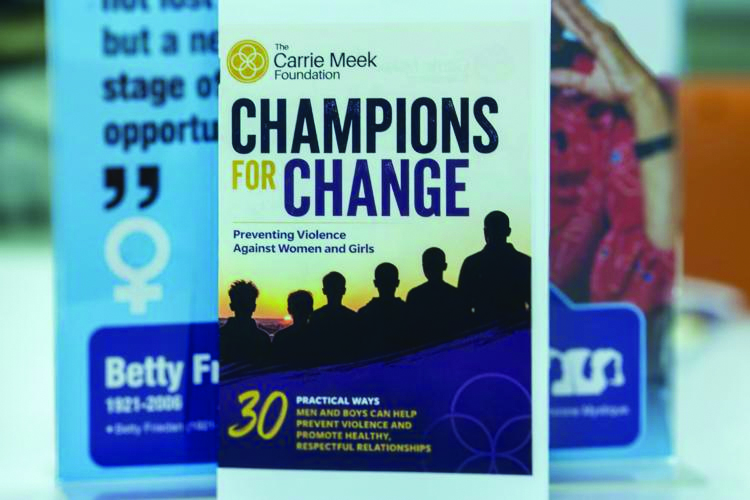
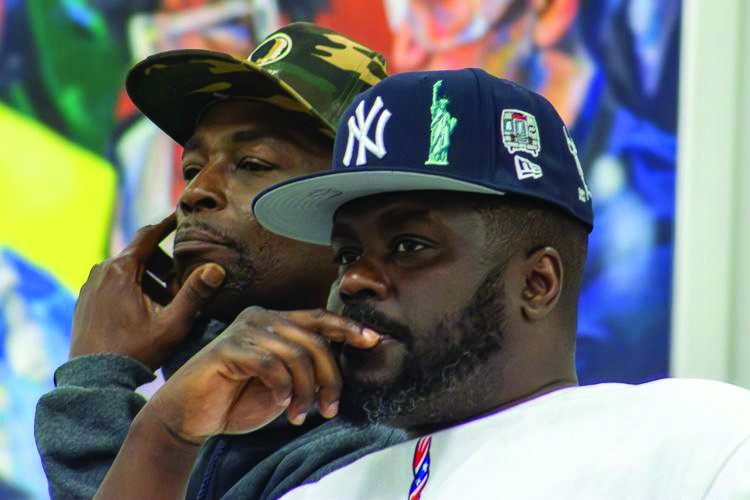
A meeting held at the Carrie Meek Foundation in Opa-locka last week brought together community leaders, educators, coaches, mentors and residents to engage men and boys in the movement against gender-based violence.
The July 8 event, entitled “Men to Men: Mobilizing Leaders for Safer Communities,” was the second in a series of meetings inviting men to work with the Foundation in building the movement. The first such meeting was held in Florida City, reflecting the foundation’s aim to mobilize the entirety of Miami-Dade County in its work.

Lucia Davis-Raiford, president and CEO of the Carrie Meek Foundation, led the meeting in Opa-locka. Prior to working at the foundation, Davis-Raiford was the director of Miami-Dade County’s Community Action and Human Services Department and founding director of the Domestic Violence Unit at New York City’s Police Department.
“We’re trying to create leadership by men in this area, solidarity with men in this area,” said Davis-Raiford. “We’re looking for right-thinking, well-meaning men — the average guy in our everyday lives — who want their daughters and their wives to be safe walking down the street.”
Emphasis is placed on men from Black and brown communities. The foundation seeks to respond to the issue of gender-based violence in a way that is reflective of how people live, from affinity groups to cultural groups, faith groups to academic groups.
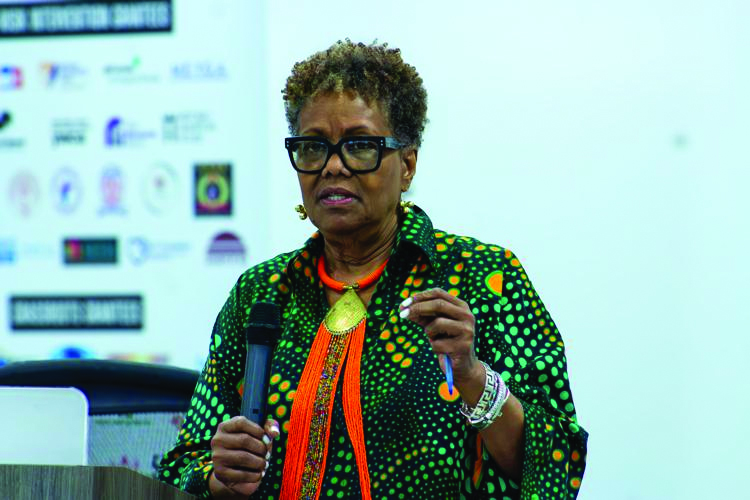
“However they experience their lives and wherever they gather, that’s the audience we want to work with,” said Davis-Raiford. “In every strata of life — in law enforcement, in the justice community, in the civil justice community, in the medical community, in the legal community — we’ve got to change attitudes about what it takes to have a community that is safe for all of us, and this is particularly true in the objectification of women and girls.”
The movement will involve a training and mentorship component. Boys ages 10 through 18 are one primary demographic, as well as young men on college and university campuses.
According to the presentation at the Opa-locka meeting, one in five undergraduate women have experienced rape or sexual assault. Research by the Rape, Abuse, & Incest National Network (RAINN) found that women ages 18-24 experience three times the rate of sexual violence than other age groups. The CDC reports that nearly half of women in the U.S. experienced some form of physical sexual violence in their lifetimes.
“As a community of women who’ve established the movement against gender violence and interpersonal violence, we haven’t given men the broader voice to join us and fight with us against this,” said Davis-Raiford. “If the community of men doesn’t make this an intolerable kind of thing for other men, it’s not going to stop happening.”
The movement began with a grant from the U.S. Department of Justice’s Office of Violence Against Women (OVW) and is also receiving financial support by the Carrie Meek Foundation.
“Men of color are going to define what the case will be for themselves,” said Davis-Raiford. “Where the experience of women will come into play is [that] they need to hear from us how we’ve experienced the current situation, being impacted by this disproportionately.”
Ruban Roberts, CEO of RER Consulting, attended the Opa-locka meeting. As a retired family therapist, he emphasized the importance of broadening the work to include entire families.
“I’ve worked with youth all of my life,” said Roberts. “One of the things I know is, I don’t care how good your program is, that kid has to go back home. A lot of the native learned behavior is learned and reinforced at home. So, if you’re going to address this issue with your youth, you have to also address the family.”

Other suggestions at the meeting involved mobilizing social media and traditional media, such as film and TV, to change the messaging to younger audiences. Marvin Brown, co-founder and assistant program director of Mentally Fitt, Inc., encouraged finding a more creative way to engage kids.
“We’re working in the school system and doing a lot of mentoring,” he said. “We have to update our approach. If our target population is 10 to 18 years old, we have to find out their interests. When we were younger, we were able to have sit-down groups, but right now, their attention spans are short. We have to use what they like in order to get them engaged.”
Davis-Raiford emphasized the grassroots approach to the movement, beginning where men gather.
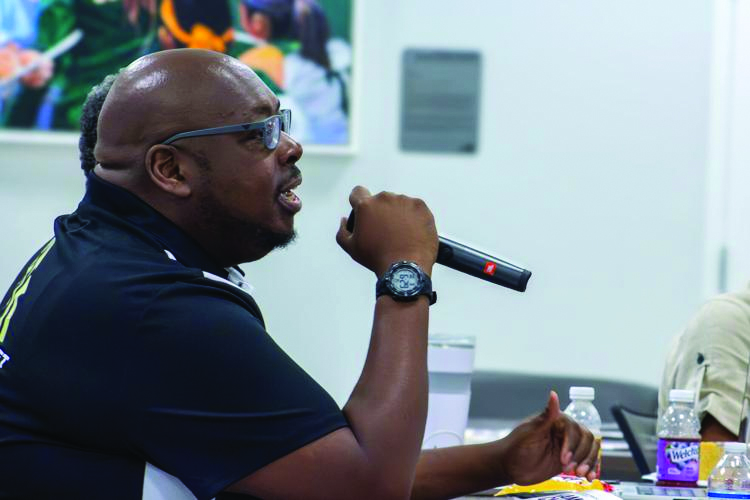
“This organization is boots on the ground, talking to brothers as they speak to each other,” said Davis-Raiford. “We don’t speak the same language, we don’t all use language the same, we aren’t all from the same economic background. But what we all have in common is our common humanity, and we are learning how to break it down to create language that everybody can understand.”
The movement is in its beginning stages of development. Davis-Raiford hopes to eventually seek county and municipal funding but is currently organizing more Men to Men meetings around the county to hear what the community wants.
Find out more about the movement and share your thoughts through the Carrie Meek Foundation website at carriemeekfoundation.org/men-to-men-mobilizing-leaders-for-safer-communities/.