
“America’s government fears a nuclearized Iran but turns a “blind eye” to the rise of nuclearized racism threatening democracy at home.” John Johnson II 08/19/26
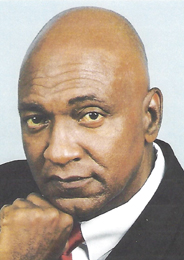
By John Johnson II
America’s democracy was conceived like a magnificent castle pro-claiming liberty while reserving political power over-whelmingly for white men. Indigenous peoples were branded “savages,” while enslaved Black people were treated as property rather than citizens. Yet the Founders engraved majestic promises of freedom upon democracy’s gates. Symbolically, however, another sign hung from its drawbridge: “RESERVED FOR WHITE MEN.” Thus, racial hierarchy became embedded within America’s original experiment in representative government. How could a nation proclaim liberty at the castle gate while deliberately denying millions permission to cross its drawbridge?
The blueprint for exclusion survived generations. Property requirements initially restricted political participation, while slavery denied Black people citizenship and freedom altogether. After emancipation, poll taxes, literacy tests, intimidation, racial terrorism and lynchings helped suppress Black political power. Native Americans who had assisted struggling European settlers eventually witnessed dispossession, warfare, forced removal and confinement to reservations. The mythology surrounding Thanksgiving cannot erase this historical contradiction. White America celebrated expanding freedom for itself while repeatedly denying equality to others.
The Civil War beginning in 1861 became America’s greatest armed struggle over preservation of the Union, with slavery at the center of Southern secession. Reconstruction briefly expanded Black citizenship and political participation. But Jim Crow followed, enforcing segregation while protecting white political, economic and social power. Was Jim Crow merely segregation—or was it an elaborate security system constructed to keep Black Americans outside democracy’s castle?
America’s courts were also participants in this history. Supreme Court decisions including Dred Scott v. Sandford and Plessy v. Ferguson reinforced racial subordination, while later decisions such as Brown v. Board of Education helped dismantle legalized segregation. The judiciary therefore demonstrated its enormous power either to strengthen the walls of racial hierarchy or tear them down.
Then came an extraordinary historical moment: Barack Obama was elected president—twice. A Black family occupied the White House of a nation originally structured to exclude Black people from citizenship and political power. Critics argue that Obama’s presidency intensified an already developing conservative and nationalist backlash against America’s changing racial and cultural landscape. Did electing a Black president prove that America’s racial hierarchy had finally been defeated—or did it awaken political forces determined to reconstruct it?
That reaction must not be confused with proof that Project 2025 was secretly created to prevent another Black presidency. Rather, critics view the later Heritage Foundation-led Project 2025 as part of a broader conservative movement seeking dramatic changes in federal power and policies involving DEI, immigration, LGBTQ protections and reproductive rights.
January 6, 2021, presented another grave challenge to constitutional government when a mob attacked the Capitol as Congress certified the presidential election. Today, critics and political scientists warn that efforts to concentrate executive authority, restrict voting access, weaken civil-rights protections and diminish institutional checks could progressively dismantle democracy from within.
The ultimate danger is no longer merely that Americans may be excluded from democracy’s castle. The danger is that those unwilling to share the castle may decide to destroy it.
After generations of struggle opened democracy’s drawbridge more widely, America confronts a profound question:
If preserving racial and political supremacy requires dismantling democracy itself, which will America choose—democracy or supremacy?
Question What You Believe!