
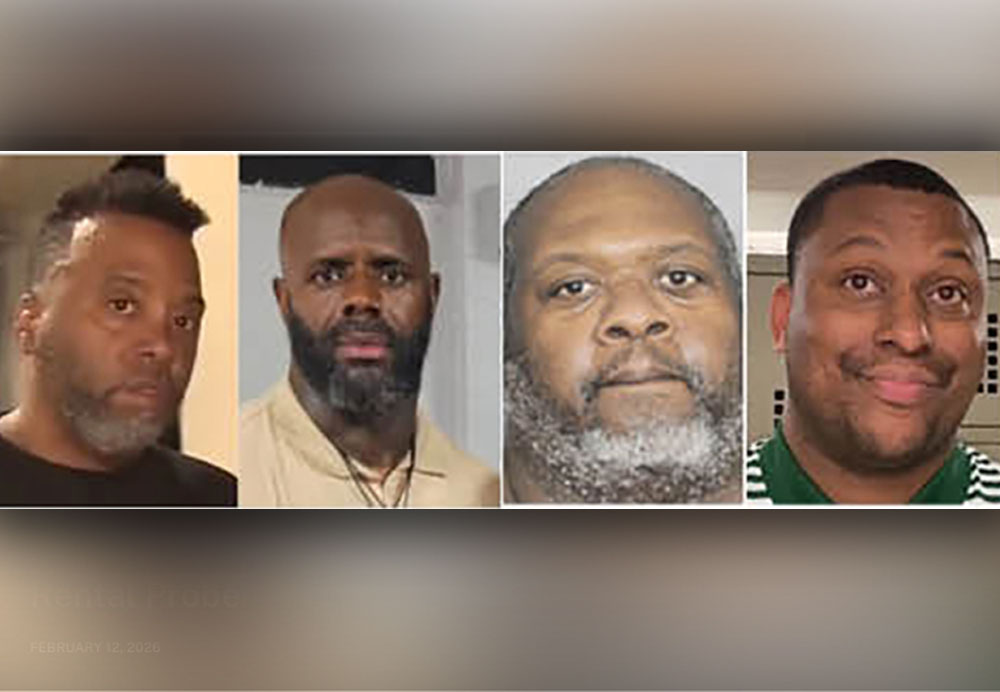
Disclaimer: The Westside Gazette publishes this commentary in the interest of transparency, fairness, and public accountability. At the time of publication, no criminal charges have been files against any of the coaches named in this column, and all individuals are entitled to the presumption of innocence. This article does not assert wrongdoing but raises questions about process, consistency, and oversight within Broward County Publix Schools — questions the public has a right to ask while investigations remain ongoing.
Broward County Public Schools is investigating alleged improper gymnasium rentals that have already cost at least four high school basketball coaches their positions. To date, the Broward State Attorney’s Office has not filed criminal charges against any of them.
That tension — serious employment consequences without filed charges — is why this story deserves careful public attention.
The inquiry reportedly began after a March 31 incident at Blanche Ely High School, where a person who reserved the gym for a graduation event arrived to find a basketball tournament underway. What might have remained a single-site review has since widened to include coaches at Coral Springs High School, Blanche Ely, and Marjory Stoneman Douglas High School.
All the coaches publicly known to be affected are African American.
That fact, standing alone, proves nothing. But it does raise fair questions the district should be willing to answer plainly.
Are similar after-hours facilities used in other sports — wrestling, baseball, cheerleading, volleyball — being examined with the same rigor? Have other campuses with long-standing traditions of hosting outside tournaments, clinics, or events been audited in the same way? Or is this review functionally centered on one sport, one set of schools, and one group of coaches?
Those are not accusations. They are transparency questions.
Public schools regularly allow facilities to be used beyond the school day. Coaches, boosters, community partners, and parents often work together to host events that bring activity — and sometimes revenue — onto campuses. If the rules governing those uses were unclear, inconsistently applied, or loosely enforced over time, that is a management issue as much as an individual one.
And when consequences fall swiftly on a handful of employees before the public understands the scope of the review, it can look less like policy enforcement and more like selective enforcement — even if that is not the district’s intent.
That perception matters.
A broader fairness lens
In February 2026, reporting by the South Florida Sun Sentinel described an audit finding that certain senior administrators received bonuses of up to $14,000 annually from proceeds of a 2022 referendum widely promoted to voters as a measure to improve teacher pay. The audit further reported that roughly $300,000 in such payments went to top-level employees in 2024, and that key details about the bonus distribution were not clearly presented to the School Board or the public. Some board members were quoted as saying they never intended to approve those payouts.
Those facts, as reported, involve substantially larger sums and far higher-ranking officials than the coaches currently under investigation.
This is not to equate the situations. It is to ask a consistency to question the public has a right to ask: How does the district calibrate accountability?
When alleged policy violations by coaches involving comparatively small amounts trigger swift employment consequences and a widening probe, while audit findings about senior compensation tied to voter-approved funds prompt debate and calls for reform, the contrast invites scrutiny.
Will there be investigations of similar depth? Employment consequences? Referrals to law enforcement? Or does accountability operate differently depending on where one sits in the organizational chart?
Again, these are not accusations. They are fair questions.
What transparency would look like
The district has every right — and obligation — to enforce its policies. But it also has a responsibility to show that enforcement is consistent across sports, campuses, and ranks.
Right now, the public does not know:
- How many schools and sports programs are under review,
- What criteria expanded the probe beyond the initial incident,
- Whether districtwide audits of facility use are underway, and
- How accountability standards are applied to administrators versus coaches.
Answering those questions would not compromise the investigation. It would strengthen trust in it.
Until then, the appearance of uneven scrutiny will continue to concern many in the community — not because conclusions have been reached, but because answers have not.
Fairness is not only about outcomes. It is about process, visibility, and consistency.