
By Derek Boyd Hankerson
As a “social scientist” who loves American history, and as one who has put his money where his mouth is related to American history, I’m thrilled that Florida is one step closer to correcting a long-standing omission in how it tells its own story.
Senate Bill 308, which is now advancing through the Florida Senate, would establish a state-funded Museum of Black History — an institution long overdue in a state where Black history is inseparable from Florida history itself, dating back to the arrival of the Spanish expedition in 1513 and the founding of St. Augustine in 1565.
SB 308 is straightforward in its intent and significant, moving beyond rhetoric and committing public resources to preserving, interpreting and celebrating the stories, struggles and achievements of Black Floridians.
It also formally designates St. Johns County as the museum’s site, following the recommendation of a state task force in 2024.
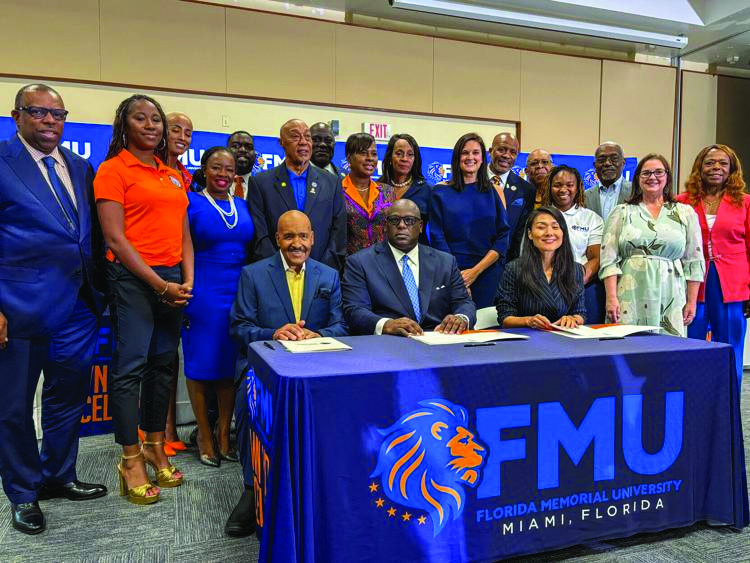
The proposed location — west of St. Augustine on land that once housed Florida Memorial University — carries deep historical resonance and symbolic weight. I’m particularly thrilled, as my great-great-grandfather the Rev. J. P. Hankerson served two terms as president of the Baptist General Convention in Florida (1894-1899 and 1903-1909) while working with other ministers to establish the HBCU in St. Augustine in 1918. My great-grandfather, the Rev. J. H. Hankerson, continued this legacy, attending the institution during its humble beginnings as Florida Institute at Live Oak.
Equally important is how the bill structures governance. As I understand, SB 308 creates a 13-member Florida Museum of Black History Board of Directors, with appointments shared among the governor, Senate president, and House speaker. This board would oversee planning, construction and long-term operations, while working collaboratively with the Foundation for the Museum of Black History, Inc., a nonprofit established to support the project. St. Johns County would provide initial administrative support, ensuring the effort begins on solid footing.
Supporters argue the museum will fill a critical cultural gap. Florida House Speaker Paul Renner, St. Johns County State Sen. Tom Leek and other proponents describe it as a space for education, reflection and heritage tourism — one that acknowledges painful truths while honoring resilience, innovation and triumph.
Derek Boyd Hankerson is a social scientist and documentary filmmaker who was instrumental in connecting the Department of Interior/National Park Service (NPS) Underground Railroad Network to St. Johns County in 2014, highlighting the original Underground Railroad to Spanish Florida. He was also the catalyst to connecting the Gullah Geechee Cultural Heritage Corridor to St. Johns County, and contributed to having the NPS change its management plan to include St. Johns County in 2015. Currently, Hankerson is the president of the Loxahatchee Battlefield Preservationist Board in Jupiter, Fla.