
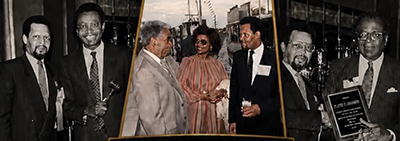
Broward County’s first Black county administrator, former Fort Lauderdale city manager, and founding leader of NFBPA leaves a legacy of public service, mentorship, and opportunity
By Bobby R. Henry, Sr.
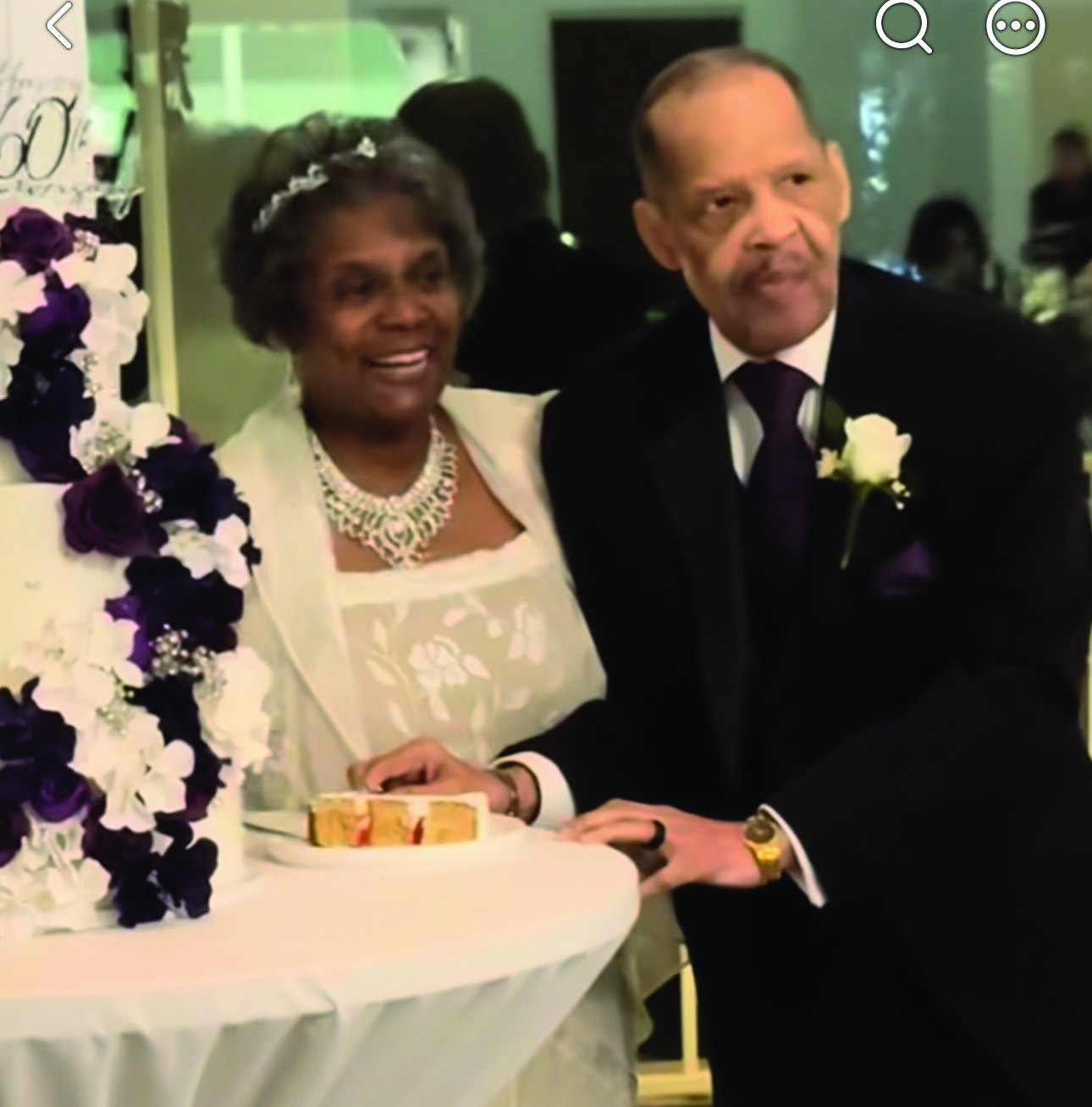
Floyd T. Johnson belonged to the latter.
Johnson was a Marine, a pioneering public administrator, mentor, family man and institution-builder whose career carried him into some of the highest levels of local government at a time when African Americans were still fighting for access to those rooms.
In Broward County, his name is forever connected to history.
Johnson came to Broward County government in 1976 as an assistant county administrator after serving as a special assistant to the mayor of Jacksonville. In 1982, he became Broward County’s first African American county administrator, breaking a racial barrier and assuming responsibility for the day-to-day administration of one of Florida’s largest and fastest-growing counties.
But Johnson’s legacy cannot be measured simply by the positions he held, the budgets he administered or the public projects developed during his watch.
His legacy is also found in the people who came behind him.
“He Did It His Way”
Former Broward County Administrator Bertha W. Henry, who would later occupy the county’s top administrative position herself, remembered Johnson as a leader whose strength was matched by compassion.
“He did it his way through strength as a Marine; with compassion and a servant’s ethos of advocating for the least of us; and his love for family and friends,” Henry said.
Her final words to Johnson speak to the enduring nature of his contribution:
“Floyd, your legacy and influence will continue to live on through the footprints of time.”
Those footprints stretch far beyond Broward County.
Long before becoming county administrator, Johnson was already preparing himself for a life in public service and helping create opportunities for other African Americans who wanted to do the same.
More than 50 years ago, Johnson participated in the National Urban Fellows program, an initiative designed to accelerate the development of people of color and others historically underrepresented in public-sector leadership.
It was there, during a summer session at Yale University, that Johnson met Harvey Johnson Jr.
Their meeting would begin a friendship lasting more than half a century.
“I first met Floyd over 50 years ago at Yale University,” Harvey Johnson recalled. “We were both awarded fellowships, and were attending the summer session of the National Urban Fellows program.”
The two young men talked about their families, where they came from, the politics of the day and where their careers might take them.
Even then, Harvey Johnson remembers something distinctive about his friend.
“As I recall, Floyd was laser-focused on where he wanted his career to take him,” he said. “He clearly wanted to excel in the field of public administration, and he saw the opportunities that National Urban Fellows would present as a means of pursuing his dream.”
And excel he did.
Building a Pipeline for Black Leadership
Floyd Johnson didn’t simply pursue opportunity for himself.
He helped build an institution so others could pursue it as well.
Johnson became one of the founding members of the National Forum for Black Public Administrators (NFBPA), helping create a professional network and leadership-development organization for African Americans seeking careers in government and public administration.
At a time when Black professionals could earn the education and possess the qualifications yet still find the doors to executive government leadership closed, organizations such as NFBPA created networks, mentorship and professional-development opportunities that could help pry those doors open.
Harvey Johnson described it as creating “a network and a training vehicle for African Americans who, like him, decided on a career in public service.”
Floyd Johnson would eventually come full circle.
The young man whose career had been accelerated by National Urban Fellows later served on the organization’s Board of Directors and eventually became its chairman, giving back to an institution that had helped prepare him for leadership.
“I am so proud of Floyd’s accomplishments,” Harvey Johnson said. “He had an amazing career in public service.”
But after more than 50 years of friendship, something mattered even more.
“I am even prouder of our friendship, which started as we were both trying to figure out how to navigate our lives and our careers…a friendship that endured for over 50 years.”
“Rest in Peace, Dear Friend.”
From Broward County to Fort Lauderdale
Johnson’s career would take him into senior public administration positions in different parts of the country, including service as a city manager.
But Broward County remained a central chapter of his professional story.
His elevation to Broward County administrator in 1982 represented more than an individual accomplishment. A Black man was now responsible for overseeing the machinery of county government during a period of extraordinary growth and development.
His administration oversaw major public investments and capital improvements as Broward continued its transformation from a collection of growing South Florida communities into a major metropolitan county.
Years later, Johnson would return to Broward County public life in another powerful position, this time as city manager of Fort Lauderdale.
The significance should not be overlooked.
The same Black public administrator who had broken the racial barrier at the county level would ultimately occupy the chief administrative office of Broward County’s largest city.
Johnson also continued his public-service career in South Florida through redevelopment work in Riviera Beach.
Like many executives whose careers span decades in government, Johnson’s record included difficult decisions and periods of controversy. His years in public administration included debates over government spending, major capital projects and municipal finances.
Those chapters are part of the complexity of a career spent not watching government from the sidelines, but making decisions from inside its most demanding offices.
And for many of the Black public administrators who followed, Floyd Johnson represented something even more fundamental:
Possibility.
“Like Your Father, My Friend, I’m So Proud of You”
For Jonathan K. Allen, Johnson’s influence became deeply personal.
“For more than 25 years, I was blessed to call Mr. Floyd T. Johnson my mentor and friend,” Allen said.
One reminder of that relationship remains hanging in Allen’s office today.
At the 1995 NFBPA National Conference, Johnson wrote a message to Allen on a commemorative poster:
“Like your father, my friend, I’m so proud of you!! The very, very best for the future.”
Three decades later, Allen still has it.
“Those words have inspired me throughout my career and reflect the man he was, a trailblazer who broke barriers, opened doors, and believed deeply in the next generation of public servants and city managers,” Allen said.
Then Allen used a word rarely found in government résumés or official biographies, but one that helps paint a fuller picture of Floyd Johnson:
Swagger.
“I will forever be grateful for his friendship, professionalism, swagger, and example of leadership and service.”
That swagger mattered.
Because Floyd T. Johnson entered rooms where, few years before, Black professionals would have struggled simply to get an interview, much less be entrusted with running the government.
He carried himself as though he belonged there.
And his career demonstrated that he did.
A Legacy Measured in Those He Lifted
Perhaps the most powerful evidence of Johnson’s impact is found not simply in his own résumé, but in the careers of those he encouraged, supported, and helped prepare for leadership.
Retired Palm Beach County Administrator Virginia Crutchfield-Baker credits Johnson with playing an important role throughout her more than four decades in public service, from her early days as a budget analyst to ultimately becoming county administrator.
“Floyd T. Johnson was a family man, a leader, mentor and friend who made a difference in the communities he served,” Crutchfield-Baker said. “I am especially grateful for the opportunity and support he gave me throughout my 40+ years in public service from being a budget analyst to County Administrator of Palm Beach County, FL. I will always be grateful for his belief in me, his friendship, and the lasting legacy he leaves in the lives of so many people.”
Her journey from budget analyst to county administrator helps put Johnson’s legacy into human terms.
He didn’t simply achieve.
He encouraged others to achieve.
He didn’t simply walk through doors.
He held them open.
And he didn’t measure leadership only by the authority of the position he occupied, but by what he could pour into the people coming behind him.
When Crutchfield-Baker’s reflection is placed alongside those of Bertha W. Henry, Jonathan K. Allen and Harvey Johnson Jr., a remarkable pattern emerges.
Different people. Different careers. Different chapters of Johnson’s life.
Yet they remember many of the same things: his mentorship, friendship, belief in others, commitment to public service and determination to create opportunities for those coming behind him.
More Than Being the First
History rightfully remembers “firsts.” The first Black person to occupy an office. The first woman. The first person from a community previously excluded from leadership.
But the true measure of being first is what happens afterward.
Did somebody come through the door behind you? Did you mentor someone? Did you create an institution? Did you leave the ladder standing?
By those measures, Floyd T. Johnson’s legacy extends far beyond the title “Broward County’s first African American county administrator.”
He helped establish a national organization dedicated to developing Black public administrators.
He mentored younger professionals.
He returned to National Urban Fellows to help an organization that had once invested in him. He led governments. He served communities. He loved family and friends.
And he demonstrated to generations of Black professionals that they could aspire not simply to work in government, but to run it.
He was the first through some doors.
But he made certain he wasn’t the last.
Coming Home to the Main Library
There is something especially fitting about where Broward County will gather to remember Floyd T. Johnson.
On Saturday, September 12, 2026, from 10 a.m. until noon, family, friends, colleagues, public servants and members of the community will gather at the Broward County Main Library in Fort Lauderdale to celebrate his life and legacy.
The event is open to the public.
It will honor Johnson as a trailblazing public servant, respected administrator, mentor and founding member of NFBPA—a man whose leadership opened doors, strengthened communities and inspired generations.
And perhaps that is the most appropriate way to remember Floyd T. Johnson.
Not simply by counting the offices he occupied.
But by counting the people he influenced.
Not simply by remembering the barriers he broke.
But by recognizing the people who walked through afterward.
Not simply by examining what he accomplished during his lifetime.
But by watching what continues because he lived.
From Harvey Johnson Jr., who remembers two young men at Yale more than half a century ago trying to determine where life and public service would take them; to Jonathan K. Allen, who still keeps Johnson’s handwritten words of encouragement in his office; to Virginia Crutchfield-Baker, whose journey carried her from budget analyst to county administrator; to Bertha W. Henry, who would ultimately sit in the Broward County administrator’s chair Johnson once occupied, the footprints are visible.
Floyd T. Johnson did more than make history.
He helped create the people who would continue making it.
As Bertha W. Henry so fittingly said: “Floyd, your legacy and influence will continue to live on through the footprints of time.”
And those footprints are still being followed.