
A MESSAGE FROM THE PUBLISHER
14 If you keep quiet now, help and freedom for the Jews will come from another place. But you and your father’s family will all die. And who knows, maybe you have been chosen to be the queen for such a time as this.”–Esther 4:14 ERV
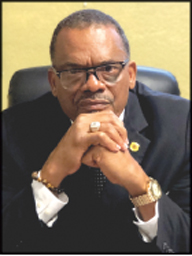
By Bobby R. Henry, Sr
There are moments in history when a people must decide whether they will merely survive the storm or stand in the storm with courage, conviction, and purpose. We are living in one of those moments now.
The Book of Esther tells the story of a young woman placed in position “for such a time as this.” It was not comfort that called Esther. It was crisis. It was not convenience that summoned her. It was conscience. She understood that silence in dangerous times could become betrayal to her people.
Today, Black and Brown Americans find ourselves standing at another defining crossroads in American history.
I am reminded of that powerful scene from the movie Glory, when the soldiers of the 54th Massachusetts Regiment sat around the campfire singing, bonding, and encouraging each other before heading into battle. Those men understood that the days ahead could cost them their lives. Yet, in that moment, song became strength. Brotherhood became armor. Faith became fuel.
That scene was not just Hollywood drama. It was a reflection of the Black experience in America.
Because once again, we hear the drums of resistance calling.
We are witnessing attempts to dismantle the Voting Rights Act one of the greatest achievements born from the blood, tears, and sacrifice of ordinary people who dared to believe they were fully American. We are seeing aggressive redistricting efforts designed to dilute Black political power. We are watching the systematic erasure of Black history from classrooms and public spaces, as though our story is something to be hidden instead of honored.
These are not isolated political acts.
These are pivotal moments in the ongoing struggle over who gets to belong in America.
And the question before us is the same question our forefathers and foremothers faced:
What are we willing to live for?
And if necessary, what are we willing to die for?
When we think about Medgar Evers, Fannie Lou Hamer, Harry T. Moore, and Harriette Moore people beaten, bombed, threatened, and murdered simply because they believed Black people deserved the right to vote we cannot afford to treat these times lightly.
We remember the young freedom workers James Chaney, Andrew Goodman, and Michael Schwerner, who were killed while trying to register Black citizens to vote during Freedom Summer. Their sacrifice reminds us that democracy has never been free for Black Americans.
The Jim Crow era did not disappear because America suddenly became moral. It changed because people fought, marched, prayed, organized, bled, and died.
That is why the words of Fannie Lou Hamer still echo across generations:
“I’m sick and tired of being sick and tired.”
Those words were not a slogan.
They were a cry from the depths of a weary but determined people.
The same spirit was carried in Memphis during the sanitation workers’ strike when Black men marched with signs declaring:
“I AM A MAN.”
Not “boy.” Not “less than.” Not invisible. A MAN.
And still today, America wrestles with the same disease whether it will fully recognize the humanity, dignity, and historical truth of Black people.
More than 170 years ago, Frederick Douglass stood before this nation and asked one of the most piercing questions ever directed toward American democracy:
“What, to the slave, is the Fourth of July?”
In essence, Douglass was asking:
How can a nation celebrate freedom while denying freedom to others?
That question still lingers in the air today.
How can we speak of liberty while restricting voting access?
How can we praise equality while erasing Black history?
How can we honor democracy while manipulating districts to silence Black voices?
This is not about Democrats or Republicans.
This is about democracy itself. This is about memory.
This is about humanity.
This is about whether America is willing to confront its contradictions honestly.
And so, for such a time as this, we must not grow weary. We must organize. We must educate. We must vote. We must teach our children the truth.
We must protect the legacy handed down to us through sacrifice.
Like those soldiers around the campfire in Glory, we must strengthen one another for the battles ahead.
Because history has shown us something powerful:
Whenever Black people have stood together with faith, courage, and purpose, America has been forced to move closer to its promise.
The road ahead may not be easy. But neither was Selma. Neither was Birmingham. Neither was Mississippi. Neither was the long, lonely road walked by our ancestors whose names history may never record.
Yet they walked it anyway.
Now the torch is in our hands.