
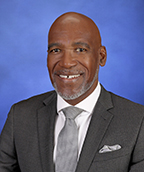
Wayne Lomax is the Retired Pastor of The Fountain Church in Miami Gardens, Florida. He currently serves as a Compliance Manager for Miami Dade County Public Schools and is the President of The Fountain Endowed Legacy Scholarship Fund. 2
If you have heard the word forgive, you have probably heard the word forget in proximity to it. I am not quite sure how they became a tandem. Perhaps it is similar to the cohesion of “rock and roll” or “black and blue.” These pairings have assumed a space in common culture.
“Forgive and forget” is a bit different. These two words are offered as an antidote to hurt and pain. It would be great if forgiveness were never needed. But it is. We are tethered to our imperfection, which shows up in egregious behavior toward others. Acts that cause extreme pain can be forgiven but not forgotten. Forgiveness is most effective when we have not forgotten or cannot forget.
Most religious traditions encourage the practice of forgiveness. Let us look at forgiveness as a process rather than a single, once-and-for-all act. Depending on what has occurred, forgiveness could take time and effort. It might show up like a pendulum, swinging back and forth between forgiveness and sadness, forgiveness and vengeance, or forgiveness and hopelessness. To forgive is to enter the process with the intent to complete it. This usually takes time.
When is forgiveness required? It is required when repayment will not resolve the act that caused the unforgettable pain. Forgiveness is needed when an apology will not resolve it. Forgiveness is needed when you cannot recover without it. When forgiveness is absent, the quality of life is diminished on every relational level. Forgiveness is a way of saying that I am moving on from the hurt caused by others. It is a very difficult thing to do. It may not seem like it, but if you can pull it off, it is always better to Forgive, even if you can’t forget.