
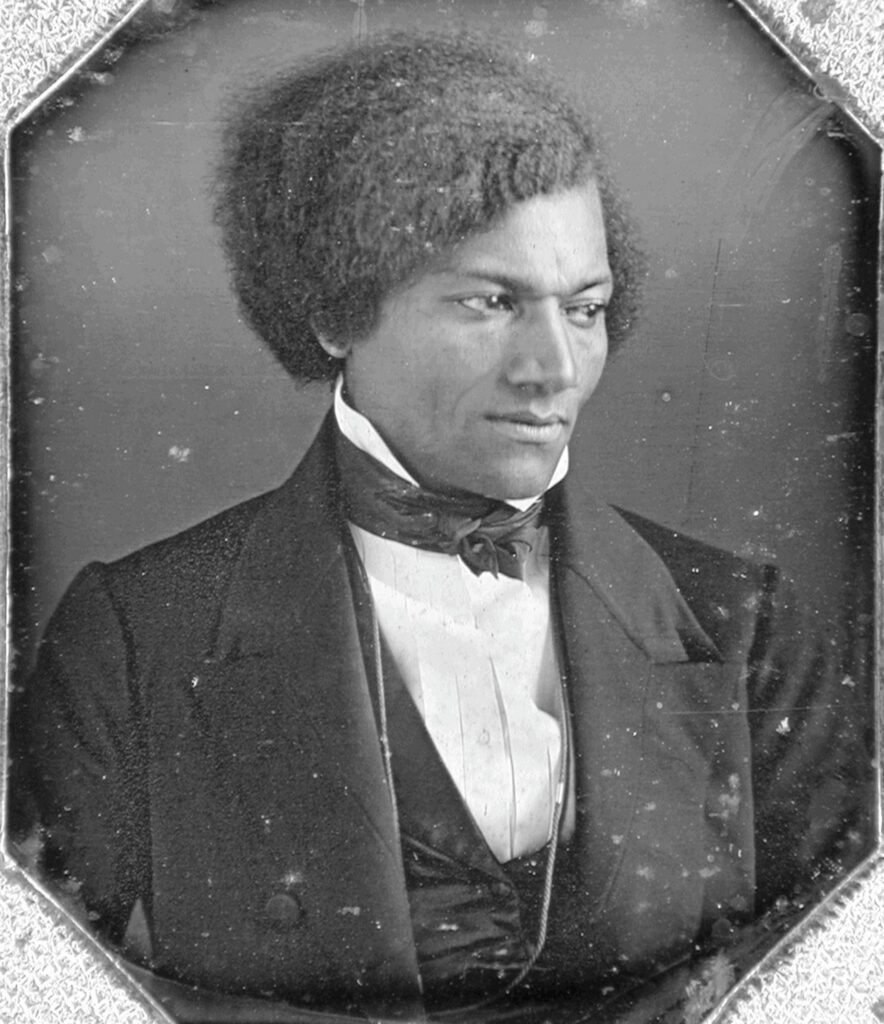
In this moment in Black history, we pause to remember Frederick Douglass, a man born into slavery in 1818 who would become one of the most powerful voices for freedom the world has ever known.
Escaping bondage in 1838, Douglass transformed himself through literacy calling education the pathway from slavery to liberty. His autobiography, Narrative of the Life of Frederick Douglass, an American Slave, exposed the brutal truth of slavery to a nation that preferred denial. His words shook consciences across America and Europe.
In 1847, he founded The North Star, a newspaper that declared: “Right is of no sex—Truth is of no color—God is the Father of us all, and we are all brethren.” Through journalism, oratory, and organizing, Douglass pressed America to live up to its founding ideals.
He met with Abraham Lincoln during the Civil War, advocating for Black enlistment in the Union Army and equal treatment for Black soldiers. After emancipation, Douglass continued the struggle fighting for voting rights, women’s suffrage, and full citizenship for formerly enslaved people.
Frederick Douglass understood something we must never forget: freedom is not self-executing. It must be demanded, defended, and defined by those who refuse to be silent.
At a time when history is debated and sometimes diminished, Douglass’ life reminds us that literacy is liberation, journalism is resistance, and the Black press has always been central to the fight for justice.
As we reflect on his legacy, one of his most enduring warnings still echoes:
“Power concedes nothing without a demand. It never did and it never will.”
A moment in Black history and a reminder that the struggle for dignity, voice, and equal protection under the law continues.