
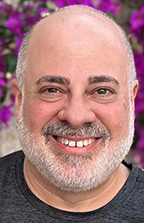
By David Gallup
This year marks the 75th anniversary of the Universal Declaration of Human Rights (UDHR) and the World Citizenship Movement (WCM).
As a response to the devastation of World War II, the drafters of the UDHR sought to ensure that human rights would be protected by the rule of law. The Declaration provides a statement of our civil, cultural, economic, political, and social rights.
The WCM links our universal rights to our identity as citizens of the world. Former WWII bomber pilot Garry Davis gave up his US citizenship in favor of world citizenship, launching the World Citizenship Movement in 1948 to promote peace and human unity.
The UDHR and the WCM offer a framework of universal rights and universal identity to achieve the peaceful and governed world envisioned in 1948.
Although we have enumerated our rights over the past 75 years, we have not yet fully implemented them. To paraphrase Rousseau from The Social Contract, humans are born free, but everywhere we are in chains. We have empowered a governing system — the nation-state — that because it is partial, can never fully affirm our rights and duties. The nation-state system where states maintain absolute sovereignty enslaves us to corporate interests and national security at the expense of human needs and world security.
As we celebrate how far humanity has come in the past 75 years, and simultaneously recognize the many existential challenges we currently face — war, climate destruction, injustice – let’s consider what kind of world we want for humanity in 2098, 75 years from now on the cusp of the 22nd Century.
Over the next 75 years, we must build a human rights institutional architecture that affirms our universal rights. That framework must be built on the global rule of law, world law that applies to everyone, everywhere. We must recognize the importance of seeing ourselves as world citizens, living sustainably with the earth, and must legalize this status.
How do we arrive at 2098, 75 years from now, having built a peaceful, just, sustainable, and united world?
- The UDHR must become a universal bill of human rights incorporated into a world constitution legally binding on everyone, everywhere. This would ensure that all governments, ranging from local town councils and nation-states to the world federal government would place rights above self-interest and the force of law above the law of force.
- World citizenship must become a recognized legal status for everyone, everywhere. This would mean that no one would be stateless anymore. Everyone would be able to exercise all rights no matter where they are or where they go throughout the world.
- We, humanity, must create a World Parliament to participate in governing the world as one united planet. This would put the rights of individuals above the power of states.
- A World Court of Universal Rights must be established where individuals and groups could seek redress when local judicial systems fail them. A global judicial system with subsidiary regional courts would provide venues for people to resolve conflicts peacefully.
- To secure our peacebuilding efforts, we must outlaw war and weapons manufacturing. We must use resources sustainably for peaceful means. Because war and its preparation are the biggest wasters of resources, we need to develop peace and indigenous-based economies that will protect the Earth and ensure humanity’s survival.
Ultimately, we must fulfill human needs, affirm rights, resolve conflict, and protect the environment. We must build an ethical identity and governing system that allows us to accomplish these human and planetary requirements and manage our human and environmental interactions equitably and peacefully.
In 1948, the UDHR and the World Citizenship Movement provided a vision of a united world as an alternative to absolute national sovereignty that perpetuates war and continues to fracture humanity. The UDHR and world citizenship together provide the ethical framework we need to have a thriving Earth community in 2098.
By fully implementing the Declaration of Human Rights and world citizenship, in 75 years from now, we will have transcended the “Divide and Conquer” approach in favor of a “Unite and Prosper” paradigm.
David Gallup is President of World Service Authority, Convenor of the World Court of Human Rights Coalition, and a Board Member of Citizens for Global Solutions Education Fund.