
Againts The Grain II
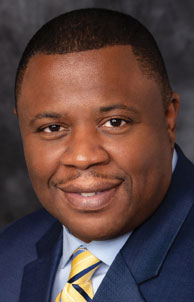
By Vaughn Wilson

Fortunately for me, I attended the old FAMU High School. Teachers such as Vivian Hobbs, Eileen Warner, Barbara Trueblood, Amos Lewis and Carolyn Darnell Ryals instilled in us a sense of purpose. People such as Matthew Estaras, Ozel Martin and Doris Medlock were no-nonsense when it came to teaching us to be good citizens. They poured into us the importance of helping carry the mantle for our race, reaching new heights and protecting the progress that had already been made.
Let’s be clear: This article is about those who did not vote. If you voted, the criticism is not aimed at you.
In Precinct 1303 in the Jackson Bluff area, only 92 votes were cast. In Precinct 2355, where voting took place at Jacob Chapel Church, only 63 votes were cast. Precinct 1362 in Woodville recorded just three votes.
Consider some key figures reflecting the economic state of America. Year-over-year core inflation is up 2.5 percent, food prices are up 3 percent, housing costs are up 3.2 percent and energy prices are up 14.7 percent.
Investment in public education is rapidly declining, unemployment is at 4.1 percent, and we have spent $37.5 billion on the war with Iran. The administration has requested an additional $67 billion.
How on Earth can anyone sit at home and refuse to make their voice heard? Public approval of the U.S. Congress hovers between 10 and 15 percent, while disapproval has reached as high as 86 percent. Just three days ago, Reuters reported that President Trump’s approval rating stood at 33 percent.
Disapproving of what is happening while doing nothing to effect change is unfathomable. Things never improve on their own. Things never change by themselves. Waiting for someone else to create change is like visiting the Wizard of Oz and asking him to fix everything. It is pure fantasy—real-world fiction.
Back to the discussion of FAMU High. In civics or history class, a teacher would sometimes roll a projector into the classroom, dim the lights and show us films. They were not Marvel or Disney movies. They were newsreels showing Black people being attacked by police dogs, beaten by police officers or members of the military, and blasted with high-pressure fire hoses.
Those Black people were not being disobedient. They were fighting for the right to vote—the right to have a say and the right for future generations to step behind the curtain and express their opinions.
To repay them by sitting comfortably in our air-conditioned homes is beyond insulting. Some people died while fighting for Black Americans to have the right to vote. Leaders such as the Rev. Dr. Martin Luther King Jr. were assassinated while advocating for voting rights. Medgar Evers was shot and killed in his driveway after fighting to integrate schools and secure civil rights.
Yet some of these same complacent individuals will attend city and county commission meetings and complain. Those complaints often fall on deaf ears because Black people have not demonstrated that they are a reliable voting bloc. Too many stay home. Already-thin efforts to court the Black vote are becoming even thinner because of our complacency.
Attorney Sean Pittman’s 2024 book, “Disaffected!,” should be a New York Times bestseller. The knowledge contained in his finely crafted work lays a foundation for Black people to begin exercising the power granted through the Voting Rights Act. In black and white, Pittman’s compilation clearly describes what is wrong with our community’s passive attitude toward voting.
One vote.
Since turning 18 in 1984, I have missed only one opportunity to vote. I was literally too sick to go. That commitment comes from watching our ancestors being sprayed with fire hoses powerful enough to break bones. I saw our people being attacked for marching for their rights. I saw sworn law enforcement officers batter citizens simply because they wanted the right to vote.
Today, however, a majority of eligible Black voters are sitting on their couches as the world passes them by.
We have enjoyed the benefits of voting because of the sacrifices others made for us. With all the attempts to weaken the Voting Rights Act, continued complacency could mean that the next generation will not have the same access we enjoy today.