
There are pieces of our history that endure because someone decided they were worth preserving. A picture tucked away in a family collection. A newspaper clipping that preserves a moment that might otherwise have been forgotten. A church program. A handwritten letter. An oral history. A book that helps a young person understand the people on whose shoulders they stand.
Individually, these things may seem small. Together, they tell the story of a people. If we do not intentionally preserve those stories, we risk losing not only documents and artifacts but also pieces of ourselves.
As president of the Friends of the African American Research Library and Cultural Center, I think about that responsibility often. Broward County is fortunate to have the African American Research Library and Cultural Center, an institution where African American history, culture, scholarship, and community converge. But having an institution dedicated to this work does not mean we can assume the work is taken care of. Preservation requires investment, advocacy, and a community that understands its history is worth protecting.
Our History Cannot Be Taken for Granted. Across generations, Black communities have worked to ensure that our contributions are documented, our voices are heard, and our experiences are recognized as essential to the American story. That work endures.
Who is collecting today’s history? Who is preserving the photographs, documents, and oral histories of the people shaping Broward County today? Who is ensuring that young people can access the books, archives, and primary sources that enable them to explore African American history on their own?
These are not questions only for historians, librarians, or scholars. They are questions for all of us.
When young people learn about the educators, entrepreneurs, activists, artists, clergy, business owners, and families who helped build Broward’s Black communities, they gain more than information. They gain context and connection.
They understand that the community they see today did not simply appear. People sacrificed, organized, built institutions, opened businesses, educated children, and created opportunities for future generations.
If we neglect to preserve those stories, we weaken that connection. Institutions need communities behind them. They do not remain strong simply because their buildings stand. They need resources, programming, growing collections, community participation, and people willing to advocate for them.
The Friends of AARLCC works alongside the library to support programs, exhibits, archives, special collections, research materials, and other resources. We raise funds, build partnerships, advocate, and help strengthen the connection between the institution and the community it serves.
But this work is bigger than any one organization. At a time when libraries, arts organizations, and cultural institutions compete for limited resources, we should resist the temptation to treat culture and history as optional whenever budgets tighten.
Once a collection is dispersed, a program disappears, or an important story goes undocumented, future generations inherit that absence. Preservation is an investment in the future. Historic preservation is not only about what happened decades ago. It is about what future generations will know.
The child walking into AARLCC today may become tomorrow’s historian, journalist, educator, entrepreneur, or community leader. A student may discover a historical figure whose story reshapes how they see their own possibilities. A family may uncover something about an ancestor they never knew. A researcher may find a document that adds an important chapter to our understanding of South Florida.
African American history should not be difficult to find. Our history deserves institutions capable of preserving it professionally and making it accessible to everyone. That requires shared responsibility.
Government has a role in sustaining libraries and cultural institutions, but it cannot be the only source of support. Corporations, foundations, businesses, philanthropists, and individuals also have a role.
Become a member. Visit the library. Bring your children and grandchildren. Attend programs. Donate. Volunteer. Advocate during funding decisions.
Most importantly, support these institutions before they are facing a crisis.
On October 31, Friends of AARLCC will host its 24th Annual Honoree Luncheon, a masquerade celebration themed “Grounded in Community: Honoring Those Who Brought Change.”
The luncheon will honor five South Florida leaders and generate support for the Friends’ continued work. But our mission goes far beyond one afternoon.
It is concerned with ensuring Broward County continues to have a place where African American history is researched, preserved, discussed, and shared. It means ensuring that young people encounter stories that reflect them. And it is concerned with ensuring that the people building today’s Broward become part of the historical record available to future generations.
Preserving our history is not someone else’s responsibility. It is ours.
If we don’t collect our stories, someone else may decide which ones are worth remembering. If we don’t protect our history, parts of it can disappear.
Our ancestors left us stories, institutions, and examples of what was possible.
What we protect today will determine what the next generation inherits.
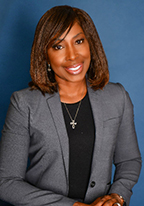
Luwando Wright is president of the Friends of the African American Research Library and Cultural Center (Friends of AARLCC). This community-based organization advocates for and supports AARLCC through fundraising, partnerships, programming, preservation initiatives, and public awareness. https://www.friendsofaarlcc.org/.