
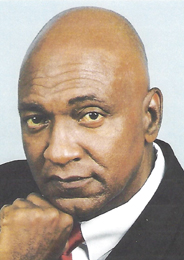
“Leaders when surrounded by sycophants who fear telling the truth to avoid confrontation or losing their position become human “paper Tigers” and an even greater threat than the enemy.” John Johnson II 09/02/26
By John Johnson II
America commands the world’s most technologically advanced military. Its aircraft carriers, bombers, missiles, and nuclear arsenal project extraordinary power. Yet an uncomfortable question deserves asking: Is America be-coming a paper tiger?
A paper tiger appears formidable but proves less effective when its strength is assessed. The phrase does not indict American troops, whose courage is unquestioned. It challenges the political leaders who decide when, where, why, and how to use military power.
America’s post–World War II record is complicated. The 1991 Persian Gulf War achieved its immediate objective. But Korea ended in an armistice; Vietnam with the fall of Saigon; Iraq with battlefield victory followed by prolonged instability; and the twenty-year Afghanistan war ended with the Taliban again in power. How can the world’s greatest military repeatedly demonstrate battlefield superiority without consistently securing lasting political outcomes?
Military superiority without strategic wisdom can become an illusion of invincibility.
History supplies a sobering contrast. The United States remains the only nation ever to have used atomic bombs in warfare, striking Hiroshima, and Nagasaki in 1945. The bombings demonstrated almost unimaginable destructive power and killed overwhelmingly civilian populations. Historians continue debating Truman’s decision and its role in ending World War II. But another question survives: Does the ability to destroy an adversary prove national strength, or does genuine strength require knowing when overwhelming power should never again become an option?
That distinction matters today. A credible threat of overwhelming force may deter an adversary more effectively than a weak display of force supported by an even weaker plan of attack. Once military force is employed without attainable objectives, however, the mystique of power can disappear.
Congress bears responsibility. Article I, Section 8 gives Congress the power to declare war. Yet
presidents of both parties have accumulated enormous latitude to initiate military action.
The paper-tiger label should not begin with America’s military.
It should begin with Congress.
Given the current prolonged conflict with Iran, Congress should demand defined objectives, realistic costs, casualty estimates, a withdrawal plan, and an explanation of what victory means.
America is not a paper tiger because it lacks destructive power. It risks becoming one when leaders confuse the ability to destroy with the ability to prevail.
The greatest military power should not demonstrate how quickly a nation can start a war, but by possessing the wisdom to know when not to start one. America’s war with Iran, Israel’s war with Hamas in Gaza, and Russia’s with Ukraine are all examples of powerful nations’ failure to exercise effective sustained diplomacy instead of resorting to senseless and endless warfare.
The world must now watch in living color the killings of tens of thousands of innocent children and civilians. Regrettably, the focus of concern is shared with running out of murderous weaponry rather than ending these wars.
Americans should imagine an endless 9/11attack each day against our nations and demand that the President honors his promise, “I’m not going to start a war, I’m going to stop wars.” Will he demonstrate the prudence required of a great leader? Or as the Commander-In-Chief, will he listen to his Generals rather than those who view wars as a video game?
Wars are far easier to launch than to end.