

By Elisabeth Campbell, Miami Times Staff Writer
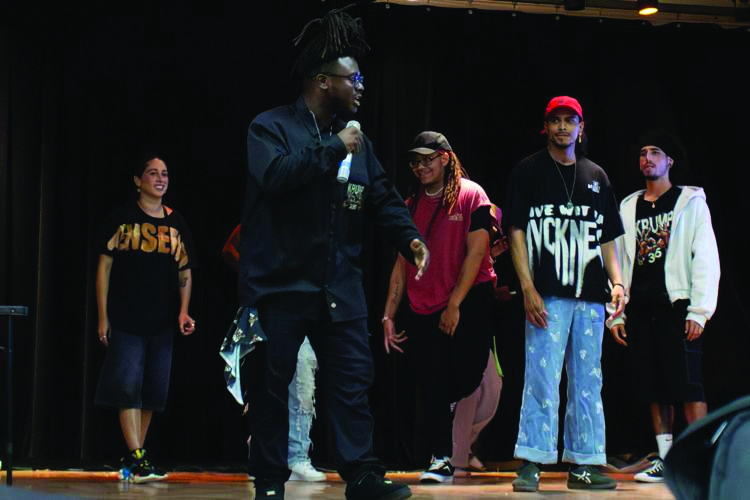
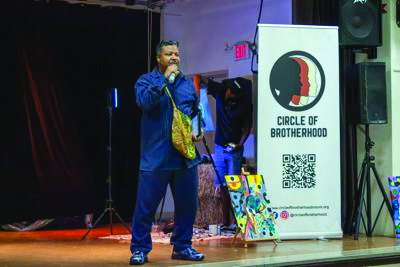
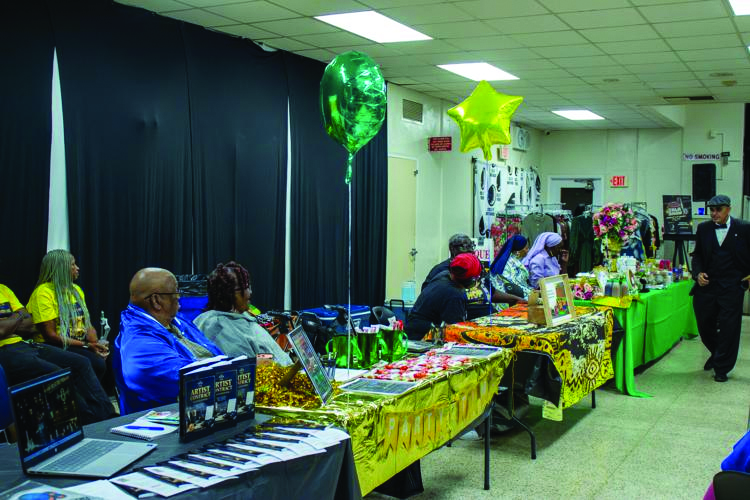
The third annual S.H.E.A.R. INC. Black Business Expo took place at the Dr. Dorothy Bendross-Mindingall Social and Economic Institute in Brownsville this past weekend, marking the start to National Black Business Month.
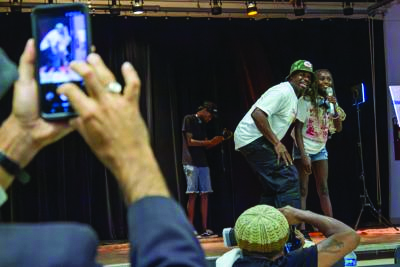
Building on the goal of highlighting Black entrepreneurs and connecting them with resources, this year’s mission expanded to include a Hip-Hop Summit featuring a panel of experts who spoke about the intersection of culture and commerce.
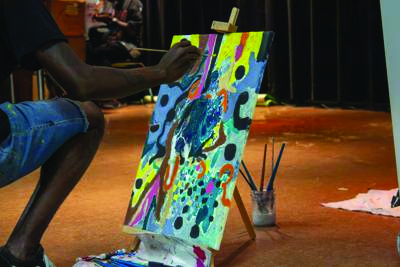
S.H.E.A.R. INC. — or Sharing Hope, Empowerment and Reaction — was founded on the belief that “people who have walked through addiction, incarceration and street life are uniquely equipped to lead others out of it,” according to CEO Anthony Durden. The dual purpose of the Aug. 8 event was to confront hip-hop’s complicated legacy while spotlighting opportunity for ownership in Black communities.
“Hip-hop is basically a cultural thing because it does not just identify with the music; it identifies with the lifestyle,” said Durden. “It deals with fashion. It deals with business.”
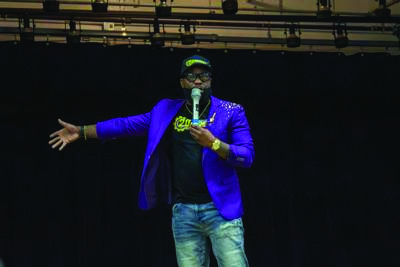
“We’ve birthed a lot of millionaires and music moguls out of the hip-hop culture who are still very successful,” he continued. “We just wanted to be able to connect all these things in terms of some of the pros and cons of the hip-hop industry and how it has impacted the Black community.”
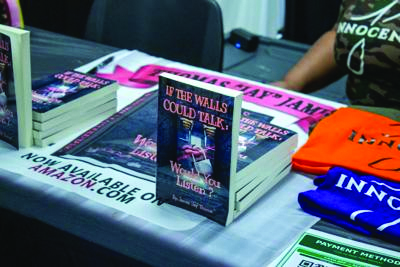
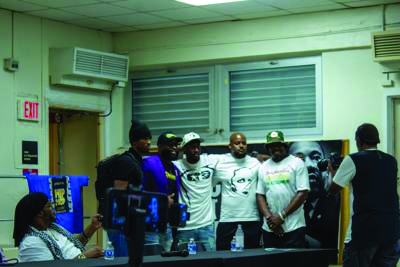
The expo brought together speakers, performers, community leaders, music executives, entrepreneurs and more. The panel, moderated by Circle of Brotherhood member Faisal X. Tavernier, touched on the impact of music and business on Black culture and identity.
“Hip-hop has grown into a trillion-dollar industry built almost entirely on Black creativity, Black struggle and Black influence,” said Tavernier. “The question we’re here to answer is simple and urgent: Who actually profits from it?”
Derrick 2.0, a motivational speaker and life coach with the Confident Voices Movement, spoke about what music meant to him growing up.

“Music was the voice for me,” he said. “Music was the window before there was YouTube, before there was Instagram. We listened to music to hear the community, hear how people lived. All they talked about was murdering and smoking weed, and it wasn’t even a thing of glorifying it; they were talking about things that they knew.”
Ruban Roberts, CEO of the professional development firm RER Consulting, echoed that sentiment.
“Hip-hop is that social commentary,” said Roberts. “It was one of the first ways that we could communicate what was happening in our community. What happened is that when the distributors and the labels got involved, they were the ones to influence the misogyny and the violence in the music. Why? They were also the owners of the prison systems.”
Other panelists, such as Dr. Tania Guerrier and author and mentor Shane “Zulu” Shepherd, spoke about the impacts of the music on Black children.
“I like rap music because that’s what I grew up on,” said Guerrier, a psychiatric mental health nurse practitioner. “However, I’m emotionally intelligent enough to know that I’m not going to act out what I’m hearing. What’s going on nowadays with these children is that they don’t know how to separate entertainment from reality.”
For Shepherd, it’s an even deeper reality.
“We have to go back to the root cause and say, how did we develop this appetite for murder and violence and killing and disrespecting Black women?” he asked. “If my appetite isn’t for that, I won’t listen. I think that we need to focus not so much on the artist, because a drug dealer is going to deal drugs if there’s a customer out there. We need to cut the demand for the supply.”
But there are struggles facing Black businesses today that extend beyond music culture and branding, and not just in Miami-Dade County. Durden believes that Black entrepreneurs are still trying to make adjustments to the current presidential administration’s rollback of financial resources that were once coming into their communities.
“A lot of our Black businesses have been crippled because the lack of funding,” said Durden. “Our organization in particular has dealt with millions of dollars’ worth of cuts from this administration. We had to lay off maybe half of our staff. We had to furlough them because we didn’t have the funding.”
Programs with outreach to jails and prisons, local schools, homeless shelters and rehabilitation centers took a significant hit from the funding cuts. But the Black Business Expo and Hip-Hop Summit explored how to persevere despite the financial hurdles, as well as how to address dangerous cultural norms that affect the local community.
“My [goal for] this event is to get the people in the space, create a synergy in the space, share information, share knowledge and share expertise,” said Durden. “This is more of a conscious and more positive accountability event that’s going to hold people accountable for some of the things that we’re disseminating over the airwaves. We have to address issues and speak truth to power.”
He emphasized the need to find solutions to the problems that arise in the Black community, partnering with local government and officials to make sure resources are coming into the neighborhoods that need it the most. The Black Business Expo and Hip-Hop Summit was, for him, a “historic event.”
“Miami is one of the entertainment capitals of this country,” said Durden. “But when it comes down to local events in the community, we really don’t have a lot of sit-down, informal, communicative events that are very pertinent to our neighborhoods… When there are problems in our community, we try to find the solutions.”