
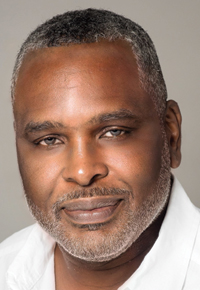
By Perry Busby
When I was a youngster, shopping for clothes was always a stressful event. I was big for my age, at least that’s the term my mother, and a few other kindhearted grownups, used to describe my physique. However, the kids at school weren’t quite so nuanced in their assessment. According to them, I was fat.
Physical descriptions aside, trips to the department store created a dilemma for me and my parents. On one hand the clothes designed for my age group were too small, and the clothes I could wear weren’t always age appropriate. Montgomery Wards seized on the opportunity — evidently, my parents and I weren’t the only ones with this problem — and created a Big Boys department for us hard to fit, rotund little fellas.
Looking back on those times it’s easy to draw a correlation as why many eligible voters don’t participate in U.S. elections. You see, voting, particularly the process by which we cast a ballot, is more about uniformity than variety. Consider the fact that after a campaign season of being inundated with news and videos espousing the differences between each candidate’s ideology and their unique leadership qualities, voters are then presented with a process that offers very few options to express their voice.
There is more than a hint of irony in this, don’t you think?
No matter which county you live in — whether it’s a densely populated area like Broward or Miami-Dade, or a sparsely populated county like Liberty or Lafayette, casting a ballot in Florida is pretty much the same, give or take a few cosmetic differences here and there. The same can be said for many other states whose legislatures and state election administrators are resisting to adopt pro-voter policies.
The failure to expand voting opportunities, especially in burgeoning areas with diverse demographics, is seen as one of the key contributors to our current polarized state of governance. It is also a cause of the growing distrust in our election process.
Since 2000, voter participation in the U.S. consistently ranges – between 54% and 64% during presidential elections, while midterm elections have routinely seen smaller turnouts between 41% and 48%. For a better example of this lack luster participation, you need not look any further than the 2016 presidential election, where close to 92 million registered voters failed to cast a ballot, and the 2014 midterm elections where a whopping 142 million registered voters did not participate, making it the lowest election turnout in 72 years. However, signs point to a slightly upward shift as the 2018 midterm election is projected to have the highest voter turnout in history, with approximately 116 million ballots cast, or 49.3% registered voter participation.
As the old saying goes, all politics are local. However, a closer look at home reveals even more disturbing results. Local elections, particularly those held in odd years, are experiencing least voter participation. Turnout in these elections, including those in major metropolis, average only 15% voter participation. To state it more clearly, 85% of all U.S. cities are governed by leadership that is determined by a little more than a tenth of the residents, most of which are 50 years and older.
For our system of government to thrive and provide equitable representation, all eligible Americans must have an opportunity to vote in a process that is fair, accessible and secure. Federal and state election administrators can, and should, build an election system that has pro-voter policies and practices that will drive participation by all eligible voters.
This begins with eliminating barriers to voter registration and voting and implementing reforms that ensure all ballots cast will be secured and counted. Among the list of initiatives are:
- Automatic Voter Registration (AVR). AVR would create a shift in the voter registration paradigm from one of voters choosing to opt-in, to one that requires them to opt-out. According to the Center for American Progress, if every state implemented AVR it would result in approximately 22 million voters added nationwide within the first year.
- Same-Day Voter Registration (SDVR). SDR, which should also include registration on election day, is a viable alternative for states unwilling to implement automatic voter registration. Analysis show states that have implemented SDR policies, consistently have the highest participation in the country. Election analysts estimate that if all states without SDVR had passed and implemented the policy, there could have been approximately 4.8 million more voters in the 2016 elections.
- No-excuse absentee voting. Enabling voters to request an absentee ballot without requiring an excuse appears to be a viable option for voters who are highly mobile (i.e. truckers, airline attendants) or work non-traditional hours. Projections show that no-excuse absentee voting could potentially increase voter participation by about 3% over time.
- Strengthen civics education in schools and in communities. Eligible citizens are much less likely to engage in elections or government if they do not understand them. A 2016 survey found that only 26% of Americans could name all three branches of government, a decline from past years. Lack of understanding—including that of institutional checks and balances and mechanisms for holding government accountable—contributes, at least in part, to rising distrust in government and elected bodies. According to a 2017 survey by The Pew Charitable Trusts, only 20% of Americans trust the government to do what is right always or most of the time. Public distrust and alienation lead to a vicious cycle of bad government representation. If people do not trust democratic institutions or understand political processes, they will not show up to the polls—a place where they could contribute to removing bad actors from office and electing responsive representatives.
These pro-voter policies are mutually dependent and reinforcing. For example, the effectiveness of more convenient voting options—including early voting and no-excuse absentee voting—depends on eligible voters being registered. The additional convenience of early voting is worthless to a potential voter who finds that he or she isn’t registered, and therefore unqualified to vote. At the same time, the benefits of modernizing registration cannot be fully realized if voters do not have ample opportunities to exercise their civic duty. Moreover, these policies often complement each other. Whereas early voting on its own has been shown to increase participation by about two percent-four percent, early voting combined with same-day voter registration has increased voter participation by as much as 10% in some counties.
Our state is continually growing and becoming more diverse. Nationally, we are often seen as a battleground or swing state. Armed with these facts, concerned Florida residents must begin to advocate for pro-voter policies that are more suitable to these changes while ensuring the goal of counting every vote is achieved