
By Bobby R. Henry, Sr. Publisher, Westside Gazette, Past Chairman, National Newspaper Publishers Association
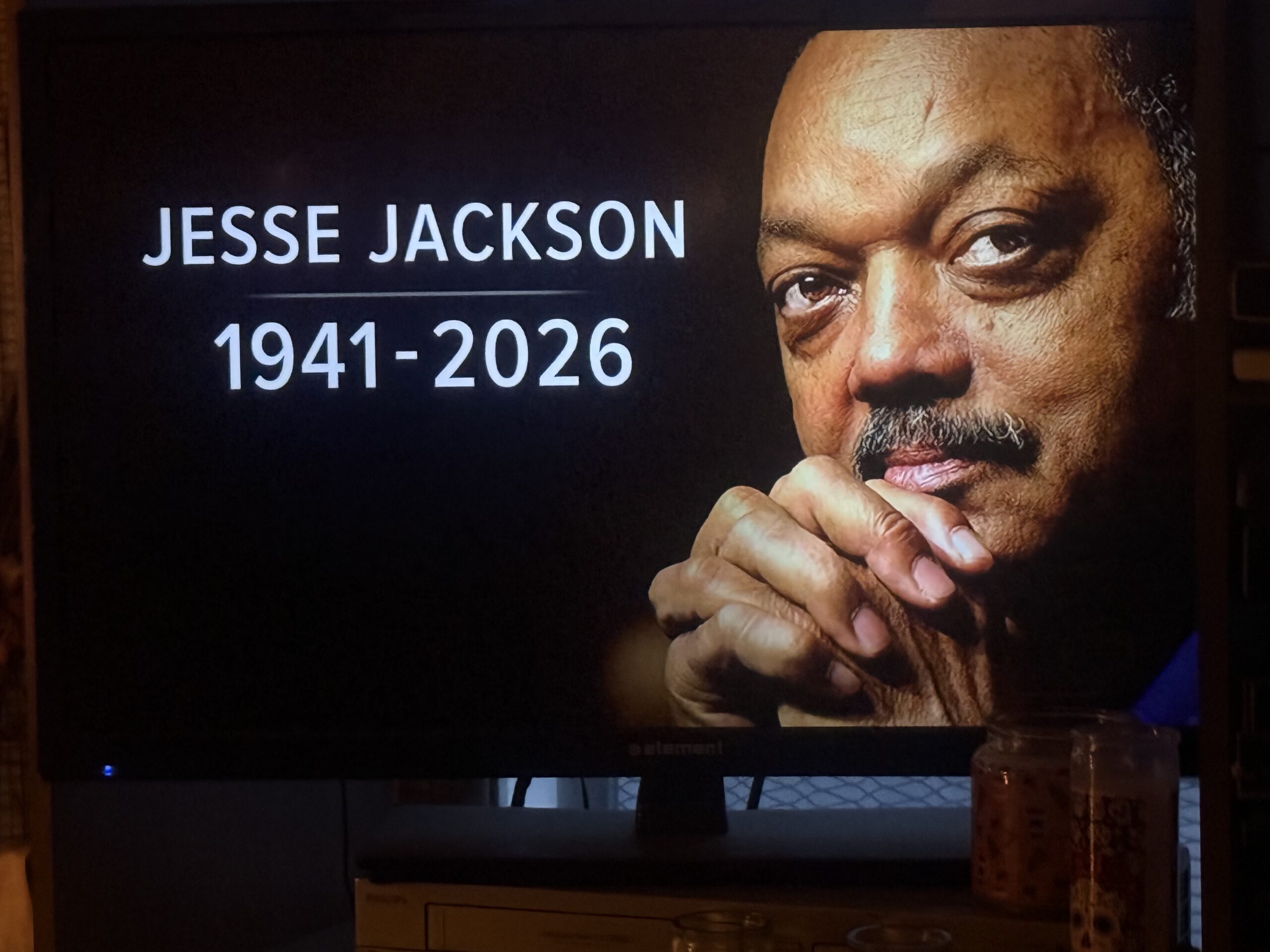
The Reverend Jesse L. Jackson Sr. has transitioned from labor to reward leaving behind a nation forever marked by his courage, cadence, and conviction.
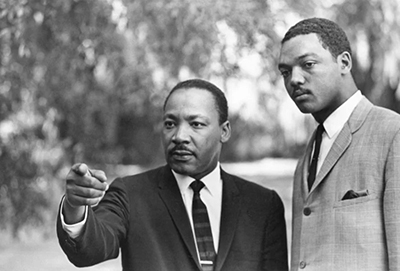
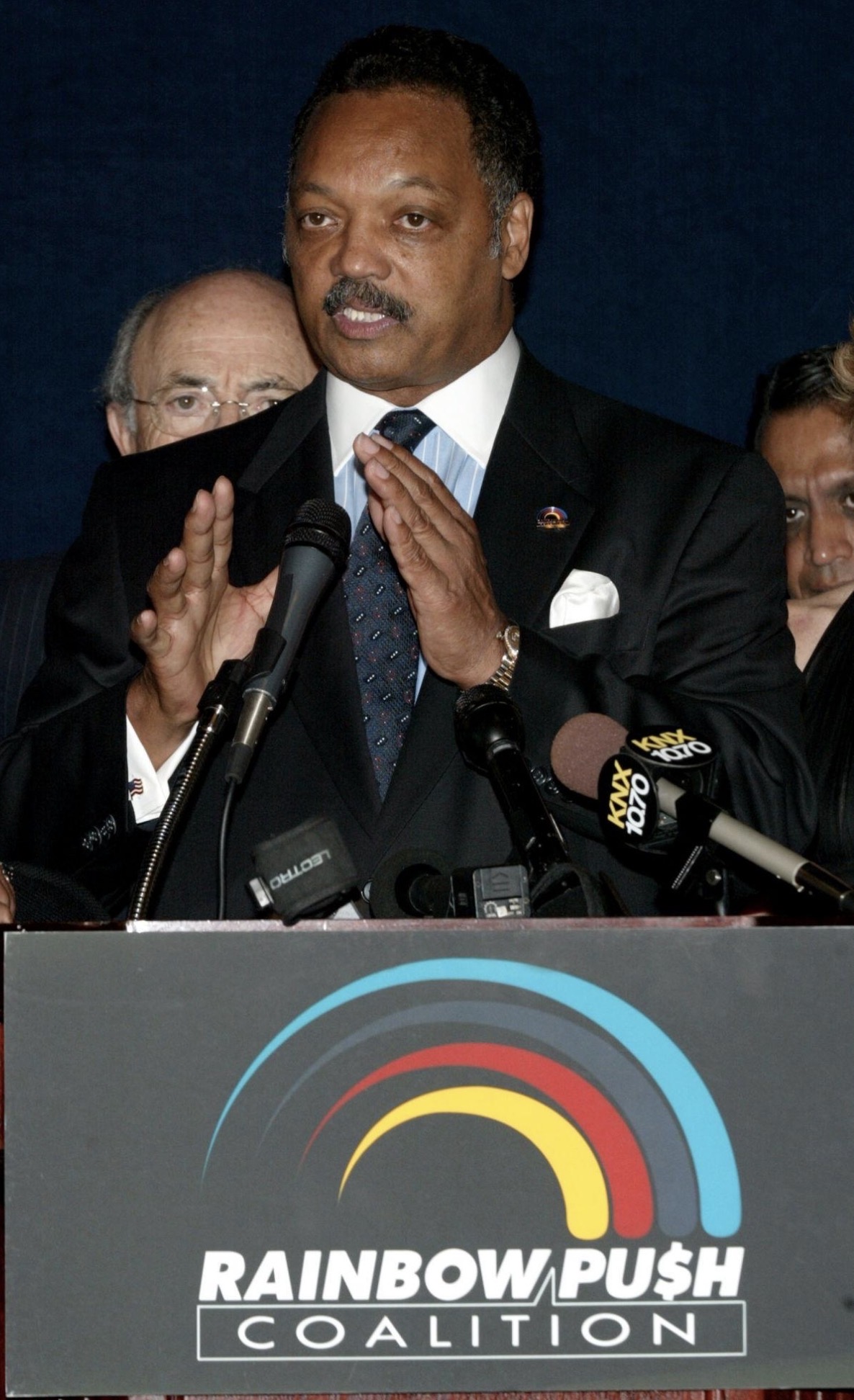
For decades, Reverend Jackson stood at the intersection of faith and freedom, politics and protest, hope, and hard truth. Whether marching alongside Dr. King, organizing boycotts, launching Rainbow PUSH, or running for President of the United States, he never stopped reminding America of its unfinished promise.
And through it all, one phrase became both proclamation and prophecy: “I am somebody.”

Those three words did more than uplift children in classrooms. They restored dignity to sanitation workers, domestic workers, steel workers, farm workers, and those too often pushed to the margins of American life. “I am somebody” was not a slogan; it was a shield. A declaration of worth in a world determined to deny it.
An Omega Man in the Struggle
Reverend Jackson was also a proud member of Omega Psi Phi Fraternity, Inc., and he carried its principles not as decoration, but as discipline.
Omega’s four cardinal principles: Manhood, Scholarship, Perseverance, and Uplift were evident in every chapter of his public life.
Manhood meant moral courage in moments of national crisis. Scholarship meant preparation before proclamation. Perseverance meant running for President not once, but twice — expanding the electorate and shifting the political landscape. Uplift meant lifting the least of these, whether through voter registration drives, economic boycotts, or international diplomacy.
When he declared, “I am somebody,” it echoed Omega’s insistence that Black men must know their worth in a society that often questions it. His fraternity was not about letters stitched on a jacket; it was about a lifetime stitched into service.

Omega men have long stood on the front lines of justice. Reverend Jackson widened that front line to include the entire nation.
A Bond with the Black Press
Reverend Jackson understood the power of the Black Press. He did not just speak through us he spoke with us.
The National Newspaper Publishers Association was not merely an audience for him; it was family. He knew that the Black Press has been the conscience of this nation for nearly two centuries carrying the truth when others would not print it.
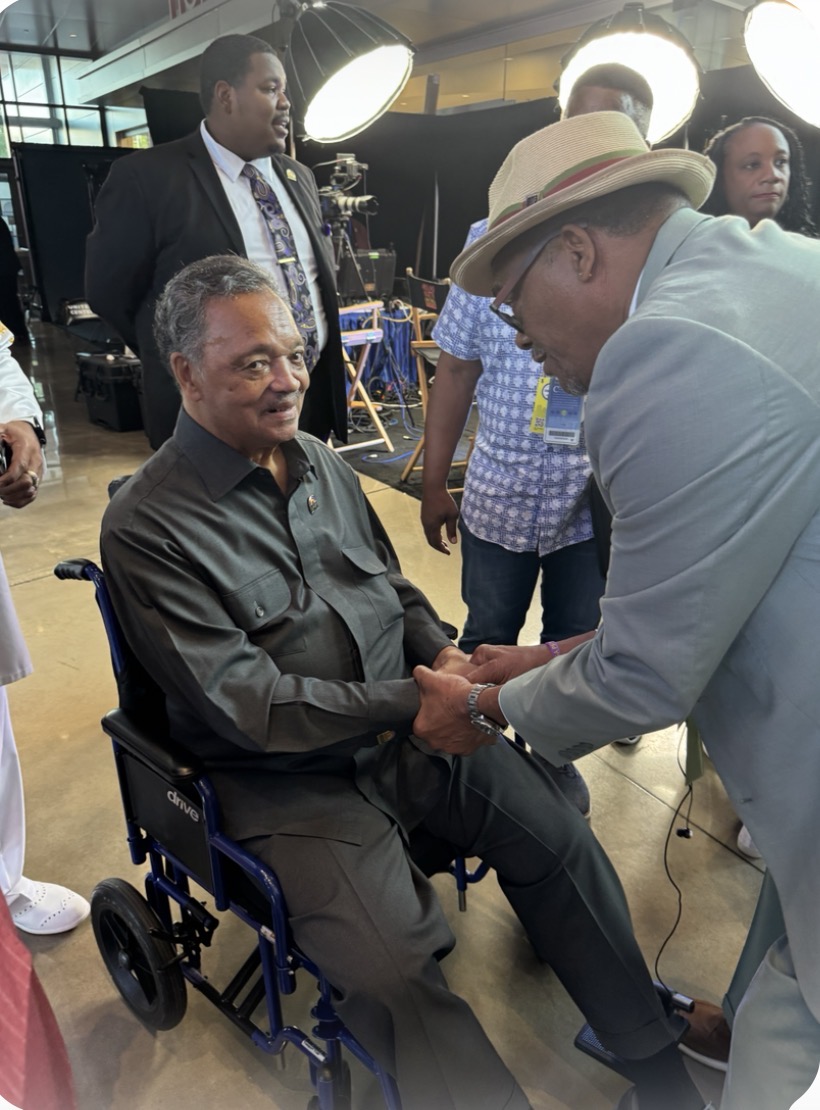
I recall moments when he would lean over, clasp your hand, and say, “Keep telling the story. Our people must know.” Those were not casual remarks. They were marching orders.
At NNPA conventions and gatherings, Reverend Jackson did not posture he poured. He encouraged publishers to be bold. To be unapologetic. To remain rooted in our mission to inform, educate, and agitate when necessary. He reminded us that Frederick Douglass used the press as a weapon of liberation and that the modern Black publisher must do no less.
Those were not just professional exchanges. They were fraternal bonds forged in struggle, strengthened in purpose.
Faith, Fire, and Political Footprints
From his early days in the Southern Christian Leadership Conference to his historic presidential campaigns in 1984 and 1988, Reverend Jackson shifted the political landscape. He expanded the electorate. He registered voters. He brought farmers, laborers, students, and the dispossessed into the democratic conversation.
He dared to say America belonged to all of us. He dared to run. He dared to win delegates and shake conventions. He dared to build what he called a “Rainbow Coalition,” insisting that poor whites, Blacks, Latinos, Native Americans, Asian Americans all of God’s children had common cause in justice.
That vision still challenges us today.
The Man Behind the Movement
Beyond the microphone, there was the man. A preacher’s cadence. A strategist’s mind. An Omega brother’s embrace. He laughed loudly. He prayed deeply. He forgave often. And he never stopped believing in redemption both personal and national.
Many of us in the Black Press experienced his personal warmth. He remembered names. He remembered struggles. He remembered who had stood firm when it was not fashionable to do so.
That is what made our bond fraternal. We were not simply covering him; we were walking alongside him.
His Legacy Now Rests with Us
As we reflect on his passing, we must also reflect on our assignment.
Reverend Jackson often reminded young people: “If my mind can conceive it, and my heart can believe it, then I can achieve it.”
But his more urgent message echoes still: “I am somebody.”
In an era where history is challenged, voting rights are contested, and truth is diluted, those words matter more than ever.
Reverend Jessie L. Jackson, Sr.’s physical voice may be silent, but his moral voice remains thunderous.
To the family of this Omega man, to the Rainbow PUSH family, to the civil rights community, and to the brotherhood of Omega Psi Phi Fraternity, Inc. we extend our deepest condolences.
And to my brothers and sisters in the NNPA and the Black Press of America: The baton has been passed.
Let us carry it with the same courage. The same clarity. The same conviction.
Because if he taught us anything, it is this: We are somebody. And our story must always be told.