
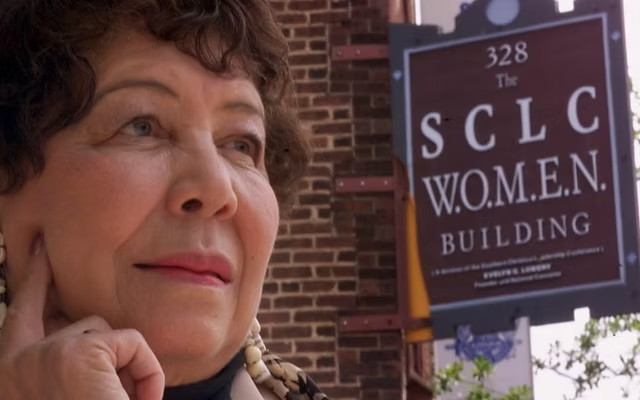
September is recognized nationally as Suicide Prevention Month and sclc/W.O.M.E.N., Inc. is calling on families, faith communities, civic organizations, schools, workplaces, and community leaders to make suicide prevention a year-round commitment by paying attention to those who may be struggling and ensuring that people know where to turn for help.
Atlanta/Georgia/sclc/W.O.M.E.
“These numbers represent far more than statistics,” said Leon Kennedy III, Communications Director for sclc/W.O.M.E.N., Inc. “Behind every number is a person—a mother, father, child, grandparent, friend, neighbor or colleague. Suicide prevention requires us to see the person behind the statistic and recognize that sometimes the people who appear to be the strongest are the very people who need someone to check on them.”
Kennedy emphasized that suicide prevention begins with connection. “Sometimes the most important question we can ask is not simply, ‘Are you okay?’ but ‘How are you really doing?’” Kennedy said. “We have to be willing to listen without judgment, take people seriously when they tell us they are struggling, and help connect them with the support they need.”
Recognizing the Warning Signs
sclc/W.O.M.E.N., Inc. encourages members of the community to become familiar with potential warning signs of suicide. These may include:
-
Talking about wanting to die or expressing thoughts about suicide;
-
Expressing feelings of hopelessness, worthlessness, being trapped, or being a burden to others;
-
Withdrawing from family, friends, church, school, work, or community activities;
-
Significant changes in mood or behavior;
-
Increased use of alcohol or drugs;
-
Giving away important possessions or putting personal affairs in order;
-
Saying goodbye to loved ones in an unusual or concerning way;
-
Experiencing a major loss, trauma, relationship crisis, financial crisis, or other overwhelming circumstance; and
-
A sudden and unusual change from extreme distress to apparent calm.
“One sign alone does not necessarily mean that someone is suicidal, but a significant change in someone’s behavior should not be ignored,” Kennedy said. “If something doesn’t seem right, reach out. A conversation may not solve everything, but it can let someone know that they are seen, that they are valued, and that they are not alone.”
How Communities Can Help
sclc/W.O.M.E.N., Inc. encourages individuals who are concerned about someone to begin a compassionate conversation, listen without judgment, and help the person connect with appropriate professional support.
People can say:
“I’ve noticed that you’ve seemed different lately. How are you really doing?”
“You seem like you’re carrying a lot. I’m here if you want to talk.”
“I’m glad you told me. Let’s get you some help.”
“If someone tells you they are thinking about suicide, take them seriously,” Kennedy said. “You don’t have to be a mental-health professional to care. You can listen. You can stay with them. You can help make a phone call. You can help them find a counselor, physician, crisis service, faith leader, family member, or other trusted source of support.”
988 Suicide & Crisis Lifeline
Individuals experiencing emotional distress or concerned about someone else can call or text 988 to reach the 988 Suicide & Crisis Lifeline. The service is available 24 hours a day, seven days a week.
People can also access the 988 Lifeline online.
For immediate emergencies or situations involving an immediate threat to life, call 911 or go to the nearest emergency department.
Additional resources include the Substance Abuse and Mental Health Services Administration (SAMHSA) National Helpline at 1-800-662-HELP (4357) and the Black Mental Health Alliance, which provides mental-health education and culturally responsive resources for Black communities.
A Legacy of Caring for the Whole Community
For sclc/W.O.M.E.N., Inc., recognizing Suicide Prevention Month is part of a much broader tradition of community service and advocacy.
Founded in 1979 by the late Dr. Evelyn G. Lowery, sclc/W.O.M.E.N., Inc. has a longstanding history of addressing issues affecting women, children, families, and communities, including health and welfare, education, human rights, family life, youth development, substance abuse, domestic violence, and other challenges affecting the well-being of individuals and families.
“Our history teaches us that human rights and community service are about caring for the whole person,” Kennedy said. “The legacy of Dr. Evelyn G. Lowery and the women who have carried this work forward reminds us that we cannot separate social justice from human dignity, health, family, and community well-being.”
Kennedy, who is the grandson of Dr. Evelyn G. Lowery and Rev. Joseph Lowery, said recognizing Suicide Prevention Month carries a particularly personal meaning for him.
“As the grandson of Evelyn Lowery, I understand that carrying on my grandmother’s legacy is not simply about remembering what she accomplished, it is about continuing the work of caring for people and strengthening our communities,” Kennedy said. “The women who stood beside her understood that service means responding to the needs of our communities, especially when people are hurting or vulnerable. By bringing greater awareness to suicide prevention, we are continuing that tradition of service and carrying forward the legacy of my grandmother and the courageous women of sclc/W.O.M.E.N., Inc.”
Kennedy said that same philosophy applies to suicide prevention. “Caring for our communities means caring when someone is hurting,” Kennedy said. “It means making room for conversations about mental health. It means replacing stigma with compassion and isolation with connection. And it means reminding people that asking for help is not a sign of weakness.”
A Call to Check on One Another
sclc/W.O.M.E.N., Inc. is encouraging individuals and organizations to use September as an opportunity to make suicide prevention part of their ongoing community conversations.
“Check on your people,” Kennedy said. “Call the person you haven’t heard from. Reach out to the young person who has withdrawn. Check on the elders who may be isolated. Ask the person who is always taking care of everybody else how they are doing. Sometimes one conversation can open the door to help.”He added, “We bring this message to our community because we honor you, we value you, and we believe every life is worthy of care, dignity, compassion, and hope.”
sclc/W.O.M.E.N., Inc. encourages everyone to remember throughout Suicide Prevention Month and beyond: You matter. Your life matters. And you do not have to face difficult moments alone.