
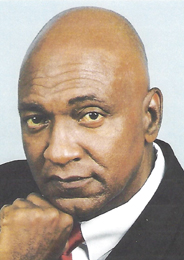
“Only Supreme court Justices and Congresspersons consumed by racism, greed, a lust for power, and unaware of the curse of the doubled-edge sword would willfully concede their powers to a president.” John Johnson II 07/22/26
By John Johnson II
An ancient proverb warns that a double-edged sword wounds not only its intended target but also the one who wields it. Critics and constitutional scholars increasingly invoke that metaphor to describe what they view as the evolving relationship between the Supreme Court and the Republican-controlled Congress. They argue that, by gradually conceding portions of their constitutional authority to the executive branch, both institutions have helped create what some describe as an “Imperial Presidency”—one possessing powers that now threaten not only America’s constitutional democracy but also the very institutions that helped create it.
According to these critics, the strategy was never simply about empowering one president. Rather, they contend it reflected a broader political calculation that an increasingly powerful executive could accomplish policy objectives that might otherwise encounter resistance through the normal legislative process. Among the objectives critics identify are efforts to roll back diversity, equity, and inclusion initiatives, reduce employment opportunities designed to benefit Black Americans and other historically marginalized groups, restrict protections affecting immigrants and LGBTQ individuals, and reshape women’s reproductive rights. They argue that bypassing traditional legislative checks has become a political strategy for advancing a partisan agenda. Could today’s political advantage become tomorrow’s constitutional disaster?
Legal commentators point to recent Supreme Court decisions expanding presidential immunity for certain official acts as another significant step in this constitutional evolution. Critics argue that these decisions, coupled with what they describe as congressional reluctance to exercise aggressive oversight, have accelerated the concentration of executive power. Ironically, they contend that the very “Imperial President” they sought to create now wields the constitutional double-edged sword against its creators. They point to instances in which the President has publicly criticized or threatened Supreme Court justices whose decisions displeased him and has similarly directed sharp public attacks toward Republican lawmakers who opposed legislation or policies he favored. When power begins intimidating its own allies, who truly controls the government?
Critics further argue that the Senate’s consideration of Todd Blanche for Attorney General illustrates this constitutional dilemma. They contend that, if confirmed, Blanche would remain closely aligned with the President’s priorities, further strengthening executive influence over an office historically expected to exercise independent legal judgment. Critics argue that confirming him despite those concerns would demonstrate that certain senators have failed to recognize the “curse of the double-edged sword.” In their view, every additional transfer of authority from Congress to the executive risks reducing legislators from independent constitutional actors to little more than political rubber stamps. They argue that members of Congress once retired each evening possessing constitutional powers equal to those of the President but now awaken each morning increasingly behaving as presidential puppets rather than equal partners in government.
Yet critics emphasize that this constitutional story need not end this way. The Framers deliberately created three co-equal branches because they understood that concentrated power inevitably invites abuse. Congress retains the constitutional power of the purse and may refuse appropriate funding for executive initiatives it opposes, including military operations or expanded immigration enforcement. The House of Representatives retains the authority to impeach a president, while the Senate possesses the constitutional authority to convict and remove one from office when warranted under the Constitution. Likewise, the Supreme Court retains the responsibility to interpret the Constitution independently, free from political intimidation or personal loyalty.
A CONSTITUTIONAL OATH IS NOT A CEREMONIAL PROMISE—IT IS A SACRED COVENANT WITH THE AMERICAN PEOPLE. SUPREME COURT JUSTICES AND MEMBERS OF CONGRESS MUST RECLAIM THE POWERS ENTRUSTED TO THEM BY THE CONSTITUTION, DEFEND THE SEPARATION OF POWERS ENVISIONED BY THE FOUNDING FATHERS, AND NEVER WILLFULLY SURRENDER THOSE POWERS TO ANY PRESIDENT, REGARDLESS OF PARTY, PERSONAL LOYALTY, OR POLITICAL CONSEQUENCE. HISTORY WILL NOT ASK WHETHER YOU WERE REPUBLICANS OR DEMOCRATS; IT WILL ASK WHETHER YOU HAD THE COURAGE TO DEFEND THE CONSTITUTION WHEN IT NEEDED YOU MOST.
The curse of the double-edged sword, critics conclude, is not irreversible. The Constitution has already provided a remedy. What remains uncertain is whether the Supreme Court and the Republican-controlled Congress possess the courage, institutional integrity, and constitutional commitment to reclaim the powers entrusted to them by the Founding Fathers. Will history remember them as guardians of constitutional liberty—or as the architects of their own constitutional surrender?
YOU ARE THE JUDGE!