
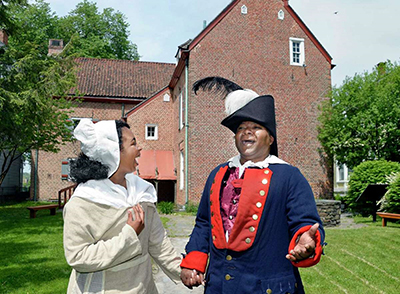
Pinkster was brought to the region in the 17th century and reclaimed by enslaved people
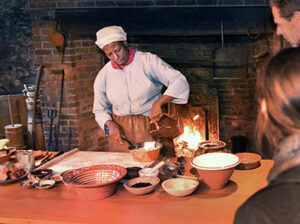

(Source Hudson Valley// Culture)
American history. What’s the oldest such holiday? It’s actually Pinkster — originally a Dutch celebration that was brought to the Hudson Valley in the 17th century and morphed into the most treasured festival of the year for enslaved people and their descendants.
Pinkster is shortened from Pinksteren, the Dutch word for Pentecost. It was an ancient religious and social holiday, a three- to five-day celebration that began the Monday following Pentecost Sunday. Colonial New Netherland continued the holiday, and during this time, slave owners — yes, the Dutch had a slave society, too — allowed their slaves some time to reunite with friends and family members, some of whom lived far away, to celebrate, play games, dance to African music, trade goods and, of course, drink.
“For rural captives in particular, who were often isolated from larger African communities, Pinkster became the most important break in the year,” notes Historic Hudson Valley, a nonprofit that interprets and promotes historic landmarks of national significance in the region.
Even after the colony came under English rule, Pinkster continued among the Dutch who remained and, even more so, the Africans in the region. By the early 1800s, Pinkster was more African than Dutch, so infused with its music, food and customs that it was considered an African American holiday. Large celebrations were held throughout the Hudson Valley and in New York City. On Albany’s Pinkster Hill, now home to the state Capitol, locals built African style shelters out of scrub brush to house attendees who had traveled from far and wide to get to the festival.
Both enslaved and freed men and women set up markets, selling berries, herbs, oysters, flowers (particularly azaleas, which were known as “pinxter flowers”) and other goods. There were traditional African drum circles and dances with names like the “jig,” “breakdown” and “double shuffle” melded both African and European steps with new moves that “were the forerunners of tap and break dancing,” according to History Hudson Valley. Celebrants young and old played games and sports — Mancala, Nine-Men’s Morris, Draughts (checkers), marbles, cards, tag and wrestling. And there was plenty of drinking.
In Albany, a local eminence known as King Charles ruled Pinkster around the turn of the 19th century. Born in Angola and enslaved by the mayor of Albany, Charles was “tall, handsome, an athletic and tireless dancer, and a gifted speaker,” according to Historic Hudson Valley. As the master of ceremonies, he was responsible for directing the event and “keeping up the spirits of participants during the long sessions of drumming and dancing that crowned the celebration,” which attest to the survival of West African musical traditions.
If all of this — the music, dancing, drinking, games, and faux royalty — sounds familiar, it should: Mardi Gras, a better-known version of this party, also was transformed from a white Christian religious holiday to a roaring party by Africans and their descendants, who needed and forged a rare and welcome break from their otherwise horrific lives.
Pinkster “by consent had been made a holiday time for the Blacks, and they enjoyed it in a good, old fashioned measure of hilarity and carousing,” the Troy Daily Times reported in 1874. But by then it was a thing of the past. Slave rebellions in the Caribbean during the mid- to late-1700s and another in Louisiana in January 1811 frightened local slave owners, so they doubled down on cruelty.
In April 1811, Albany banned Pinkster, declaring that “no person shall erect any tent, booth or stall within the limits of this city, for the purpose of vending any spirituous liquors, beer, mead or cider, or any kind of meat, fish cakes or fruit, on the days commonly called Pinxter.” In addition, it was illegal “to collect in numbers for the purpose of gambling or dancing, or any other amusements, in any part of the city, or to march or parade, with or without any music under a penalty of ten dollars or confinement in jail.” By the 1820s, it was mostly lost to history.
Until recently. Though Albany has held the Dutch version of Pinkster for many years, it wasn’t until 2011 that the city symbolically lifted the then-200-year-old ban on its African heritage. There are now several Africa-centric celebrations held at various locations throughout the region, including Philipsburg Manor in Sleepy Hollow, the Old Dutch Church in Kingston, and the Schuyler Mansion in Albany.