Close Menu
The Westside GazetteThe Westside Gazette
    Facebook X (Twitter) Instagram
    • About Us
    • Contact
    • Media Kit
    • Political Rate Sheet
    • Links
      • NNPA Links
      • Archives
    • SUBMIT YOUR VIDEO
    Facebook X (Twitter) Instagram
    The Westside GazetteThe Westside Gazette
    Advertise With Us
    • Home
    • News
      • National
      • Local
      • International
      • Business
      • Releases
    • Entertainment
      • Photo Gallery
      • Arts
    • Politics
    • OP-ED
      • Opinions
      • Editorials
      • Black History
    • Lifestyle
      • Health
      • HIV/AIDS Supplements
      • Advice
      • Religion
      • Obituaries
    • Sports
      • Local
      • National Sports
    • Podcast and Livestreams
      • Just A Lil Bit
      • Two Minute Warning Series
    The Westside GazetteThe Westside Gazette
    You are at:Home » This Is How Latin America Receives the Three Wise Men
    News

    This Is How Latin America Receives the Three Wise Men

    January 4, 20214 Mins Read12 Views
    Facebook Twitter Pinterest Telegram LinkedIn Tumblr Email Reddit
    Share
    Facebook Twitter LinkedIn Pinterest WhatsApp Email
    Advertisement

    Children across Latin America enthusiastically await Jan. 6, or the Epiphany, known in Latin America as “Día de Los Reyes Magos” (The Day of the Wise Men). Each year, on this date, the Three Wise Men take a page out of Santa’s book and leave gifts and toys for all the good boys and girls, who enjoy the day eating Rosca de Reyes. It is a tradition that began with the conquest of Latin America, the primary purpose of which was to evangelize natives.

    In Latin America, it is commonplace to see children writing letters for Melchior, Gaspar and Balthazar, in which they ask for toys. These Wise Men are the same who traveled to Bethlehem to witness the birth of Jesus Christ. 

    How can a child send a letter to the Wise Men?

    In Mexico and Argentina, children put their letters in their everyday shoes, while kids in Puerto Rico go to their local parks searching for leaves of fresh grass to put in a shoebox at the foot of their beds. The logic behind the Puerto Rican tradition is to allow the Wise Men’s animals — a camel, a horse, and an elephant— to eat something during their long journey.

    “For me, someone who enjoyed the festivity while a kid and now is a parent, I feel I must continue the tradition,” said Andrés Utrera Jiménez, a Mexican nutritionist and father of two children. “I know my children will make their letters and put them in their shoes. I also encourage them to leave cookies out for the Wise Men, just like my parents taught me many years ago. I teach them this so that, when they become parents themselves, they give their children the same happiness that they received from me, and that I got from my parents.”

    The Three Kings bring gifts to Baby Jesus at the Winterhall Players’ performance of The Nativity in All Souls Church, in London, England. *** Los Reyes Magos llevan regalos al Niño Jesús en la representación en una iglesia de Winterhall, cerca de Londres. (Mary Turner/Getty Images)

    No more presents, just celebrations

    However, not all Latin American countries celebrate this event with gifts. Paraguayans instead celebrate “Easter of the Blacks” on Jan. 6, a local celebration that started when Paraguay was still a Spanish colony. Thus, instead of gifts, people commemorate the Three Wise Men via dancing in the streets, the banging of drums, fun and colorful characters.

    Just like in Paraguay, Peruvians do not celebrate the day by giving children gifts. Instead of the Día de Los Reyes Magos, they celebrate “Bajada de Reyes” (Wise Men Descent), during which families get together once more and dismantle the Nativity Scene they put up in December.

    “In my humble opinion, I think that no matter which country we are from, we should not let die the original tradition,” said Andrés Utrera. “It is a good tradition because it unites and fills us with joy; that is why it has endured and the reason why we must guide the younger generations to continue with it.”
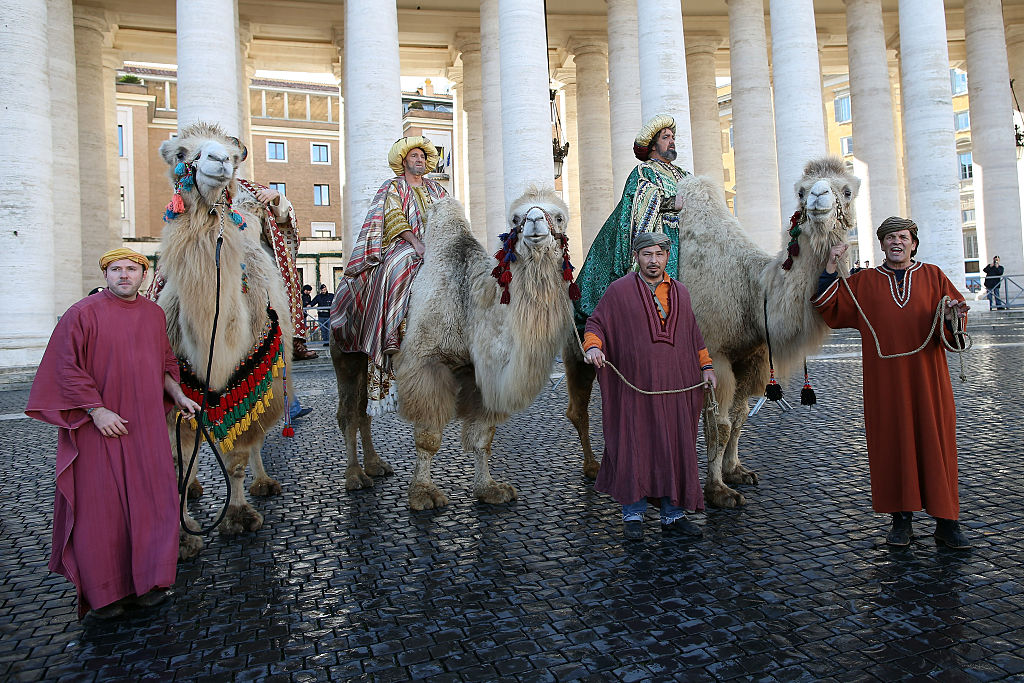
    The Three Kings represent Epiphany, on January 6. *** Los Reyes Magos representan la Epifanía, el 6 de enero. (Getty Images)
    In Mexico, just like in Spain, it is customary that families eat a traditional Rosca de Reyes after the Wise Men have brought the gifts. The food consists of oval-shaped wheat bread with small plastic or ceramic figurines in the shape of a child inside of it. Whoever cuts the Rosca de Reyes and finds one of these tiny figurines must prepare the tamales for Feb. 2, the celebration of La Candelaria.
    (Translated and edited by Mario Vázquez. Edited by Carlin Becker)


    The post This Is How Latin America Receives the Three Wise Men appeared first on Zenger News.

    Share. Facebook Twitter Pinterest LinkedIn Reddit WhatsApp Telegram Email
    info@zenger.news'
    zenger.news
    • Website

    Related Posts

    The Blueprint of Manipulation: How Jeffrey Epstein’s Power Network Conditioned it’s Victims

    November 17, 2025

    Donate to the National Newspaper Publishers Association

    November 4, 2025

    Target continues to challenge our spending power, so we must continue to take action • Full Target Boycott! ✊

    April 28, 2025
    Advertisement

    View Our E-Editon

    Advertisement

    –>

    Advertisement
    Advertisement
    advertisement

    Advertisement

    –>

    The Westside Gazette
    Facebook X (Twitter) Instagram Pinterest
    © 2025 The Westside Gazette - Site Designed by No Regret Media.

    Type above and press Enter to search. Press Esc to cancel.

    Go to mobile version