
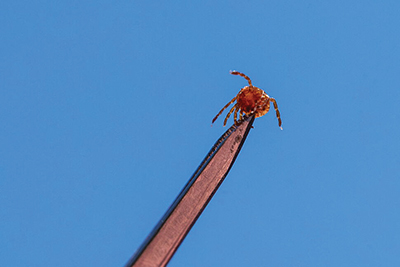
As ER visits for tick bites rise across parts of the U.S., health officials are drawing attention to alpha-gal syndrome, a potentially life-threatening allergy linked to the lone star tick.
By Cecelia Smith-Schoenwalder
(Source US NEWS)
U.S. health officials warn that emergency room visits for tick bites are higher than normal in many parts of the country, putting a renewed focus on tick-borne diseases, including one that can cause a red meat and dairy allergy.
“In all regions except the South Central United States, weekly rates of ER visits for tick bites are the highest for this time of year since 2017,” the Centers for Disease Control and Prevention posted in April.
While Lyme disease is the most common tick-borne disease in the U.S., another is gaining attention: alpha-gal syndrome.
Alpha-gal syndrome is a tick-borne disease that is most often associated with the lone star tick, which the CDC describes as “very aggressive.” The adult female is marked by a white dot or “lone star” on her back. The adult females and nymphs most commonly bite humans and spread disease.
Where Has the Lone Star Tick Been Documented?
The lone star tick is widely distributed in the Northeast, South and Midwest, according to the CDC
What Is Alpha-Gal Syndrome?
Alpha-gal syndrome is a potentially life-threatening allergy.
When the tick bites, it transfers the alpha-gal molecule that occurs naturally in ticks and most mammals but not humans. Once the molecule enters the person’s bloodstream, the immune system can identify alpha-gal as a threat and trigger an allergic reaction.
Symptoms typically occur after a person eats red meat or mammal-related products. Therefore, alpha-gal syndrome is also known as red meat allergy or tick bite meat allergy.
What Are the Symptoms of Alpha-Gal Syndrome?
Symptoms can range from mild to severe, with some of them potentially life-threatening. Symptoms typically appear 2-6 hours after eating red meat or dairy products.
Symptoms can include:
Hives or itchy rash
Nausea or vomiting
Severe stomach pain
Heartburn or indigestion
Diarrhea
Cough, shortness of breath or difficulty breathing
Drop in blood pressure
Swelling of the lips, throat, tongue or eye lids
Dizziness or faintness
Can Alpha-Gal Syndrome Be Treated?
The syndrome can be managed under the care of an allergist or other healthcare provider.
“Most healthcare providers recommend patients with [alpha-gal syndrome] stop eating meat from mammals, such as beef, pork, lamb, venison or rabbit,” according to the CDC. “Some patients need to eliminate other sources of alpha-gal, such as dairy and certain medications. Patients can work with their healthcare provider to determine which sources of alpha-gal should be avoided.”
Health officials last month said that the National Institutes of Health has preliminarily identified “promising” products that could help protect individuals from developing alpha-gal syndrome following a tick bite. HHS said that it “expects to provide additional details on the initiative in the coming months as part of its broader effort to accelerate innovation and improve outcomes for Americans affected by tick-borne illnesses.”
How Many People Have Alpha-Gal Syndrome?
As many as 450,000 Americans are living with alpha-gal syndrome, according to CDC estimates.
“Emerging evidence suggests the true number may be far, far higher, potentially reaching in the millions,” Health and Human Services Secretary Robert F. Kennedy Jr. said last month.