
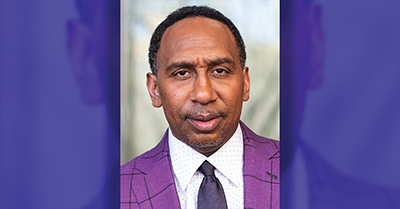
BLACKPRESSUSA NEWSWIRE — Joy Reid had finally had enough. After Stephen A. Smith went on his show and tried to frame her departure from MSNBC as a failure of ratings rather than a collision with an administration working to silence Black voices, she laid out the truth without ceremony.
By Stacy M. Brown, Black Press USA Senior National Correspondent
Joy Reid had finally had enough. After Stephen A. Smith went on his show and tried to frame her departure from MSNBC as a failure of ratings rather than a collision with an administration working to silence Black voices, she laid out the truth without ceremony. “You got one hundred million dollars for a show with half my ratings at my worst,” she told journalist Cari Champion. Then she explained why that payday existed at all. “They’re paying you because you are willing to say the nasty things about Black people that they want to say. You’re willing to take their denigration of Black women and put it in the mouth of a Negro.”
Her words were an indictment because the pattern had been building for years. Smith dismissed Reid on his YouTube show and said, “Nobody was watching her show,” and claimed, “the numbers don’t lie.” Reid pushed back by pointing out what his audience has seen for years. His value to executives does not come from accuracy. It comes from usefulness.
That usefulness has shown itself repeatedly. When Smith targeted Texas Congresswoman Jasmine Crockett, he questioned whether confronting Donald Trump counted as real congressional work. He criticized her voice and said she relied too heavily on what he called “street verbiage.” The backlash was loud. On social media, Don Salmon wrote that Smith is “a foot soldier for white supremacists. He’s a propaganda mouthpiece.” Former NBA star Stephen Jackson added that Smith becomes loud only with Black men and Black women, yet becomes quiet when speaking with a white billionaire. Jackson told him to “stay out of politics and stick to talking about sports you never played.”
Crockett responded with calm disappointment. She said she keeps her constituents first and that people outside her district often do not see the depth of her work. She said the criticism hurt because she expected more from someone with Smith’s platform. She thanked the community for defending her before she even spoke.
When Trump later attacked Crockett and called her a person of “very low IQ,” Smith tried to distance himself. He said he did not want to be linked to anything like that, yet he did not withdraw his earlier remarks. He only objected to sharing rhetorical company with Trump.
Smith has taken similar stances before. In April 2024, he defended Trump’s claim that Black voters relate to Trump’s criminal indictments. Smith said Trump “wasn’t lying” and placed Trump in the same frame as Marcus Garvey, Rosa Parks, Dr. Martin Luther King Jr., and Angela Davis. Those figures were persecuted for fighting for the freedom and dignity of Black people. Trump faced charges after attempting to eliminate Black votes in major cities, and now the president has made it a mission to erase Black history. Smith’s comparison was historically absurd and, for many, deeply offensive. He later offered an apology, yet quickly blamed listeners for misunderstanding him.
His behavior repeats itself across years. When Megyn Kelly defended Blackface on air, Smith insisted she was not racist and said the outrage was unfair. He protected her without hesitation.
The comparisons that followed him were inevitable. Many viewers saw in him the traits of Stephen from “Django Unchained,” the enslaved man who devoted himself to serving the oppressor. Others likened him to the House Negro Malcolm X described as the one who loved the master’s house more than his own freedom.
To understand why these comparisons resonate, one must also understand Chester Himes. Himes was a novelist who confronted American racism without flinching. He wrote about the types of Black men who believed safety came from obedience and who became tools of the very system that sought to break them. Smith’s public conduct often resembles the characters Himes warned readers about.
This makes the contrast with Crockett’s final words even sharper. “It’s all good when you know that you’re walking in the purpose God has put on your life,” the proud Texas Senate hopeful proclaimed. “I’m going to keep doing me, and the world will continue.”