
By Amelia Orjuela Da Silva
(Source: Miami Times)
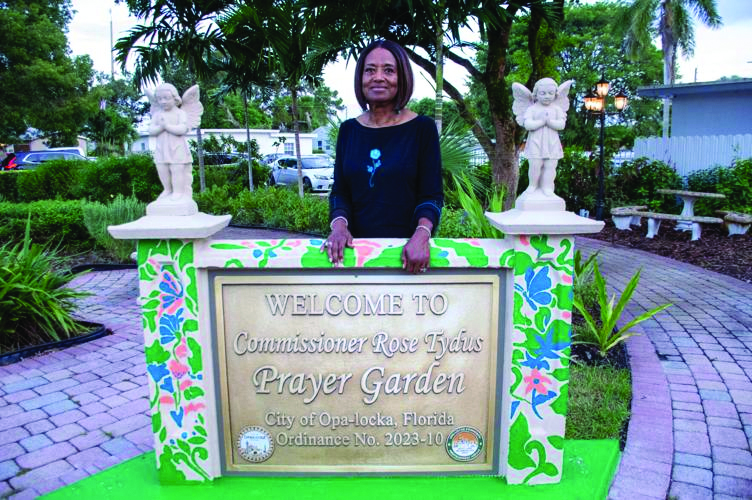
Decades before Rose Tydus’ name was placed on a public prayer garden in Opa-locka, she was carrying her Bible to the track at Carol City Senior High School.
After walking the track, she would sit beneath a tree to read Scripture. It was there, she said, that she first imagined having a garden closer to home.

“I said, ‘Lord, it would be so nice if I had a garden that I wouldn’t have to walk so far because I love meeting you here in this atmosphere,’” Tydus told The Miami Times.
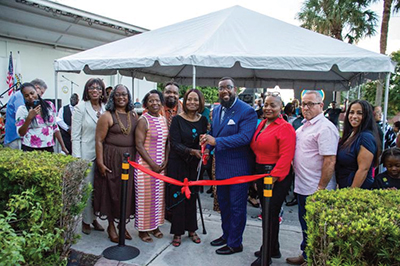
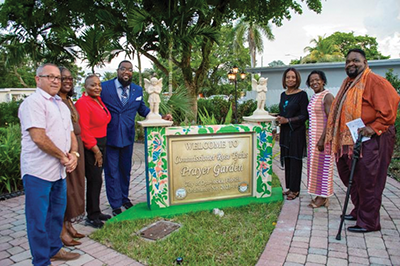
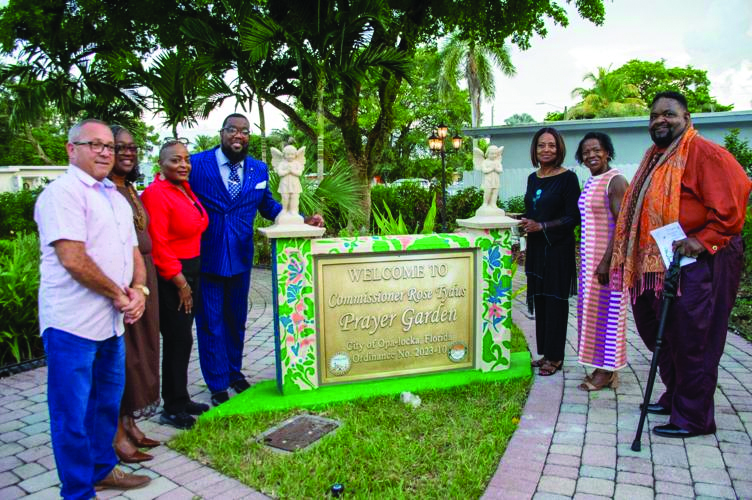
Decades later, the city she served as its first Black city clerk, commissioner and vice mayor dedicated a public prayer garden in her name just a block from her home.
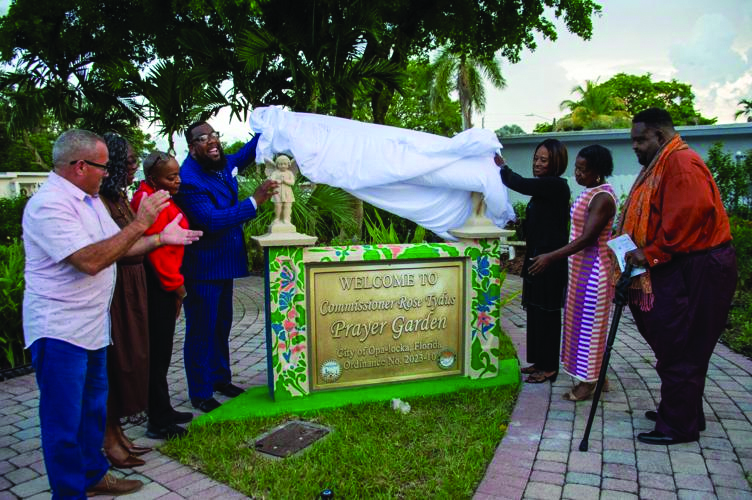
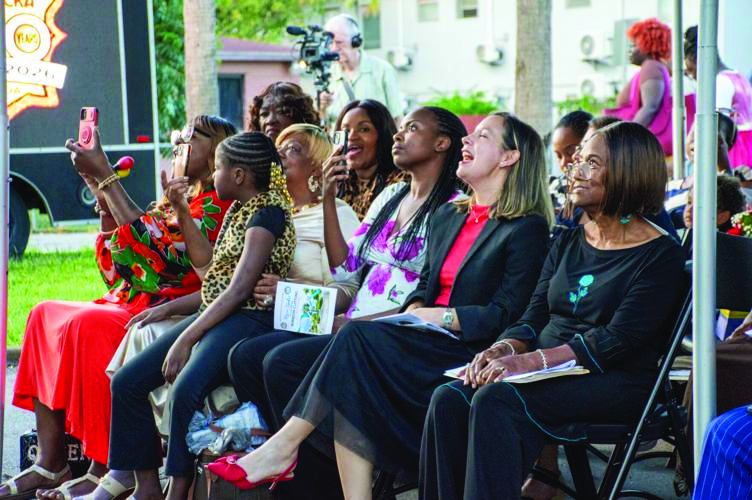
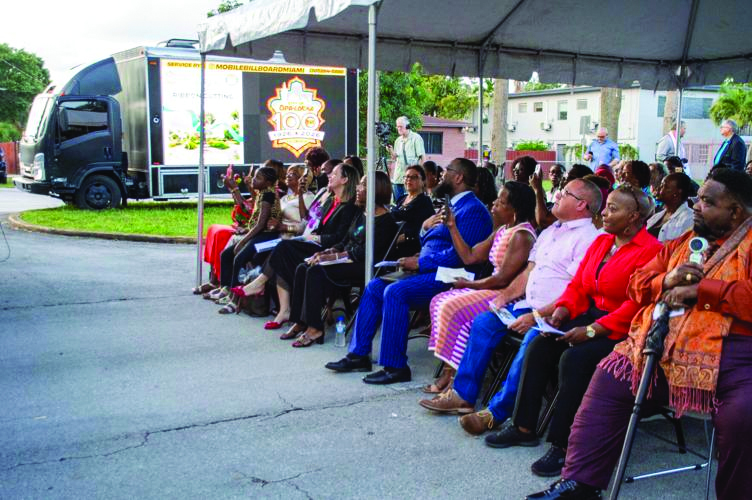
“This garden will be a place where anyone can come pray, reflect and seek God’s presence and find peace,” Opa-locka Mayor John H. Taylor Jr. told attendees during the ceremony.
Tydus said she first proposed transforming an overgrown city-owned lot into a prayer garden while serving on the commission, but the idea was rejected six times.

She later proposed creating the Butterfly Garden, which was approved and occupied the site until 2023, when the city commission approved renaming it to the Commissioner Rose Tydus Prayer Garden.
From the stage to City Hall
Long before she entered government, Tydus envisioned a different future.
Born in Paducah, Kentucky and raised in Milwaukee, she danced professionally in hotels, resorts, cruise lines and television productions before experiencing what she describes as a spiritual calling in 1975.
“Shortly after, I gave my life to the Lord,” she said. “He said, ‘I don’t want you doing that anymore.’”
After several months without work and a trip to care for her grandmother in Kentucky, a friend handed her a business card for an assistant city clerk opening in Opa-locka.
“I didn’t know anything about Opa-locka,” she said. “I didn’t know anything about government.”
She was hired in 1976.
Her first months on the job proved challenging. Tydus said her supervisor, the city clerk, refused to train her after threatening to resign unless she received a raise, telling officials they would be “stuck with Rose” if she left.
“She went out of her way not to teach me anything,” Tydus recalled. “But she didn’t know me. If I’m going to be in a room for any amount of time, I’m going to scout it out and know something about that room.”
When the clerk resigned, Tydus became interim clerk, often working until 3 a.m. to keep city records current. The commission later appointed her city clerk, making her the first Black city clerk in Opa-locka and in Miami-Dade County.

Her promotion came during one of the city’s most turbulent periods.
“Opa-locka back in the ‘70s was so racial,” Tydus said. “It was terrible.”
Commission meetings often stretched into the early morning, prolonged by political infighting and personal attacks, leaving Tydus questioning whether she wanted to remain in public service.
Before one meeting, while waiting for dinner at a restaurant, she felt prompted to pray and opened her daily devotional. The reading focused on the biblical call of the prophet Isaiah, ending with the words, “Here I am, Lord, send me.”
“I said, ‘I’m going to stop complaining. Here I am, Lord, send me,’” Tydus recalled. “And I haven’t complained since.”
She described that moment as the turning point that transformed her view of public service.
“I made a commitment to God,” she said. “I’ll just stay here until I see your handiwork done to change things around.”
’I’m not a politician’
Tydus’ tenure as city clerk ended in 1984 when she was fired after reminding commissioners that they were “ultimately responsible” to God for how they governed the city. She later filed a religious discrimination complaint that resulted in a finding of probable cause.
Tydus remained active in ministry and community service while one neighbor repeatedly encouraged her to run for the City Commission. It was that same neighbor who helped Tydus find a home within Opa-locka’s city limits so that she could qualify.
After establishing residency, Tydus was elected to the commission in 2000 and went on to serve three four-year terms, including as vice mayor.
Rather than viewing elected office as a political achievement, she saw it as an extension of the mission she had embraced decades earlier.
“I used to say all the time, ‘I’m not a politician. I’m a woman that loves God and loves people, and this position allows me to serve both of them — God and people.’”
That philosophy shaped her years in public office.
She organized daily noonday prayer meetings and lunchtime Bible studies inside City Hall, hosted a live Nativity scene for the city and served on numerous community service boards. As commissioner, she said every vote came down to one question:
“What’s going to be best for the people?”
She recalls opposing plans for a 10-story senior housing development near City Hall because she believed it would create parking problems and overwhelm the surrounding neighborhood.
“It was too dense,” she said.
The proposal was ultimately reduced to four stories.
A place for everyone
Janie Russell, chair of the Opa-locka Community Redevelopment Agency, said the garden represents far more than a monument to one person.
“This garden is more than just a place of beauty,” Russell said. “It is a living reminder of faith, service and the strength of a community.”

She said the space invites residents to “slow down, breathe, remember and connect with God, with one another and with ourselves.”
Tydus said she has already watched residents embrace the space, including a young couple who described it as peaceful and a new neighbor who spent an entire day sitting on one of its benches.
“It’s a garden for prayer,” Tydus said. “It’s a garden for reflection. It’s a garden for community connection.”
Looking across the completed garden, she thought back to the prayer she made beneath a tree decades earlier.
“I was just overwhelmed,” she said. “This is just giving me the desires of my heart. Doesn’t matter if it takes 50 years, 10 years or 10 days; persevere to the end.”