
Ain’t That A VHIT
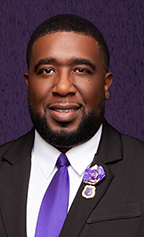
By Von C. Howard
At 46 years old, I’ve lived long enough to know that silence is rarely accidental. It’s often a choice, one shaped by comfort, fear, exhaustion, or the belief that what’s happening doesn’t quite touch our front door yet. I’ve also learned this: silence has a sound. You may not hear it immediately, but over time it echoes, carrying consequences far beyond the moment we chose not to speak.
In this current political climate, the noise is overwhelming. Every day brings another headline, another argument, another decision that reshapes how people live, learn, vote, and exist. For many, the instinct is to pull back. Turn it off. Stay out of it. Protect your peace. I understand that instinct. But there’s a difference between rest and retreat. And right now, too much silence looks like retreating.
Injustice today doesn’t always arrive shouting. It comes dressed in policy language, wrapped in procedure, justified as “the law” or “the process.” It shows up in whose stories are erased, whose access is restricted, whose dignity is debated as if it were optional. When these things happen and no one objects, silence stops being neutral. It becomes structural. It helps hold the system steady.
The loudest voices get the attention, but they don’t get their power alone. Power comes from the quiet around them. Silence creates the illusion that harmful ideas are widely accepted. Over time, what once shocked us becomes background noise. That’s how the line shifts, not because everyone agrees, but because too many people stop speaking.
I hear the reasons people give for staying quiet. I’m tired. Both sides are messy. I don’t want the backlash. I’m just trying to live my life. Those reasons are human. But silence doesn’t pause the consequences. Decisions are still being made. Policies are still moving. Lives are still affected. Silence doesn’t stop the machinery; it simply removes resistance.
What makes this moment especially heavy is that the stakes are real and immediate. When books are banned, silence edits history. When voting access is narrowed, silence reshapes democracy. When people are reduced to labels or talking points, silence sends a message about whose humanity is negotiable. In moments like these, the absence of objection becomes a quiet endorsement.
Speaking up doesn’t require a bullhorn or a political label. It doesn’t require perfection. It starts with refusing to accept harm as normal. It sounds like asking a hard question, correcting misinformation, setting a boundary, or saying, “That’s not right.” Courage doesn’t have to be loud, it just has to show up.
Because silence is never silent. It travels. It lingers. And long after the noise fades, it tells a story about where we stood. The question isn’t whether your silence speaks. It does. The question is what it will say when it sounds in the distance.