
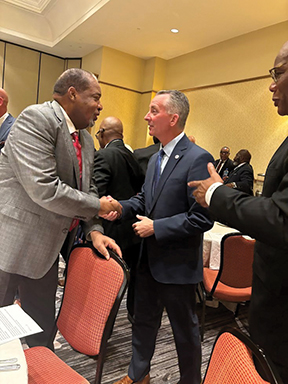
David Jolly lived up to his reputation of going far and wide to make his case to Floridians. He drove from South Florida to St. Augustine to meet with members of the Florida General Baptist Convention. He was the first gubernatorial candidate to address the group in a forum, offering answers on spiraling healthcare costs, education funding, gun violence, restoring the autonomy of state universities, and Black history in the public school curriculum.
Some were surprised at Jolly’s response to his position on Diversity, Equity, and Inclusion. While most candidates avoid it, he said it is central to his coalition-building strategy. “The economy should work for everyone because this race is about Florida, regardless of color, faith, or sexual orientation. I’m not intimidated by diversity. I embrace it,” he said.
Reverend R.B. Holmes, of Bethel Missionary Baptist Church in Tallahassee, added, “David Jolly is running to break a decades-long cycle of backward thinking in Florida politics. He is uniquely positioned to do so because his message transcends party lines, resonating with Democrats, Republicans, Independents, and young voters alike. His leadership offers hope, healing, and a renewed sense of purpose for our state.
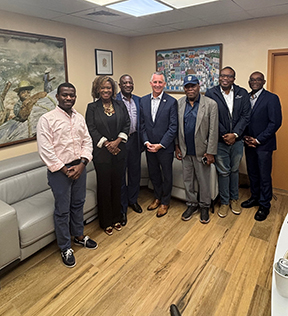
He then headed south AGAIN to Little Haiti and would also be the first gubernatorial candidate to meet with those community leaders. Renowned advocate, Dr. Larry Pierre, led the meeting. The discussion touched on a broad range of problems. Miami Gardens is dealing with an unfunded mandate that amounts to an additional tax on law enforcement services. Councilwoman Linda Julien pointed that out, among others. “We want change!” she said. David Jolly’s agenda is built on change to provide more services to Floridians instead of instigating culture wars. “On day one, I will close Alligator Alcatraz,” Jolly said, adding, “I will turn around ICE agents. It’s not a good idea to use law enforcement resources to go after immigrants who have been working for fifteen years and growing their communities.” The Haitian contribution to the Miami-Dade economy is substantial. But now their lives are at risk because the Trump administration is ending their Temporary Protective Status. That order will send thousands of Haitians back to their homeland, where they face certain death. “There is a crisis of hope in the Haitian community. We must stay in touch with the common man,” explained Father Reginald Jean Mary, who presides over Notre Dame Catholic Church. Haitian leaders complained that candidates campaign for votes but never return to the community. David Jolly said the change he’s talking about applies to that phenomenon too. Here are highlights of the conversation.
Affordable Healthcare: The option of providing primary care at local health clinics for affordable access and preventive care.
Affordable Homeowners Insurance: Establish a state Catastrophic Fund to cover major disasters and provide premium relief.
Increase Public School Funding & Stricter Voucher/ School Choice Standards: Utilize 20% of the $1.8 billion annual Tourism Development Tax and $3 billion from other insurance taxes.
Choice Schools/Schools accepting vouchers would operate under the same public school standards required by law.
Teacher Pay Raise: 10-year Public School Renaissance – 30% teacher pay raise.