By Ramon Robinson
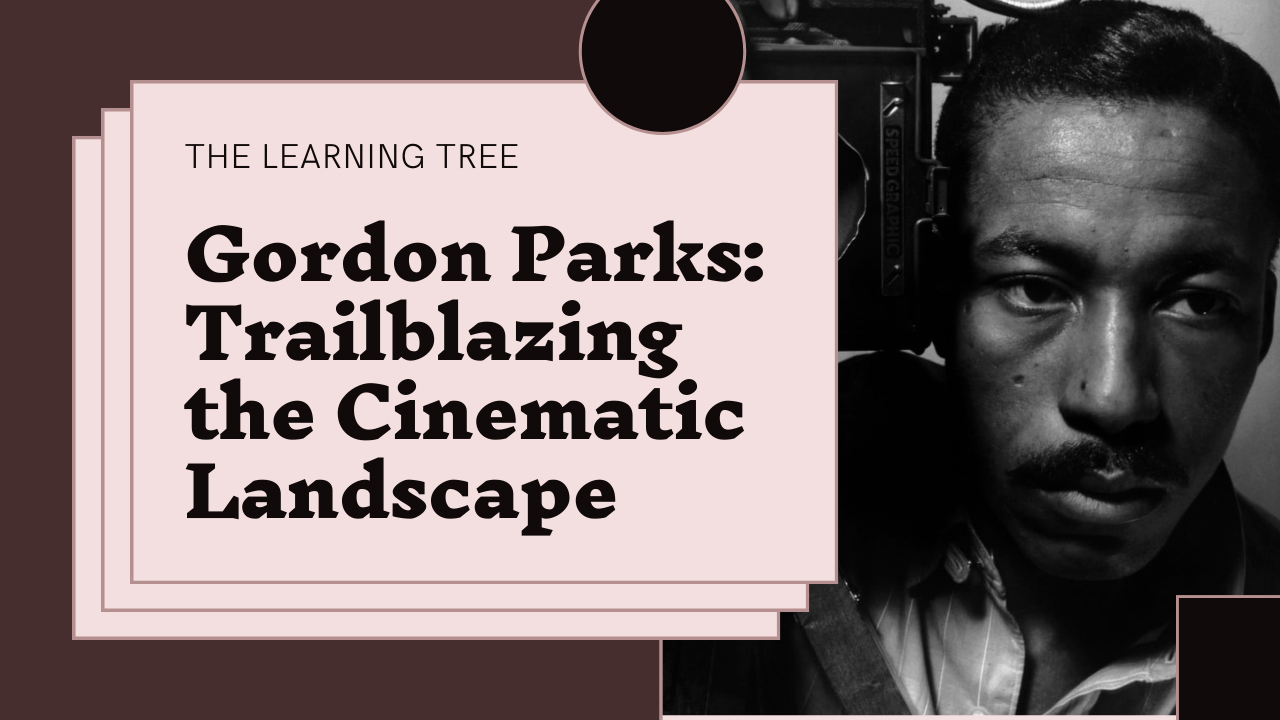
Gordon Parks is a renowned American cinema figure known for his creativity, resilience, and groundbreaking achievements. He was born in Fort Scott, Kansas, on November 30, 1912, and rose to become a trailblazer in the film industry during a time when racial barriers were deeply entrenched.
Parks’ early life was marked by poverty. Being the youngest of 15 children, he had to navigate the challenges of a segregated America. He began his journey as a self-taught photographer, capturing the essence of everyday life with a raw and unfiltered lens. Through his work, Parks not only documented the struggles of the African American community but also showcased the resilience and beauty that often went unnoticed.
Photography became Parks’ passport to a world beyond the limitations imposed by society. His talent caught the attention of the Farm Security Administration, leading to a position as a photographer, where he chronicled the lives of those affected by the Great Depression. Parks’ ability to tell stories through his lens was a precursor to his later success as a film director and producer.
Transition to Cinema:
Parks’ transition from photography to cinema was a bold move that went beyond a mere change of medium. It was a courageous step taken in the face of the racial prejudices that were prevalent in the mid-20th century. In 1969, he made history by becoming the first African American to direct a major Hollywood film, “The Learning Tree.” This coming-of-age drama was based on Parks’ semi-autobiographical novel and portrayed the challenges of growing up in a deeply divided society along racial lines.
“The Learning Tree” opened doors for Parks to break yet another barrier with the iconic film “Shaft” in 1971. This crime drama not only marked the beginning of the blaxploitation genre but also showcased Pancultural to navigate complex narratives and create cultural phenomenon. The film’s success not only shattered box office expectations but also demonstrated the commercial viability of films with African American protagonists.
Beyond the Camera:
Gordon Parks’ impact extended beyond the director’s chair. He was a true Renaissance man, showcasing his talents as a composer and author. In addition to his directorial achievements, Parks composed the score for “Shaft,” earning himself an Academy Award for Best Original Score. His ability to seamlessly transition between artistic domains highlighted his multifaceted genius.
Parks’ literary contributions were equally profound. His novels, including “The Learning Tree,” provided a nuanced perspective on race, identity, and societal expectations. Through his words, Parks continued to dismantle stereotypes and challenge prevailing narratives, leaving an indelible mark on both literature and cinema.
Legacy and Inspiration:
Gordon Parks was not only a filmmaker and photographer but also a trailblazer who opened doors for future generations of African American filmmakers. He proved that talent knows no racial boundaries and received numerous accolades, including the National Medal of Arts from President Ronald Reagan in 1988.
In an industry where inequality is often present, Parks represented what could be achieved through talent, perseverance, and a steadfast belief in one’s creative vision. His work still inspires filmmakers, photographers, and artists to this day, showing us that storytelling can go beyond the boundaries imposed by society.
Parks’ journey from poverty and segregation to success in American cinema is an extraordinary story. Through his camera lens, he captured the beauty and struggles of everyday life, breaking barriers, and challenging stereotypes. As a director, producer, composer, and author, Parks made an indelible mark on the artistic landscape, proving that creativity transcends racial bounds. His legacy lives on as a testament to the transformative power of storytelling.