
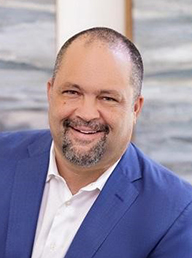
By Ben Jealous
Chicago’s Mayor Brandon Johnson has emerged as a clarion voice for American democracy in turbulent times.
The values he represents reflect the voters who elected him. They remind us of the power of the Black community and the White, Asian American, Latino, and Native American voters who believe in multiracial democracy. Together they help ensure our country ultimately remains a place defined by a deep commitment to achieving freedom and opportunity for all.
Yet events at home and abroad show how fragile that path can be.
As Black History Month begins, let us rise to this moment again. Let us take stock of what has made the Black community the backbone of movements that strengthen democracy.
Our strength has never been our size. Our strength has been that we hang together. Since we first won the ballot, Black voters have stood remarkably united. Often 80 percent or more have chosen the same candidate and the same vision of fairness. That unity has given us influence far beyond our numbers.
It is no surprise that those who attack democratic rights try to break our voting bloc. They come for civil rights. They come for workers’ rights. They come for equal pay and fair treatment. I have helped lead coalitions to defend our community from those attacks. I have faith we can see through them.
What keeps me up at night is quieter. It is the slow erosion of the cohesion that fuels our power.
Our political unity reflects our community life. For generations we were held together by congregations, by family reunions, by Sunday phone calls that crossed state lines. Cousins recognized one another by a reunion T-shirt. Even relatives we rarely saw were still close kin. Those bonds helped us resist the divisions that split others apart.
That cohesiveness was not magic. It was history. The Black community remained confined to segregated towns and neighborhoods long after White America began to suburbanize. We built economically mixed communities out of necessity. In them, elders—especially grandmothers and great-grandmothers—kept the circle tight. They did it in church basements after service. They did it around kitchen tables late at night.
From coast to coast, Black children heard the same maxim: “To whom much is given, much is expected.” Elders organized the reunions. They made the long calls between holidays. They told the stories that reminded us who we were.
That love became political power. It lifted leaders from Shirley Chisholm to Jesse Jackson to Brandon Johnson—leaders who speak clearly for democracy and equality.
But the elders who held us together are disappearing. One by one. Funeral after funeral.
They were born into communities that were integrated by necessity. Many of us were born into communities divided by class, except in a few sacred spaces, often the church on Sunday. As we entered the broader economy, we absorbed its class lines as well.
This Black History Month, let us hold our community together by holding our families together. Replicate the reunion. Make the phone calls the elders used to make. Tell the stories they told us.
Democracy is under pressure. That pressure should remind us we need one another. We must hang together so our children can live better lives than we have.
Let us never forget that the elders we are burying have already shown us how to keep this country free—by keeping our families connected, in tough times and even across great distance.
Ben Jealous is a professor of practice at the University of Pennsylvania, former national president and CEO of the NAACP, and author of Never Forget Our People Were
