Against the Grain II
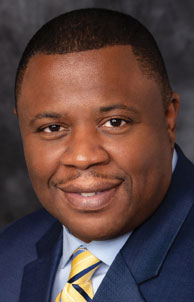
By Vaughn Wilson
Wake me when the credits roll, because this can’t possibly be the same world that spent decades moving forward—through hard-fought progress championed by Democrats and Republicans alike—only to now watch so much of that progress unravel. This is the same world that once advanced human rights, environmental stewardship, and a shared sense of public decency. Yet somehow, it now feels as though we are living in a version of society many never imagined we would see.
Perhaps even more unsettling are the quiet voices of people we once believed stood against this kind of extremism—people from our everyday lives, people we called friends, people we assumed shared similar values. One of the hardest lessons of the last several years is realizing that many people we thought we knew think exactly like those we view as the most divisive, detached, and destructive forces in our country.
President Donald Trump is not acting alone. He has an army of supporters operating in plain sight. While it may sometimes appear that he acts independently or impulsively, the reality is that his actions continue to energize and satisfy his political base more each day. In many ways, he is not even the architect of much of what we are seeing unfold. He was simply the perfect vessel—someone unafraid of consequences, opposing viewpoints, or public perception—to deliver the blows that others had long planned.
He became the lightning rod necessary to advance Project 2025, executing its agenda with remarkable precision. Many of the ideas he campaigned on seemed too extreme or far-fetched for much of the general public. Yet the Republican Party has moved in seamless coordination with the Trump administration to reshape America into the image they believe it should reflect.
At the same time, this has been one of the most sobering periods of my life as the head of a household. I have no real answers for my children or my wife when they ask why these things are happening—why it sometimes feels as though we have become strangers, or even enemies, in our own country… in our own state of Florida.
My father taught my siblings and me the value of honest work—of earning what you have, putting in an honest day’s work for an honest day’s pay, and understanding that integrity and perseverance were the foundation of providing for your family. He passed away in 2018, and I often think he could never have imagined America retreating from so much of its own progress.
My mother, who appeared in The Daytona Beach News-Journal during civil rights marches in the 1960s, passed away just a month ago. In some ways, I’m grateful she did not live to witness the continued erosion of voting protections. She poured blood, sweat, and tears into helping build the foundation for those rights—rights that generations believed would endure.
Today, changes to voting laws and redistricting appear designed to preserve political power at a time when public backlash might otherwise shift the balance of government. Decisions from the increasingly conservative Supreme Court of the United States have opened the door for sweeping political transformation, giving Republicans unprecedented latitude to reshape the nation’s institutions.
But difficult truths require honest reflection.
Democrats—and Black Americans in particular—must also look inward and acknowledge how complacency helped create this moment. Repeatedly low voter turnout, especially in midterm and local elections, created openings that others were prepared to exploit. Judges, congressional seats, Senate races—too many critical elections were met with apathy.
That apathy dishonors those who were beaten, jailed, spit on, attacked with fire hoses, and even killed in the fight for civil rights and voting access. Too many became comfortable. Too many believed the struggle was over. But history has shown us there is no finish line in the fight for justice. The struggle is continuous. Rights are never permanently secured.
What generations built through sacrifice can be weakened—or undone—with the stroke of a pen, the outcome of an election, or the ruling of a court beyond the reach of voters.
Many in the Black community want to place all the blame on President Trump. I disagree. While he may be the face of this political moment, complacency helped make it possible. Too many assumed that hard-fought legislation born from some of America’s darkest chapters could never be threatened by a single administration or political movement.
But the strategic execution of Project 2025 has paved the way for “Reality 2026.”