The myth of a federal government out of control
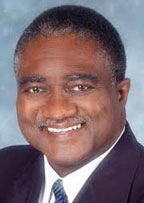
By George E. Curry NNPA Columnist
The Republican push to reduce the federal deficit solely through spending cuts is based on mythology rather than fact. That was clearly demonstrated by a series of reports issued recently by the non-partisan Center on Budget and Policy Priorities (CBPP).
In a report issued Oct. 28, CBPP stated, “As a new budget conference committee seeks agreement on spending and tax priorities for the next decade, some policymakers and commentators who believe that future deficit reduction must come solely from spending cuts will likely repeat the claim that the federal government is exploding in size. The data does not support such a claim.
“To be sure, total federal spending as a share of gross domestic product (GDP) rose considerably in 2008 and 2009 and remained high in 2010 and 2011, in part because GDP was unusually low due to the Great Recession and its aftermath. But spending dropped significantly in 2012 as a share of GDP and, as the latest Congressional Budget Office (CBO) data indicates, this downward trend is expected to continue over the next five years.”
The report, titled “Size and Reach of Federal Government Are Not Exploding,” notes that those backing deep cuts in social programs neglect the real reasons for increased federal spending.
“While total federal spending will rise modestly as a percent of GDP during the latter part of the decade under a continuation of current policies that is mostly because of a marked increase in interest payments,” the report stated. “In particular, as the economy recovers, interest rates will also rise, simultaneously increasing the interest we must pay on any given amount of debt.”
The study also found, “Under a continuation of current policies, total federal spending- including interest – will drop from 24.1 percent of GDP in 2011 and 22.8 percent in 2012 to 21.5 percent in 2013, before starting to rise in the middle of the coming decade, climbing back up to 22.7 percent by 2023. At least three-fourths of the increase between mid-decade and 2023, however, will come from higher interest payments on the debt. Interest payments are not a federal program, and increases in interest costs do not themselves represent an expansion of the government’s activities or reach. It should also be noted that interest costs rise when taxes are cut, because the tax cuts add to deficits and debt just as spending increases do.”
As I noted in this space last week, more than 90 percent of so-called entitlement benefits go to the elderly, disabled or working households. Furthermore, as the Center on Budget and Policy Priorities observed, increased spending on safety net programs because of the recession is both appropriate and temporary.
“Congressional Budget Office (CBO) projections show that federal spending on low-income programs other than health care has started to decline and will fall substantially as a percent of gross domestic product (GDP) as the economy recovers. By the end of the decade, it will fall below its average level as a percent of GDP over the prior 40 years, from 1973 to 2012. Since these programs are not rising as a percent of GDP, they do not contribute to our long-term fiscal problems,” CBPP said in a report titled, “Low-Income Programs Are Not Driving the Nation’s Long-Term Fiscal Problem.”
I am not suggesting there are not some serious financial questions facing the nation. The rising cost of Medicaid is among those concerns. But it’s important to know why costs will rise rather than using it as an excuse to cut social programs.
“To be sure, Medicaid is projected to rise significantly in cost, relative to GDP, for several reasons,” said the report on low-income programs. “To begin with, costs throughout the U.S. health care system – in both the public and private sectors – have been growing faster than GDP for several decades. Medicaid isn’t the cause of this system wide cost growth; over the past decade, in fact, per-beneficiary costs have risen more slowly in Medicaid than under private insurance, a trend expected to continue over the next ten years.”
It also noted, “A second reason that Medicaid costs will rise faster than GDP is the aging of the population. Older people have much higher average health care costs than younger people. Elderly and disabled beneficiaries account for 24 percent of Medicaid beneficiaries but 64 percent of program costs. As the population ages, the number and share of Medicaid beneficiaries who are elderly will increase, raising program costs.
“Another reason that Medicaid costs will continue to rise significantly is the continued erosion of employer-based health coverage. Over time, the share of low-income people able to get coverage through their (or their families’) employers has fallen, so more of them have turned to Medicaid for coverage.”
Yes, the federal government needs to pay close attention to future spending and revenue. But not because spending is out of control or the safety net is bankrupting the country.