U.S. has always ‘negotiated’ with terrorists
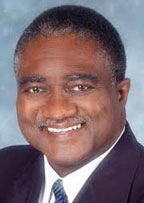
By George E. Curry NNPA Columnist
I disagree with President Obama’s decision to trade five Taliban leaders being held at Guantanamo Bay for Sgt. Bowe Bergdahl, an apparent deserter who is believed to have been the only U.S. solider being held as a prisoner of war in Afghanistan.
My opposition is based on the firm belief that such exchanges only encourage future violence against the U.S. For proof, we need to look no further than statements made by Taliban leaders after the exchange of prisoners.
Time magazine quoted one Taliban commander: “It’s better to kidnap one person like Bergdahl than kidnapping hundreds of useless people. It has encouraged our people. Now everybody will work hard to capture such an important bird.”
Even so, President Obama critics are incorrect when they claim that President Obama is departing from past U.S. practices.
Senator Ted Cruz (R-Texas), for example, said, “The reason why the U.S. has had the policy for decades of not negotiating with terrorists is because once you start doing it, every other terrorist has incentive to capture more soldiers.”
Cruz is right about incentive, as we have already seen, but he is dead wrong about the U.S. not negotiating with terrorists.
Michael Reiss, who worked for the State Department under George W. Bush, has written a book titled, Negotiating with Evil. He traces the practice of the U.S. negotiating with terrorists all the way back to George Washington, John Adams, and Thomas Jefferson.
Politifact, quoting Reiss, said the three “accommodated what today would be viewed as terrorists.” The author stated, “They each authorized payment to the Barbary pirates, and the U.S. Senate even ratified a treaty that enshrined the annual provision of naval supplies as ‘protection.’ “
According to USAToday, “… Security experts like Bruce Hoffman, director of Georgetown University’s Center for Security Studies, said that however common the refrain ‘we do not negotiate with terrorists’ has become, it is ‘repeated as mantra more than fact.’
“We have long negotiated with terrorists. Virtually every other country in the world has negotiated with terrorists despite pledges never to,” Hoffman said. “We should be tough on terrorists, but not on our fellow countrymen who are their captives, which means having to make a deal with the devil when there is no alternative.”
In that same newspaper article, Charles “Cully” Stimson, who helped coordinate the Pentagon’s detainee operations under President George W. Bush, said both Democratic and Republican administrations have relied on terrorist groups for “information, supplies, and personnel – a lot of different topics.”
He told USAToday, “We have had very quiet negotiations or discussions at least, with terrorist groups over the years on a whole host of things. They just haven’t usually come to light.”
But many have come to light.
Quoting Reiss’ book, Politifact notes:
*After the North Koreans captured the U.S.S. Pueblo in 1968, President Lyndon Johnson apologized for spying as part of negotiations to secure the release of 83 American prisoners.
*In 1970, President Richard Nixon pressured Israel, Switzerland, West Germany and Britain to release Palestinian prisoners after two airlines were hijacked by the Popular Front for the Liberation of Palestine.
*During the Iran hostage crisis of 1979 to 1981, President Jimmy Carter agreed to unfreeze $8 billion in frozen Iranian assets after more than a year of negotiations with the Iranian revolutionaries.
*In perhaps the most famous swap, after seven Americans were captured in Beirut, Lebanon, President Ronald Reagan agreed to send missiles to Iran in what became known as the Iran-Contra scandal.
*President Bill Clinton’s administration sat down with Hamas in attempts to negotiate peace with Israel. His administration also worked directly with the Taliban nearly two decades ago on several occasions to see if the group would hand over Osama bin Laden and other al-Qaida leaders.
The Website added, “Reiss also noted that President George W. Bush engaged in negotiations with Iran and North Korea even after decreeing them part of the ‘Axis of Evil.’”
Defending such actions has become a sophisticated game of hair-splitting technicalities.
Factcheck.org observed, “…The U.S. does not consider detainees held at the Guantanamo Naval Base in Cuba to be prisoners of war. The State Department calls the detainees ‘enemy combatants.’ In fact, the U.S. specifically declared in 2002 that ‘Taliban detainees are not entitled to POW status. … The Taliban have not effectively distinguished themselves from the civilian population of Afghanistan. Moreover, they have not conducted their operations in accordance with the laws and customs of war.’ That complicates any assertion that this was a simple swap of prisoners of war.”
The word game does not end there.
For what it’s worth, State Department Deputy Spokesperson Marie Harf said in a press conference on June 4 that the State Department doesn’t claim that it won’t ‘negotiate’ with terrorists, but rather that it does not make ‘concessions’ to terrorists,” Factcheck.org noted. She said the swap was not a concession to terrorists, but rather was part of a longstanding, historical precedent of exchanging prisoners “‘during a time of war.”