
 Little Known Black Women History
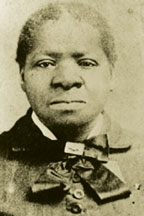
How did this former slave become the wealthiest Black woman in Los Angeles?
By April V. Taylor
Bridget Mason, known as Biddy to most people, was born a slave on a Hancock, Ga. plantation. Before she became a midwife and herbal medicine practitioner, she was separated from her parents and sold multiple times to plantations in Georgia, Mississippi and South Carolina. When she was 18, Mason was a gift to Robert and Rebecca Smith as a wedding present and relocated to a plantation in Logtown, Miss. While there, Mason had three daughters, all of whom were fathered by her slave master.
In 1847, after the Smiths were converted to the Mormon religion, Robert Smith moved his extended family and 90 slaves to the Utah territory. On the 2,000 mile journey, Mason was forced to walk behind her master’s wagon. The journey lasted some seven months. Church leader Brigham Young had counseled Smith on freeing his slaves but for years, he declined.
When Young asked Smith to join him in establishing a Mormon community in California, Smith agreed, most likely un-aware that California had entered the Union as a free state and that any slave brought across its borders was automatically free. With increasing anti-slavery sentiment, Smith eventually decided to move his family and slaves to Texas, but he was delayed when Hannah, one of Mason’s daughters, was close to giving birth. Charles O-wens, the man who courted Hannah told Mason how she could win her freedom.
Owens’ father was able to convince a local sheriff to hold Smith’s slaves in a county jail to protect them and keep Smith from taking them back to a slave state. On Jan. 21, 1856, Mason and Smith’s other slaves were granted their freedom. Owens’ father invited Mason to move to Los Angeles and live with him and his family.
Mason agreed and soon began working as a nurse and midwife for Los Angeles physician John Strother Griffin. She earned $2.50 a day and quickly became well known for her midwifery skills and her herbal remedies. After working for 10 years, Mason had saved $250 and used it to buy two lots on the outskirts of the city, making her one of the first Black women to own property in Los Angeles.
Mason built small houses on the land that she rented out and also used the land for gardening over the next 18 years. When she was 66, she was able to sell a portion of the land for $1,500. She then built a commercial building and rented out storerooms. Over the next several years, Mason acquired more land, and as Los Angeles grew, her land became prime urban real estate, forming the basis for her substantial wealth.
In 1872, Mason, along with her son-in-law Charles Owens, founded and financed the city’s first Black church, the First African Methodist Episcopal Church. Mason donated the land the church was built on. By the late 1800’s, Mason’s land was just one block from the city’s main financial district, and Mason had become the wealthiest Black woman in the entire city.
Mason eventually accumulated a fortune of nearly $300,000, becoming a known philanthropist by feeding and sheltering the poor, giving prisoners at the local jail gifts, and founding an elementary school for Black children. Mason died Jan. 15, 1891 at the age of 73. She was buried in an un-marked grave. Fittingly, a marker was placed on her grave in 1988 by Mayor Tom Bradley, the first Black mayor of Los Angeles.
