
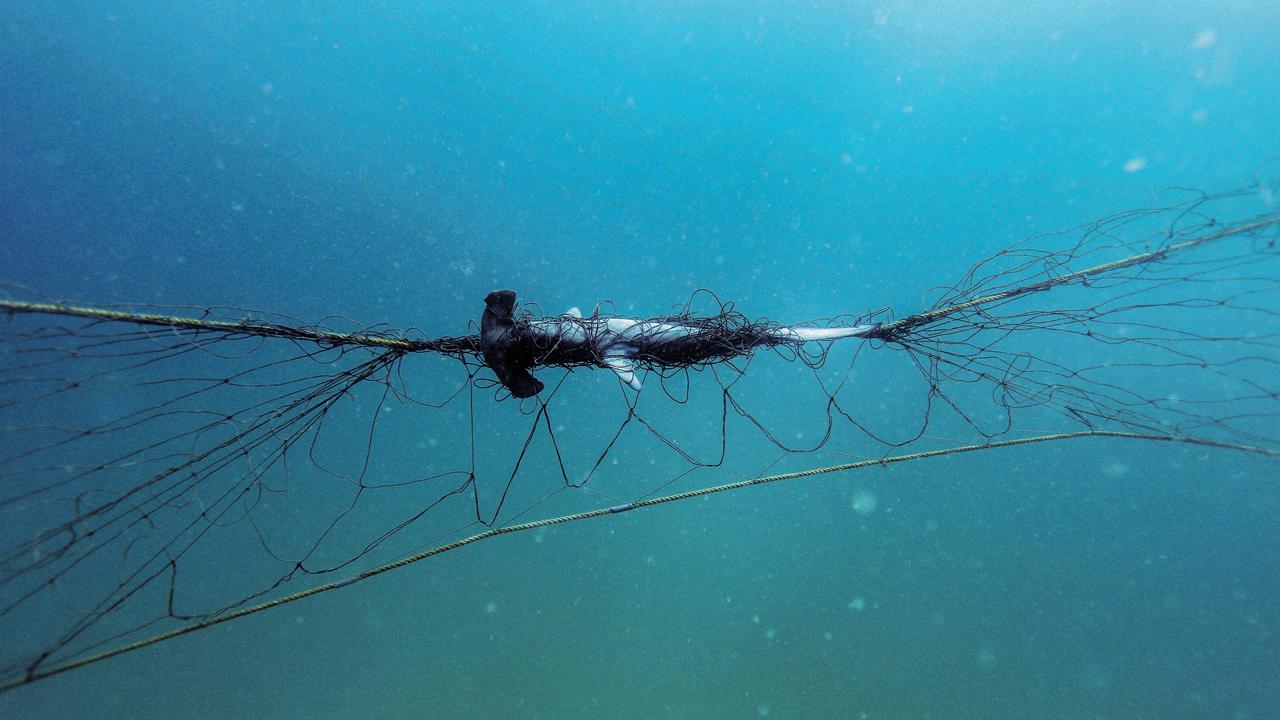
SYDNEY — A turtle is found dead on average every 20 days in a shark net lining beaches in and around Sydney, new data shows.
The annual report on 51 shark nets running from the harbor city, Newcastle, to the coastal city, Wollongong, shows 40 of the 375 animals found dead or alive in nets in the latest season were its target species: white, bull, and tiger sharks.
It was more common to find southern eagle rays (95), smooth hammerheads (60), and bronze whalers (38).
While most rays are released alive, the vast majority of other animals caught were dead by the time they are found.
That includes all five dolphins found during the eight-month season, as well as a fur seal trapped at Bondi.
Twelve of the 18 turtles caught also died, including an olive ridley sea turtle at Bronte, several on Sydney’s northern beaches, and several more on the Central Coast.
Bull sharks, most of which died, were found at beaches including Avalon, McMasters, The Entrance, and Thirroul. The figures didn’t raise red flags under the program’s key performance indicators, being in line with or lower than previous seasons’ catches.
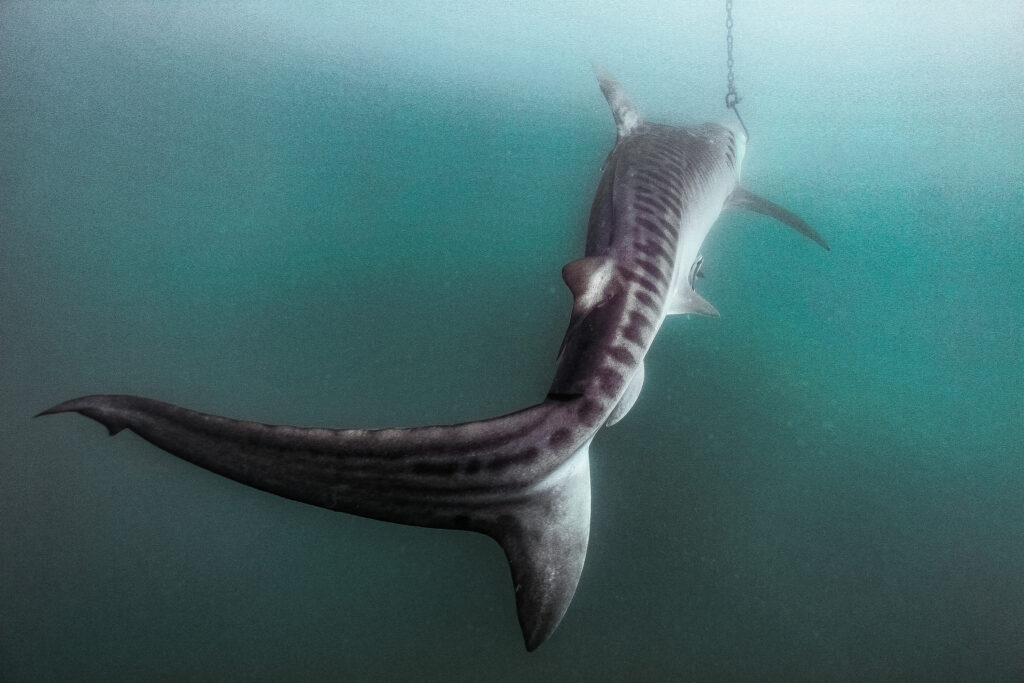
There was no fatal or serious injury at a meshed beach for the third year in a row, with 10 confirmed interactions over that time.
About 5.6 million people visited patrolled beaches in the netting zone between September 1 and April 30.
New South Wales has recently introduced several alternative beach protection strategies, including drone surveillance and “SMART” drumlines using regular surveillance.
“Combined with education programs and personal shark deterrents, those solutions were more technologically advanced and appropriate,” said Humane Society International Australia and the Australian Marine Conservation Society.
The Australian Marine Conservation Society is an Australian environmental not-for-profit organization. It was founded in 1965 as the Queensland Littoral Society before changing its name to the Australian Littoral Society and then finally in 1995 to its current title.
“The indiscriminate deaths that occur as a result of the outdated Shark Meshing Program in New South Wales must end,” said Lawrence Chlebeck, marine biologist, Humane Society International Australia.
“The technology is nearly 100 years old; we would never accept safety technology that old in any other facet of our lives. Why should ocean safety be any different?”
Humane Society International Australia is the Australian branch of Humane Society International, an offshoot of the international animal protection organization, The Humane Society of the United States.
Only a few large nesting populations of the green, hawksbill, and loggerhead turtles are left in the world. Australia has some of the largest marine turtle nesting areas in the Indo-Pacific region and has the only nesting populations of the flatback turtle, as per reports by the Australian Department of Agriculture, Water, and Environment.
“All marine turtle species are experiencing serious threats to their survival,” states the report.
“The main threats are pollution and changes to important turtle habitats, especially coral reefs, seagrass beds, mangrove forests, and nesting beaches.”
Edited by Saptak Datta and Ritaban Misra
The post Australian Shark Nets In New South Wales Kill A Turtle Every 20 Days appeared first on Zenger News.
