
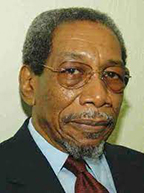
By Al Calloway
Dr. Carter G. Woodson’s creation of Negro [Black] History Week in February 1926, became celebrated with parades, banquets, speeches and exhibits across Black America. In 1970, the Black students and educators at Kent State University in Ohio promoted the occasion to celebrate the whole month of February. Since 1976, U. S. presidents have designated February as Black History Month.
In 1912, Woodson earned his PhD in history at Harvard University, becoming the second Black, after W. E.B. DuBois to do so. At the University of Chicago, where Woodson was awarded two degrees in 1908, he became a member of the first Black professional fraternity Sigma Pi Phi and Omega Psi Phi.
Through deep study and research, Woodson accumulated overwhelming evidence that the role of Black people in American history and world history was being ignored and manipulated by white scholars. Along with a handful of other Black scholars, he founded the “Association for the Study of Negro Life and History” on September 9, 1915, in Chicago, Illinois. The national organization is now named the “Association for the Study of African American Life and History (ASALH).
It is not surprising that Woodson was the son of former slaves. He was born on December 19, 1875 in New Canton, Virginia. During the Civil War, Woodson’s illiterate father escaped his “owner” and became a scout for the Union army, leading them to raid Confederate armaments and supplies. After the war and “freedom” for Blacks, the Woodson’s settled in rural West Virginia and eked out a living on a small farm they bought. Woodson did not attend school full-time until 1895 when he was twenty years old. He got a diploma in 1897. Back then, if you finished high school you were qualified to teach, which Woodson did in Winona, West Virginia. Moving fast through total absorption, Woodson got to Berea college in Kentucky and in two years, from 1901 to 1903 earned a Bachelor’s degree in literature and went to the Philippines as a school supervisor until 1907.
Although one of nine children himself, Carter G. Woodson never married and had no children. Woodson was totally consumed by research, writing, publishing and organizing. His numerous scholarly papers, articles and books are a testament to a life purposely lived. The scholarly “Journal of Negro History,” founded in 1916 is still published today by ASALH. Since 2002 the journal has been published as the “Journal of African American History.” According to the titles and publishing dates, Woodson wrote and published 20 books. The more famous two books are the “Negro in our History,” 1922, and the “Mis-Education of the Negro,” 1933.
After Harvard, Washington, D. C. and Howard University became Woodson’s base as a professor and as Dean of the College and to the College of Arts and Science. Unfortunately, hard at work in his home office in the Shaw neighborhood of Washington, D. C., Woodson died from a sudden heart attack. He was 74 years old. Every year there are many visitors to his burial site at Lincoln Memorial Cemetery in Suitland, Maryland.