
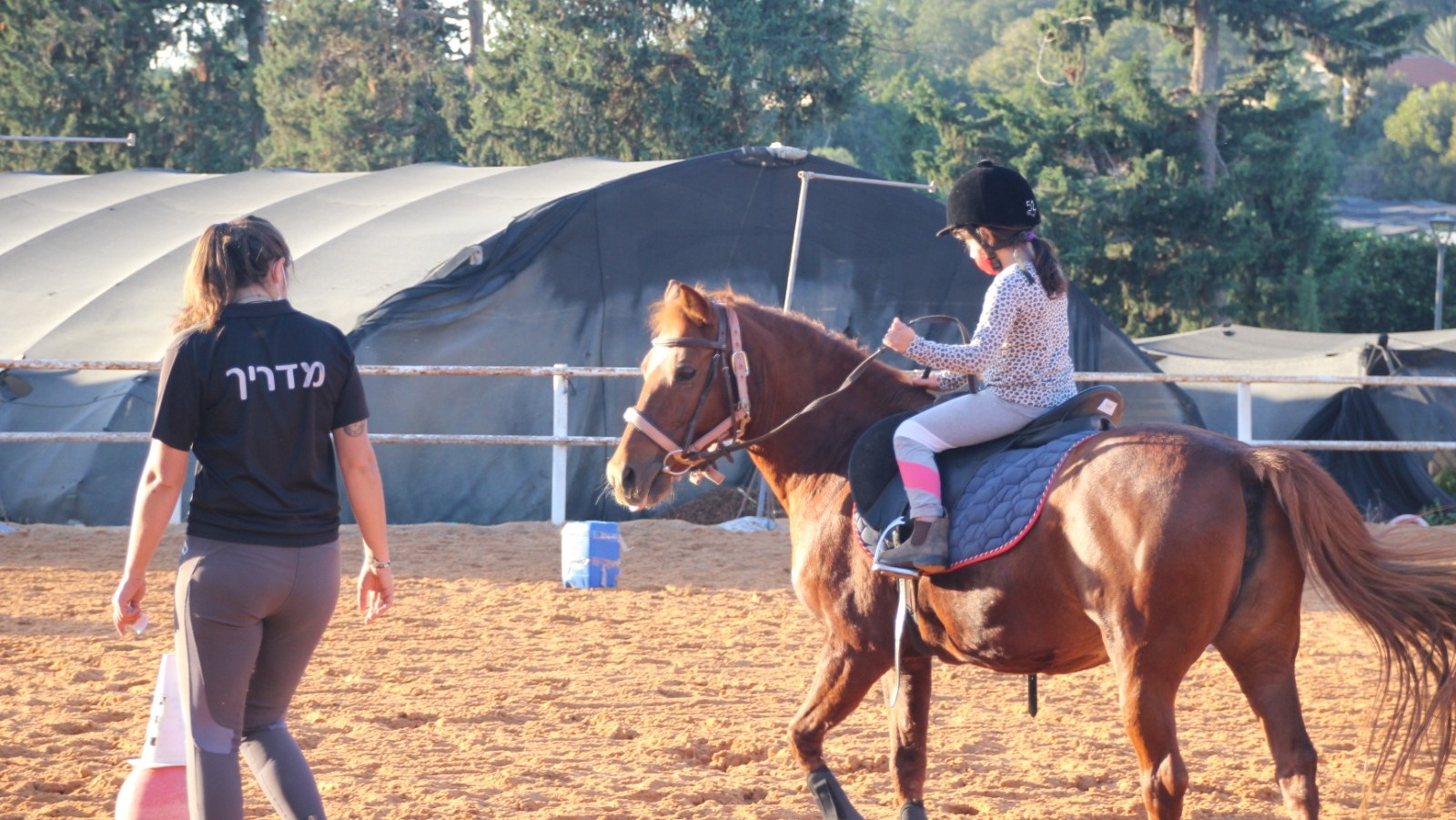
Maxim, a 13-year-old genius with socialization and communication difficulties due to autism spectrum disorder, had made excellent progress during two years of sessions at the Israel National Therapeutic Riding Association (INTRA).
But months of the pandemic seclusion plunged Maxim into distress.
“Without INTRA or school, it reached a point where his mother was afraid he’d lost his ability to speak. It was heartbreaking,” said Yotam Sheffy, executive director of INTRA.
As soon as INTRA was permitted to resume sessions last November, Maxim got back on his beloved blue-eyed pinto, Starlight.
“We were sure the therapeutic process would bring him back to where he was, but it took four weeks of sessions twice a week,” Sheffy said.
“He also started to process his feelings about the lockdown and isolation. He is now doing great and comes once a week for sessions and to groom Starlight.”
INTRA was founded in 2001 by Anita and Giora Shkedi, global pioneers in using equine therapy to enhance self-confidence, behavior and communication in children and adults with physical, neurological and emotional difficulties.
Clients range from kids with disabilities to stroke and brain trauma survivors to recovering addicts to military veterans with post-traumatic stress disorder.
Israel is the only country where equine therapy for children is covered by national health insurance, and it is an international leader in the field.
Therapy begins at the gate
Although therapeutic activities at the INTRA ranch halted during the Covid-19 lockdowns, Sheffy and his staff reached out to clients like Uri who were suffering and even regressing.
“During the first lockdown in March, I’d do video chats with some of our veterans while standing next to the horses. Our children with autism spectrum disorder would listen to the sounds of the horses,” Sheffy said.
Some of the veterans and families of severely autistic children got authorization to leave home during the lockdown and came to the gates of INTRA hoping to see their horses. Sheffy said one vet was crying with emotion to see the horse he works with, even at a distance.
“Being a therapeutic center, therapy begins at the gate. That’s when the smile comes on the face,” he said.
Based in Bnei Zion near Ra’anana, INTRA has resumed individual and group sessions as the pandemic wanes. About 150 riders are coming weekly, and there’s a waiting list.
A safe environment
“We had a hurricane of demand that was 100 percent related to Covid,” Sheffy said.
“A lot of families that spent time locked down became aware of challenges they weren’t aware of before. For others, daily therapies were suspended, so there was a lot of regression and anxiety. Some of our clients have lost communication and social skills they had gained,” he explains.
“The majority of families who come for intake talk about how their challenges were exacerbated by Covid. We can and should be part of the solution,” said Sheffy. “Covid made us understand how much therapeutic benefit this place has beyond the weekly sessions.
“We spoke about the need for clients to have a deep connection not just to the horse but to the place itself, to the safe environment they feel here,” he said.
“We explained that this deep connection enables us to continue the therapeutic process and keep them as optimistic and positive as possible when they can’t be here.”
What horse therapy accomplishes
Equine-assisted activities and therapy (EAAT) can facilitate physical, cognitive and behavioral development; increase strength and flexibility; improve motor skills; promote speech and cognitive reasoning; and enhance social skills.
“It’s not only horseback riding, but a physical, emotional, social and educational rehabilitation platform tailored to each client,” said Galya Aderet, resource development and partnership coordinator for INTRA.
Although riding is part of the program for most participants, just as important is creating relationships with the horse and with the therapeutic riding instructor.
“Caring for another creature is empowering for people who don’t have a lot of agency in their personal lives,” said Aderet. “It’s a turning point in a long-term rehab process.”

Learning to feed and groom a horse, and eventually to ride it with control and competence, is revolutionary for someone who is physically or emotionally paralyzed in life, she said.
“For riders who are wheelchair bound or have developmental or degenerative disorders, we have special harnesses and saddles so they can sit atop a horse and control its movements,” said Aderet.
“We have a hydraulic lift to place riders on and off horses, so we can handle any kind of physical or emotional disability.”
For those who cannot be on one of INTRA’s 19 horses and ponies, innovative attachments enable people in wheelchairs or with various degrees of paralysis to ride alongside the horse.

Instructor certification course
All of this requires a highly trained staff.
“We’re distinguished for our therapeutic rider instructor certification course founded by Anita and Giora,” said Aderet. “In this yearlong course, students learn about all the pathologies and psychology our clients deal with so they can tailor a treatment plan.”
More than 8,000 EAAT instructors trained in the Shkedi method now work throughout Israel, the U.S., UK and Europe.
Most of INTRA’s seven therapeutic riding instructors are graduates of this course, including Sheffy, who has worked at INTRA for 14 years and still leads one-on-one sessions.
The staff also includes three stable maintenance and horse-care workers, two administrative staff and 20 volunteer horse leaders and side walkers who ensure rider safety and help in mounting and dismounting.
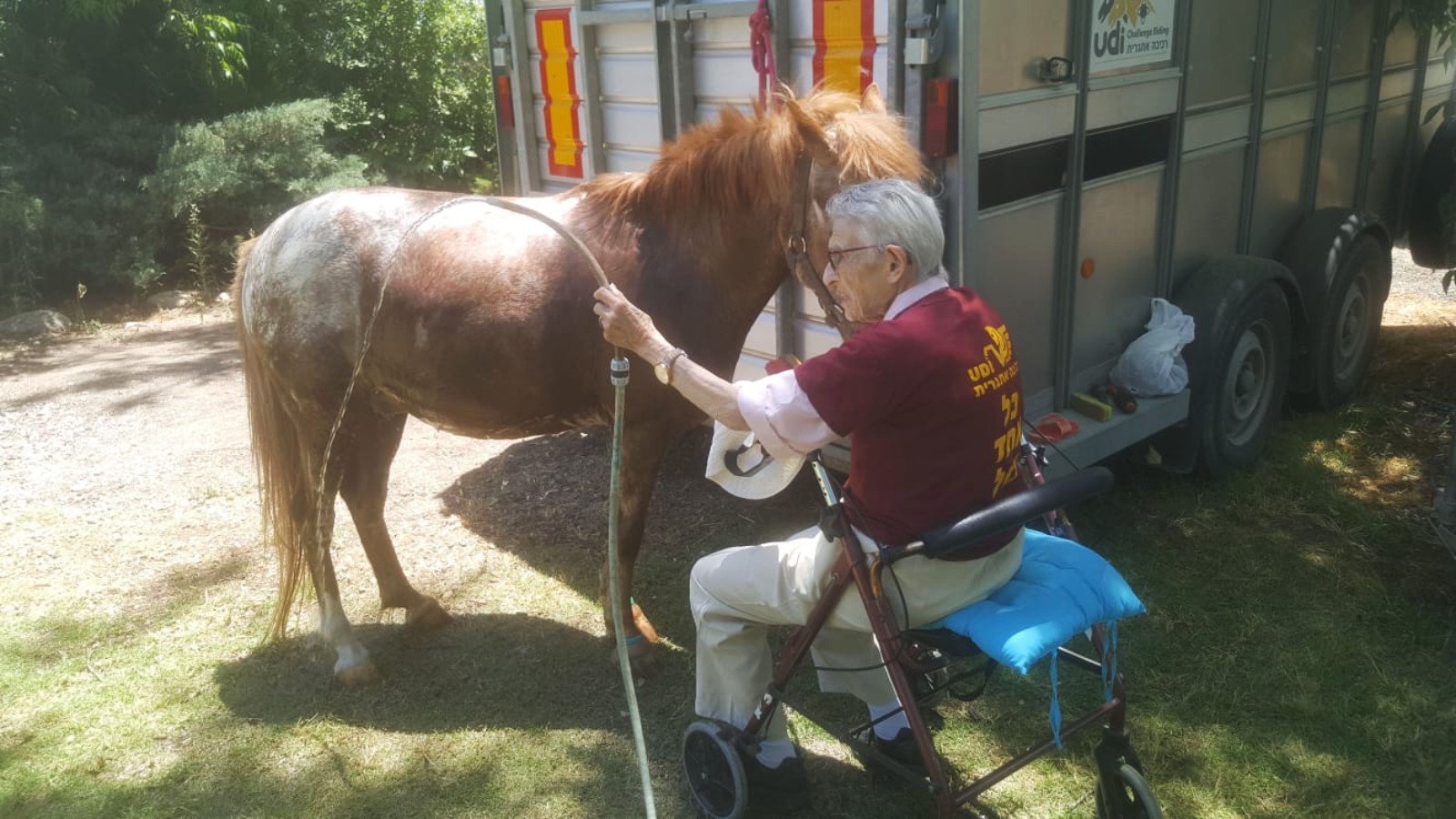
“Some participants only need the riding instructor and some need four staff members with them,” said Aderet. “We have a 95-year-old Kindertransport survivor who rides a pony with two side walkers and an instructor.”
Kindertransport was a series of rescues that saved thousands of Jewish children from the Nazis between 1938 and 1940.
INTRA welcomes visitors and volunteers from abroad, and this will resume as travelers can return to Israel. The donation-dependent therapeutic riding center also welcomes communities or individuals who want to “adopt” a rider or horse.
“This way, you can form a connection when you can’t visit Israel,” said Aderet.
For more information, click here
Coping With Covid In The Saddle Of A Therapeutic Horse appeared first in Israel21C.
The post Coping With Covid In The Saddle Of A Therapeutic Horse appeared first on Zenger News.
