Close Menu
The Westside GazetteThe Westside Gazette
    Facebook X (Twitter) Instagram
    • About Us
    • Contact
    • Media Kit
    • Political Rate Sheet
    • Links
      • NNPA Links
      • Archives
    • SUBMIT YOUR VIDEO
    Facebook X (Twitter) Instagram
    The Westside GazetteThe Westside Gazette
    Advertise With Us
    • Home
    • News
      • National
      • Local
      • International
      • Business
      • Releases
    • Entertainment
      • Photo Gallery
      • Arts
    • Politics
    • OP-ED
      • Opinions
      • Editorials
      • Black History
    • Lifestyle
      • Health
      • HIV/AIDS Supplements
      • Advice
      • Religion
      • Obituaries
    • Sports
      • Local
      • National Sports
    • Podcast and Livestreams
      • Just A Lil Bit
      • Two Minute Warning Series
    The Westside GazetteThe Westside Gazette
    You are at:Home » Eerie echoes of Albert Camus’ novel ‘The Plague’ in real-life Oran, Algeria
    Health

    Eerie echoes of Albert Camus’ novel ‘The Plague’ in real-life Oran, Algeria

    June 13, 20206 Mins Read14 Views
    Facebook Twitter Pinterest Telegram LinkedIn Tumblr Email Reddit
    Share
    Facebook Twitter LinkedIn Pinterest WhatsApp Email
    Advertisement

    ORAN, Algeria — A mysterious virus rips through the city of Oran, Algeria, in Albert Camus’ novel “The Plague.” Today the city on the Mediterranean coast grapples with COVID-19. Visiting the bars, beaches and boulevards that appear in the book reveals eerie parallels between 1947 fiction and 2020 reality.

    Known in French as “a place of radiance,” owing to its abundant sunshine and usually cloudless skies, Oran has been under curfew since mid-May after weeks of total lockdown.

    Camus, who would later win the Nobel Prize for Literature, wrote just after World War II about a silent epidemic in the city that killed the high and the low, often unpredictably.

    “Today we face an invisible enemy,” said professor Lellou Salah, president of the Scientific Council of the University of Science and Technology of the Oran-Mohamed-Boudiaf Hospital, where he studies tuberculosis.
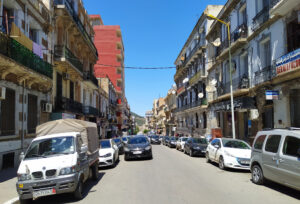
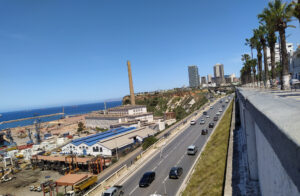
    A boulevard in Oran, Algeria is mostly deserted and devoid of any pedestrians on May 12, 2020 as city dwellers stay home to protect themselves from COVID-19. (Farid Sait/Zenger)
    The streets of Oran, Algeria are mostly deserted and devoid of any pedestrians, even near the waterfront, on May 12, 2020 as city dwellers stay home to protect themselves from COVID-19. (Farid Sait/Zenger)

    Camus imagined characters struggling to respond to a epidemic near the same building. On 67th Arzew Street, a central boulevard, the few remaining foreigners are required to undergo disinfection measures.

    The coronavirus pandemic is in some ways worse than Camus’ nightmare, which unfolded at this normally bustling port along Africa’s Mediterranean coast.

    His dark tale begins with rats inexplicably dying on the streets and annoyed townspeople blaming the sanitation department. As people sicken and die and panic grows, authorities agree to collect and cremate the rats—but ignore doctors who urge them to close the city to potentially contagious strangers.

    Officials dither and delay. Only when the dead piled up do they close the city gates and quarantine the public.

    Oran’s real-life authorities were somewhat quicker to act. And they face a more dangerous menace. Comparing the fictional story with today’s pandemic, “the new coronavirus is an uncontrollable threat unlike [Camus’] ‘Plague,’ which may have been stopped after a series of pest control and vaccination campaigns,” said Salah. As in the novel, there is no vaccine.

    Walking along the main boulevard recently, shuttered shops and closed cafes are empty monuments to the once lively city’s past. Hurrying before the 3 p.m. curfew, a handful of shoppers search out baguettes, cheese and plastic liter bottles of water. Ramadan’s end, Eid al-Fitr, was celebrated this May 30, but shopping has not returned to normal as it usually does after the fast.

    Mostly, it’s quiet. In a window, a gloved hand briefly parted the curtain to a passerby.
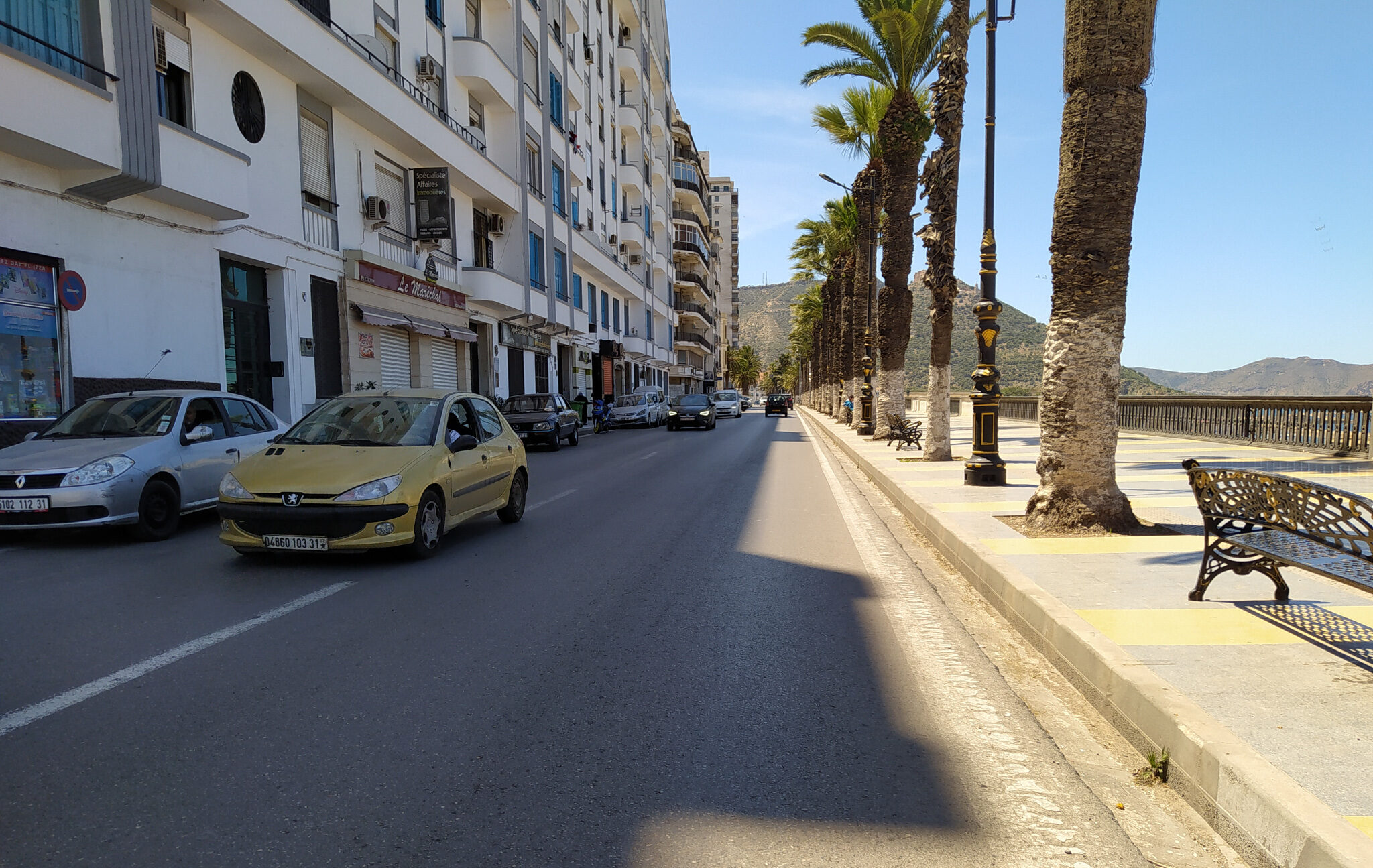
    The streets of Oran are mostly deserted and devoid of any pedestrians on May 12, as city dwellers stay home to protect themselves from COVID-19. Farid Sait/Zenger)
    The streets of Oran are mostly deserted and devoid of any pedestrians on May 12, as city dwellers stay home to protect themselves from COVID-19. Farid Sait/Zenger)
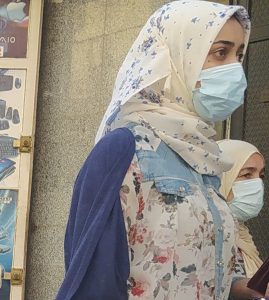
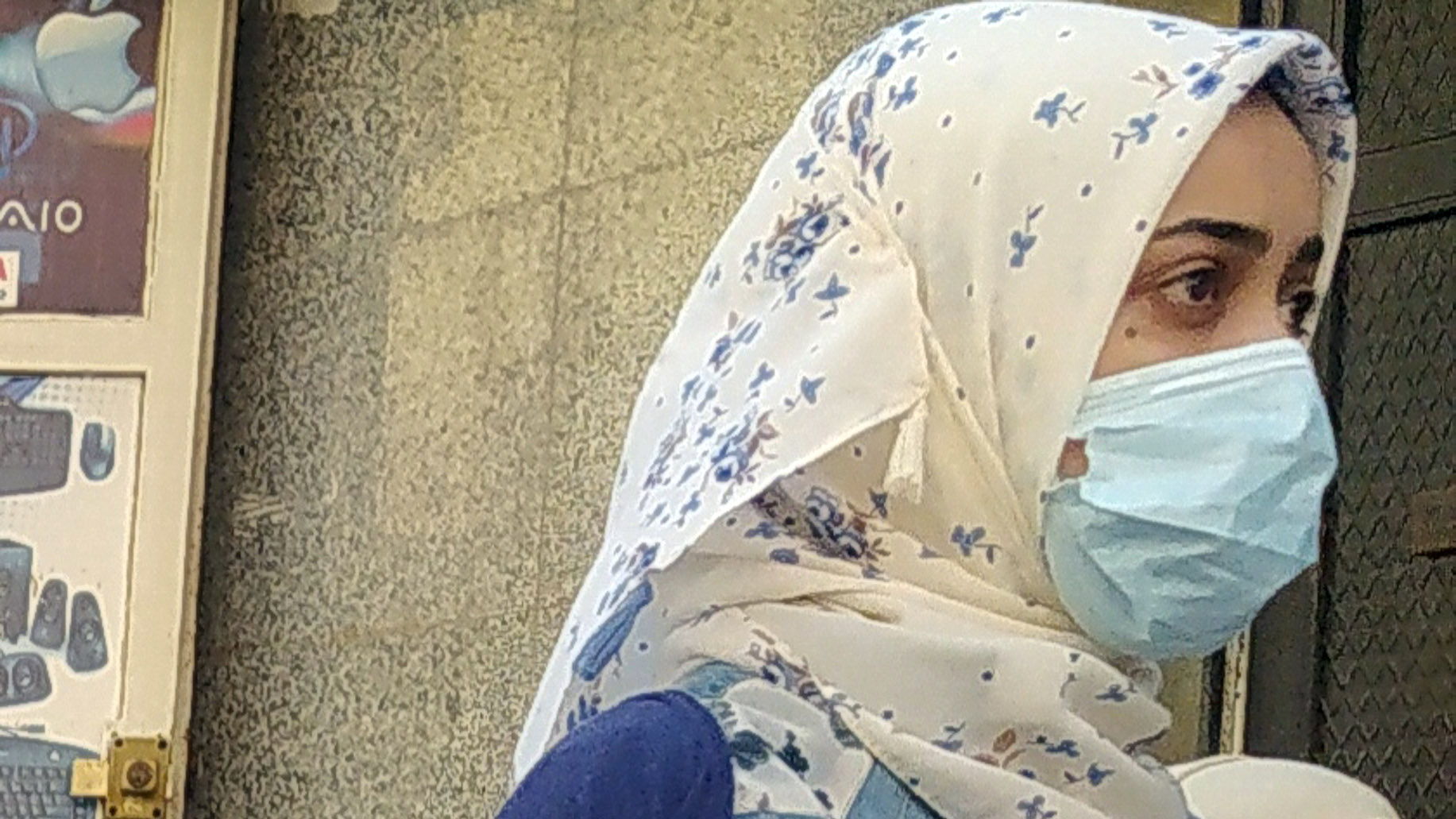
    A young woman wears a medical mask to protect herself from COVID-19 in Oran, Alegeria on May 12, 2020. (Farid Sait/Zenger)

    Camus focused on the psychological and sociological consequences of months of quarantine, the stress of total isolation and abrupt change to basic living. His characters responded in ways eerily familiar to today.

    Some focus on their own suffering, feeling isolated from loved ones and the larger community. Others try to flee the city or flout health preventive measures.

    Some look at the sick with anger or suspicion. Still others, determined to do something—anything—actively work to fight the plague.

    Everyone lives on edge: tired, isolated and uncertain about when the nightmare will end.

    Leaving the deserted boulevard 73 years into the story’s real-life future and turning onto the seaside street of Front de Mer, the salty air is a reminder of summer beach days. Queues of people ignore social distancing, hustling past each other to the harbor, birds squawking on electrical wires and children running to catch up with parents when they fall behind.

    Algerians at the Hospital Center and University, where 20 people are under intensive care for COVID-19, are weary of the quarantine—and of those who think they are above it.

    Djilali Chaibi, 50, is recovering from the disease. He said the coronavirus has “spread quickly to other people, all because of the failure to comply with containment and prevention measures.”

    The Belgaid district, Chaibi’s hometown, is located about nine miles northeast of Oran and has had the highest number of COVID-19 cases in the area.

    Hospital admissions continue to rise. In Algeria, hydroxychloroquine has been used widely, an unconfirmed treatment with sometimes uncomfortable side effects. But it has given the population a cause for optimism, said Salah.

    In Camus’ novel, experts blame environmental conditions—the rats and poor sanitation. While waste and garbage litter a few streets today, particularly in old and poor neighborhoods, the transmission and treatment of the novel’s plague “is completely different from what we are experiencing today,” said Salah.

    Algerian Prime Minister Abdelaziz Djerad and Minister of Health Abderrahmane Benbouzid came to Oran recently to assess the evolution of case transmission and hospital conditions.
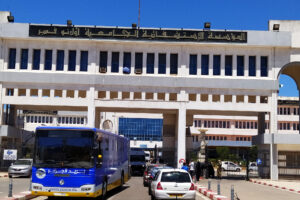
    Vehicles drive through the gate of Oran University Hospital on May 12, 2020 in Algeria. (Farid Sait/Zenger)
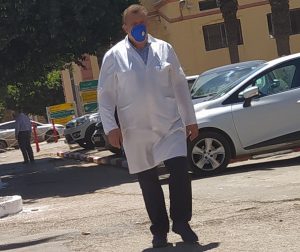
    A doctor outside the Oran University Hospital wears a mask to protect himself from COVID-19 on May 12, 2020. (Farid Sait/Zenger)

    Djerad announced another quarantine extension, with a curfew, in all 58 of the nation’s provinces.

    Benbouzid toured the Oran-Mohamed-Boudiaf Hospital, saying while he waited for new personal protection equipment to arrive that health care workers should find their own personal supplies.

    Thousands die in Camus’ story—far more than the coronavirus likely will kill in Oran and its surrounding province of the same name, where the death toll is 21 so far. It has seen 627 positive cases and 234 have recovered, according to Algeria’s Ministry of Health, Population, and Hospital Reform.

    But the novel is less about death than about what happens to a community as a quarantine extends from days to weeks, and then to months. His Oran citizens gradually leave behind their individual grievances and embrace a collective sense of social responsibility to jointly battle a silent killer that knows no boundaries.

    When the plague abruptly ends some 10 months after it appeared, Camus’ characters do what many of us would.

    Some stay away, terrified of the virus’ return. Others are scarred by family deaths or feel compelled to record the community’s history.

    Most fall back into their normal routines, forgetting—or wanting to forget—the calamity that had momentarily brought the community together.

    Today in Oran, the novel has become the news. As everywhere, coronavirus fears persist and push us to ask how we might choose to respond, and learn. Cooperation is fleeting. And the final chapter is not yet written.

    (Edited by Stephanie Mikulasek and Richard Miniter)

    The post Eerie echoes of Albert Camus’ novel ‘The Plague’ in real-life Oran, Algeria appeared first on Zenger News.

    Share. Facebook Twitter Pinterest LinkedIn Reddit WhatsApp Telegram Email
    info@zenger.news'
    zenger.news
    • Website

    Related Posts

    As state consider changes, new online tool eyes impacts of declining vaccination rates

    October 13, 2026

    Holy Cross Health Receives Emergency Nurses Week Proclamation from City of Deerfield Beach Emergency Nurses Week is October 11 to 17 Caption: Holy Cross Health nurses Lisa Alward, Angi Dionne, Karla Davis and Ian Worley receive an Emergency Nurses Week proclamation from City of Deerfield Beach Mayor Todd Drosky, Vice Mayor Michael Hudak and commissioners Ben Preston, Daniel Shanetzky and Tom Plaut. Photo Credit: Holy Cross Health Submitted by Paige Feigenbaum and Joseph Guastaferro DEERFIELD BEACH, FL– In advance of Emergency Nurses Week, Holy Cross Health received a proclamation from the City of Deerfield Beach at the city’s commission meeting on October 6. Emergency nurses are the first line of defense in the health care system, providing lifesaving care to patients during their most vulnerable moments. This year’s Emergency Nurses Week theme highlights the resilience, expertise and unwavering dedication these professionals bring to local emergency departments every day. “It is an honor for the City of Deerfield Beach commission to invite us to their meeting. This official proclamation means a great deal to our local frontline health care workers by helping raise public awareness of the critical role emergency nurses play in public safety and community health,” said Lisa M. Alward, BSN, RN, TNCC, SANE-A, Unit Base Nursing Council Chair at Holy Cross Freestanding Deerfield Beach Emergency Department. “On behalf of our council and my colleagues, I appreciate the time, leadership and constant support we receive from Mayor Drosky and Vice Mayor Hudak. The commission and Holy Cross Health both provide essential services to our community.” For more than 70 years, Holy Cross Health has been serving Deerfield Beach residents, but never more so than now. In May, the new Holy Cross Health Center & Emergency Care — Deerfield Beach opened to provide care closer to home. Holy Cross Health will fill even more emergency nursing positions when Holy Cross Health Center & Emergency Care – Fort Lauderdale at Sunrise, which is currently under construction, opens in August 2027. This year, Emergency Nurses Week will be celebrated from October 11 to 17 with Emergency Nurses Day on October 14. Emergency nurses care for patients on the worst days of their lives, and Emergency Nurses Week serves as an annual reminder to recognize the dedication, compassion and strength emergency nurses display, even in the most challenging times. Since 1989, the Emergency Nurses Association (ENA) has recognized the second Wednesday in October as Emergency Nurses Day to honor emergency nurses for their commitment to patient care. In 2001, ENA expanded the celebration to devote an entire week to celebrating emergency nurses. For more information on emergency nursing or Emergency Nurses Week, please visit the Emergency Nurses Association at www.ena.org. During Emergency Nurses Week and throughout the year, Holy Cross Health encourages patients and their families to show their appreciation for emergency nurses or any health care provider who goes above and beyond the call of duty and touched their lives by making a monetary gift through the Healing Heroes program, which honors exceptional service and advances Holy Cross Health’s mission of compassionate, patient-centered care. Each Healing Hero receives a special pin and a personal note of gratitude. Donors may contribute any monetary amount they feel comfortable giving and direct their funds to an area of the hospital that means the most to them, including cancer, heart and vascular, orthopedics, neurosciences, Institute for Nursing Excellence, medical equipment and technology, or they can customize their donation. Learn more, make a donation and share a story of gratitude at Holy-Cross.com/HealingHeroes. ABOUT HOLY CROSS HEALTH A member of Trinity Health, Fort Lauderdale-based Holy Cross Hospital, dba Holy Cross Health, is a full-service, not-for-profit, Catholic, teaching hospital operating in the spirit of the Sisters of Mercy for more than 70 years. Holy Cross Health earned High Performing ratings for five Types of Care in U.S. News and World Report’s 2026-2027 Best Hospital rankings; received the American Heart Association’s Commitment to Quality award for achieving high performance across three or more clinical areas in the Get With The Guidelines® program for two years running in 2025 and 2026; received “LGBTQ+ Healthcare Equality High Performer” designation from the Human Rights Campaign Foundation’s 2026 Healthcare Equality Index; and received four out of five stars in the Centers for Medicare & Medicaid Services Overall Hospital Quality Star Ratings for two consecutive years in 2025 and 2026. Additionally, Holy Cross Wound Healing and Hyperbarics program earned the 2025 Center of Distinction award by Healogics®, Physicians Outpatient Surgery Center at Holy Cross HealthPlex landed a spot on Newsweek’s list of America’s Best Ambulatory Surgery Centers 2025 and Holy Cross Health Foundation is designated as a High Performer from the Association for Healthcare Philanthropy. Holy Cross Health was also named among the 2024 America’s Best-In-State Hospitals by Newsweek and selected as a Forbes America’s Best Employers for Healthcare Professionals in 2025 and 2026. Through strategic collaborations and a commitment to being a patient-centered, transformative and healing presence, the 557-bed hospital offers progressive inpatient, outpatient and community outreach services and clinical research trials to serve as the community’s trusted health partner for life. Holy Cross Health also includes the new Holy Cross Health Center & Emergency Care — Deerfield Beach, which opened in May 2026; Holy Cross HealthPlex outpatient facility; The Holy Cross Health Family Health Center in Oakland Park; urgent care centers; and more than 40 Holy Cross Medical Group offices, a multi-specialty physician-employed group of 200+ physicians providing services throughout Broward County. Holy Cross Health Center & Emergency Care – Fort Lauderdale at Sunrise is currently under construction and is expected to open in August 2027. To learn more about Holy Cross Health, visit holy-cross.com, and connect with them on Facebook, LinkedIn, Instagram and YouTube.

    October 13, 2026

    Holy Cross Health is Only South Florida Hospital to Earn the American Heart Association’s Commitment to Quality Award

    October 13, 2026

    (Please enter your Payment methods data on the settings pages.)
    Advertisement

    View Our E-Editon

    Advertisement
    https://youtu.be/5prVj0eWVYg?si=cHOS4Gls9F52Yrk0
    Advertisement

    –>

    Advertisement
    Advertisement
    advertisement

    Advertisement

    –>

    The Westside Gazette
    Facebook X (Twitter) Instagram Pinterest
    © 2026 The Westside Gazette - Site Designed by No Regret Media.

    Type above and press Enter to search. Press Esc to cancel.

    Go to mobile version