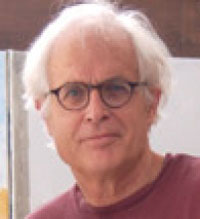
By Winslow Myers
Civil disobedience, the willingness to break a law and endure the consequences for the sake of a greater moral good, enjoys a pedigree extending back through King’s civil rights movement, Gandhi’s passive resistance to India’s British colonizers, and even back to Thoreau, who went to jail for a night rather than pay a tax that was being used to fund the Mexican war of 1846-48.
Students risking arrest for calling their institutions to stricter account should be commended.
University endowments can grow quite nicely without investment in the arms trade or fossil fuels.
But universities are mostly wasting opportunities to fulfill that part of their mission centered upon dispassionate inquiry. Those Jewish and Palestinian college students shouting slogans that some of them might not even understand generate plenty of heat, but as to light—not so much.
Absent the active listening that ought to be a skill that colleges require of all students, angry shouting itself, though a quantum leap better than shooting, is a form of futile violence. The same fanatic certainty, self-righteousness and lack of humility we deplore in both Netanyahu and the Hamas leader Yahyah Sinwar can be seen in the faces of some of the students making non-negotiable demands of hapless college administrators—who are themselves caught between the unqualified student rage and faux-indignant demagogues like Congressperson Stefanik.
For decades Len Traubman, a California pediatric dentist, and his spouse Libby, a social worker, invited small groups of American Palestinians and Jews to sit down together over a meal and share their stories. Len is gone, but Libby, in her 80s, persists. Participants welcome the opportunity to experience each other in their full human dimension rather than as oversimplified caricatures of the ‘enemy.’
Other equally significant initiatives continue both on and off American campuses. Out of such efforts will come the servant leaders of tomorrow, armed with an experience of open dialogue that goes beyond easy side-taking.
The model of ordinary Jewish and Palestinian citizens sitting down to a meal and respectfully sharing each other’s concerns would not appear to have much success in the Middle East itself right now (though crucial initiatives continue to exist there). T
The idyllic campuses of American universities are surely a far easier venue for peaceful dialogue. But it won’t happen without a concerted effort by students, faculty and administrators to agree to its value—an exposure to ambiguities which, were their solution as simple as who can shout the loudest or kill the most, would have been resolved long ago.
It is hard not to contrast the self-certainty of the most strident students with the poignant exhaustion of the soft-spoken U.S. Secretary of State Antony Blinken (doing his difficult work as the representative of an imperial superpower also divided within itself at the highest level), who shuttles endlessly from country to country trying to try to build coalitions for ending a brutal conflict with a long history of injustice and bad faith on all sides.
Far easier for students, faculty and administrators, who only have to shuttle across campus, to try to forge understanding and connection on the basis of our shared humanity.
Winslow Myers, syndicated by PeaceVoice, is the author of “Living Beyond War: A Citizen’s Guide” and serves on the Advisory Board of the War Prevention Initiative.