
I Was A Slave, Plantation Life
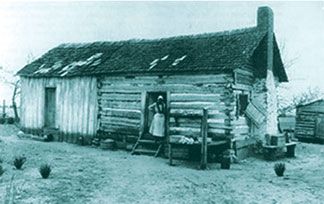
Slave cabin with swinging-door window. © EnhancedPhoto: IWASASLAVE.com.
Compiled by Donna Wyant Howell
Part Two of a Four Part Series
In the 1930s, thousands of formerly enslaved African-American elders dictated their full life stories during interviews conducted by the US government. The following is the translation of their words from southern dialect into standardized English. Their original words are published in “I WAS A SLAVE ,” a series of books.
It is very important to remember that each owner created his or her own rules for governing their slaves. Therefore, the interviews provide accounts of vastly different experiences during similar circumstances.
FOOD RATIONS
The former slaves explained that, some plantations, their food was rationed to each family and, others, was prepared by cooks and served communal-style.
Isom Norris (Tex.): Every Sunday morning, all of us went to the Big House to get our week’s supply of food. We received enough food, such as meat, flour, lard, peas, beans, potatoes and syrup, to last until the next Sunday.
Anna Miller (Tex.): We seldom got meat. White flour? We didn’t know how that tasted …. We received all of the milk we wanted because they put it in a trough and we helped ourselves. There was a trough for the slaves and one for the hogs.
Mary Reynolds (La.): They brought the food and the water to the fields on a slide pulled by an old mule. Often, there was only a half-barrel of water for all the slaves and it was stale and hot on the hottest days. Most of the time, we ate pickled pork, cornbread, peas, beans and potatoes. There never was as much food as we needed.
Tempie Cummins (Tex.): My dress usually was split from hem to neck. I had to wear them until they were only strings. We went barefoot in the summer and winter until the skin on our feet cracked open.
William Mathews (La.): The clothes we wore were made out of dyed lowerings. That’s the material used to make sacks.
Cato Carter (AL): They were always good to me because I was one of their blood. I had plenty of fine clothes, such as good woolen suits they spun on our place, doe-skins, and fine linens. _
Gill Ruffin (Tex): They gave one garment at a time to us. Each had to be completely worn-out before we got another. All of the slaves went barefoot.
Preely Coleman (Tex): Master Tom made us wear shoes because there were so many snags and stumps that made our feet sore. They were red russet shoes (made of rawhide). I’ll never forget them. At first, they were so stiff that we could hardly bear to wear them.
Silas Jackson (Va): Each slave was given something. The women received lindsey cloth or gingham clothes. The men got overalls, muslin shirts, underwear, two pair of shoes, and a straw hat. In cold weather, we wore woolen clothes that were made at the sewing cabin.
Julia Daniels: Underwear? I never wore any underwear at that time.
