
Covid-19 vaccines built with mRNA are the future. Genetic messengers that carry instructions to cells to make proteins, to treat or prevent disease, can be harnessed to keep the pandemic sickness at bay.
The same technology was used to treat cancer in mice in the laboratory of Professor Dan Peer, vice president for research and development and head of the Laboratory of Precision Nanomedicine at the Shmunis School of Biomedicine and Cancer Research at Israel’s Tel Aviv University (TAU).
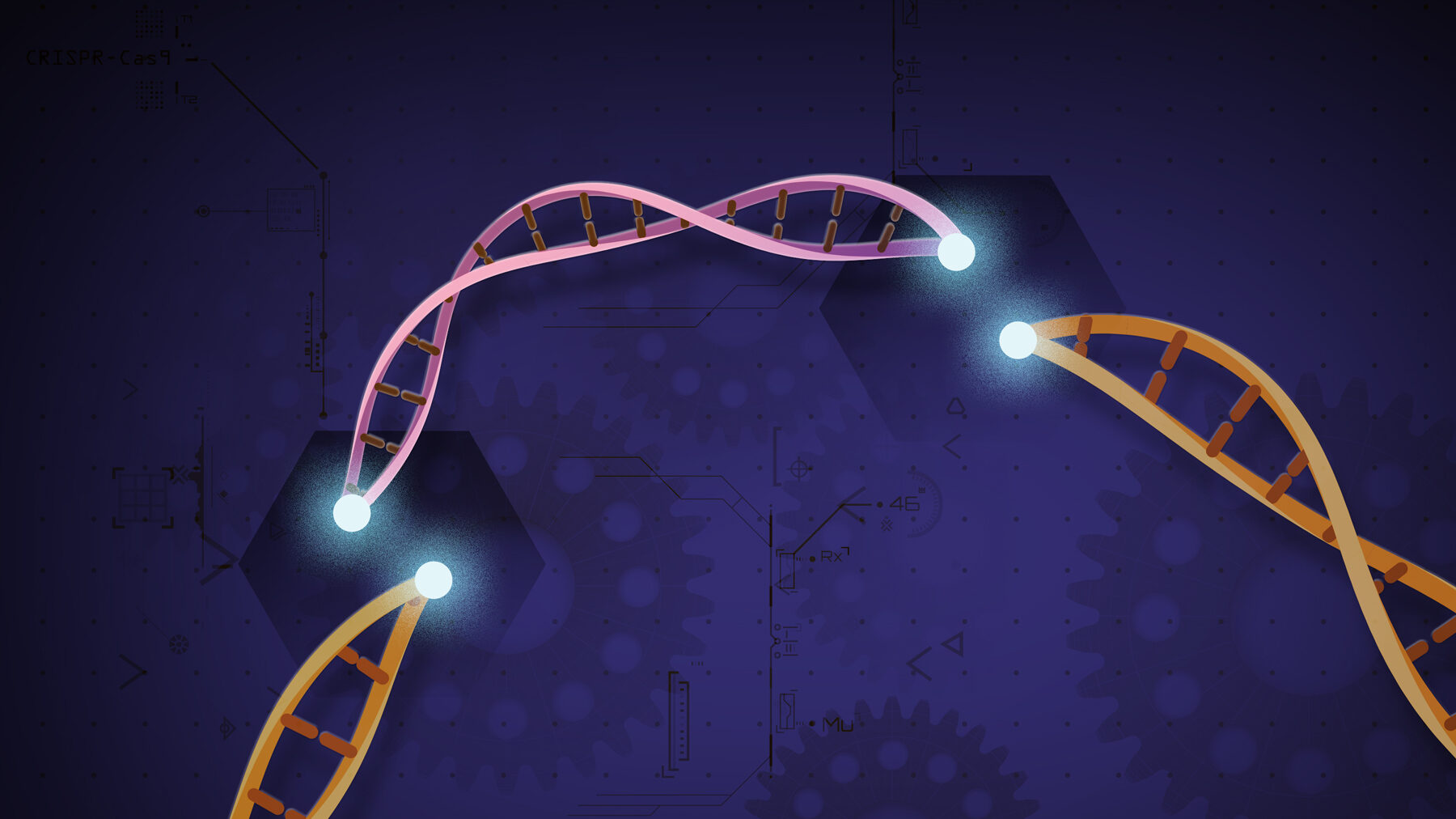
The novel lipid nanoparticle-based delivery system, called CRISPR-LNPs, carries mRNA that encodes for the enzyme Cas9. This enzyme acts as a molecular pair of scissors that snips the cancer cells’ DNA, effectively destroying them.
The results of the study, funded by Israel Cancer Research Fund, were published in November in the Science Advances journal.
“This is the first study in the world to prove that the CRISPR genome editing system can be used to treat cancer in a living animal effectively,” said Peer.
“It must be emphasized that this is not chemotherapy. There are no side effects, and a cancer cell treated in this way will never become active again. The molecular scissors of Cas9 cut the cancer cell’s DNA, thereby neutralizing it and permanently preventing replication.”
Peer and his team chose to test the technology on two of the deadliest cancers: glioblastoma and metastatic ovarian cancer.
Glioblastoma is the most aggressive type of brain cancer, with a five-year survival rate of only 3%. A single treatment with CRISPR-LNPs doubled the average life expectancy of mice with glioblastoma tumors, improving their overall survival rate by about 30%.
Ovarian cancer is the most lethal cancer of the female reproductive system; only a third of the patients survive this disease. Treatment with CRISPR-LNPs in a metastatic ovarian cancer mice model increased their overall survival rate by 80%.
“The CRISPR genome editing technology, capable of identifying and altering any genetic segment, has revolutionized our ability to disrupt, repair or even replace genes in a personalized manner,” said Peer.

“Despite its extensive use in research, clinical implementation is still in its infancy because an effective delivery system is needed to safely and accurately deliver the CRISPR to its target cells. The delivery system we developed targets the DNA responsible for the cancer cells’ survival. This is an innovative treatment for aggressive cancers that have no effective treatments today,” said Peer.
He said the research team now intends “to go on to experiments with blood cancers that are very interesting genetically, as well as genetic diseases such as Duchenne muscular dystrophy. It will probably take some time before the new treatment can be used in humans, but we are optimistic.”
The researchers include Daniel Rosenblum, Anna Gutkin and Dinorah Friedmann-Morvinski from TAU; Dr. Zvi Cohen, head of neurosurgical oncology at Sheba Medical Center, Dr. Mark Behlke, CSO at Integrated DNA Technologies; and Prof. Judy Lieberman of Boston Children’s Hospital and Harvard Medical School.
“Through Ramot, the technology transfer company of Tel Aviv University, we are already negotiating with international corporations and foundations, aiming to bring the benefits of genetic editing to human patients,” said Peer.
Innovative genome editing treatment destroys cancer cells appeared first on ISRAEL21c.
(Edited by Bryan Wilkes and David Martosko)
The post Innovative genome editing treatment destroys cancer cells appeared first on Zenger News.
