By Robert C. Koehler
As I get older – my big eight-oh is virtually two months away – I find myself sloshing through my childhood, my awkward youth, with ever-increasing awe. I’m not talking so much about “memories” (that time I broke my finger playing football, let us say, or that crush I had on Patty in first grade), but something larger, quieter, less clear: moments of unexpected awareness.
These are moments of becoming. And they’re still with me. They’re still creating who I am, which is why I’ve decided to write about them again. I tossed a few of these moments out into the world a couple years ago, but since they’re still relevant to the world of today, I’ve decided to revisit them.
One such moment occurred after I had a punch-out with a friend after school. Then I bicycled home, with bruised knuckles, a torn pantleg. I parked the bike behind our house and as I dismounted, I felt consumed by an awareness I couldn’t shake off. Gosh, that was stupid.
Maybe fighting is part of kid life, but it’s also utterly valueless. I got hold of myself, calmed down . . . and decided I would never fight again. This wasn’t a flimsy, breakable rule I decided to impose on myself – you know, try to behave better – but something much, much bigger. In that moment, I claimed, well, partial agency over my own hot temper, and eventually beyond that: over the collective anger that had a grip on so much of the world. I decided I didn’t want to be a part of that anymore. This was well before I was in any way “political.” I was 11. I read the sports pages; that was it. But the stupidity of real-life fighting remained a scar on my psyche for the rest of my life.
When I was 13, I had another stunning moment of becoming. This one was far stranger, far less obvious. I hardly understood it. It was caused by a movie. The year was 1959. My mother, sister and I went to the local theater one Saturday afternoon and saw – I have no idea why – Imitation of Life. It wasn’t funny or cowboy-and-Indian exciting. It was a social drama about, for God’s sake, race: a black woman who works as a maid, whose daughter is light-skinned enough to pass as white and chooses to do so, separating herself from her mom.
I’m not sure if the movie is any good, but I did watch a small piece of it a few hours ago and was pulled deeply in. Indeed, I was shocked – the ending slashed my heart: At Annie’s, the mom’s, funeral, Sarah Jane, the estranged daughter, pushes through the crowd of mourners and clutches hold of the casket, crying for forgiveness. She had pushed her mom – who loved her dearly – out of her life so she could live as a white person. As she lies atop the casket, she cries: “I killed my mother.” And the movie ends.
As I say, I was 13. The civil rights movement had started up in the South, but I had no connection with it whatsoever. I was a teenage white boy living in an all-white suburb in the Midwest. I knew there were bad people around who did racist things, but what did that have to do with me?
So the movie hit me by surprise. I’m sure I had no emotional protection from its heart-cutting ending, nor did I have the ability to wrap it up mentally under the label “race,” stash it away and move on. I was simply . . . well, troubled. And I’m sure we didn’t talk about it. We just headed home.
But then something happened – which had nothing to do with the movie. We had car trouble. Mom pulled into a garage so we could get the matter fixed. It apparently was not a big deal. They started working on it and we just sat there waiting. I’m sure I was doing my best to put the movie and the emotions it stirred out of my mind, but there’s no doubt something deep had just opened in me. I didn’t know what.
The car was ready. We started driving home. And boing went my mental lightbulb. I had a thought, and the thought is beyond strange. It seems to have had no relationship to the movie per se, though apparently it emerged from the troubled confusion I was feeling. Even now it makes no sense. I silently told myself: I’m a genius.
Huh?
I can only guess what that meant, but I’m sure it had nothing to do with being measurably super-smart. Rather, somehow, I was suddenly aware . . . of God knows what. Perhaps the value of life. I had just seen over the edge of ordinary, over the edge of what we’re supposed to believe, into a deep unknown. I had seen beyond the answer to the question.
In retrospect, I believe this moment pushed my sense that I was a writer, and that life was mine to discover, not simply “be taught.” I also believe the takeaway from it was: Everyone is a genius. Everyone matters. We all have a unique perspective on the unknown. As I rode home with Mom and Sis, I clutched this like a precious stone, a blue pearl, perhaps, hovering in my psychic void.
And finally, three years later: Here’s me at age 16, about to have another moment of awareness – thanks to an encyclopedia salesman. Actually, I think it was just Volume A, which we got in the mail after joining a book-of-the-month club. Ever the eager learner, I started scrolling through the volume and came across a description of the book The Age of Reason, by Thomas Paine. I was intrigued, and on Saturday I went to the public library and checked out a copy.
I spent the rest of the day in bed and read the whole thing. Oh my God (so to speak). I had grown up in a church-going family and had never particularly questioned religion, but Paine’s critique of Christian theology hit me hard, in particular because I had also recently read the book Exodus, by Leon Uris – another book-of-the-month arrival. That book had opened my awareness of the creation of Israel (I’d no doubt get extremely frustrated with it today) and Jewish people in general. I knew nothing more about this than I did about civil rights, but I felt moved by Uris’s story.
And the two books in tandem opened up an awareness I couldn’t tolerate. According to what we’re told to believe, non-believers – that includes Jews, all of them – go to hell. In no way, no way, did I give any credence to this, and because I was the person in charge of my own beliefs, I immediately decided to leave the church. The next morning I told my mother, who was shattered. She also loved me dearly, and we struggled for years over this – and eventually our relationship transcended all theology. Our love for one another was bigger than that. And I began calling myself a “trans-believer”: curious about every religion, open to spiritual wisdom wherever it comes from.
And I couldn’t be happier, or more grateful, for these moments of awareness, which, as I wrote, are still creating me. And they support my core belief about life: All humans are created equal.
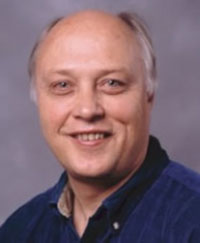
Robert Koehler (koehlercw@gmail.com), syndicated by PeaceVoice, is a Chicago award-winning journalist and editor. He is the author of Courage Grows Strong at the Wound, and his album of recorded poetry and artwork, Soul Fragments.