By Author Reneé S. Anderson
(Source: The Conversation)
Reneé S. Anderson does not work for, consult, own shares in or receive funding from any company or organization that would benefit from this article, and has disclosed no relevant affiliations beyond their academic appointment.
Lula “Mae” Reeves, one of the first Black women in Philly to own her own business, created one-of-a-kind and custom hats for celebrities, socialites, professionals and churchgoing women in downtown Philadelphia for over 50 years.
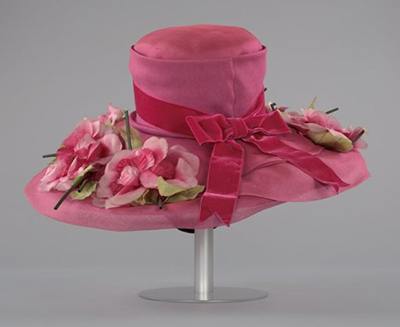
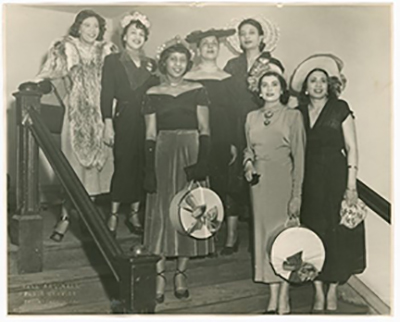
She made hats for everyday wear, hats for special occasions, and magnificent “showstoppers,” as she called them. Her celebrity clients included Eartha Kitt, Marian Anderson, Lena Horne, Ella Fitzgerald and members of the du Pont and Annenberg families.
I am a museum specialist at the National Museum of African American History and Culture at the Smithsonian Institution and an expert in costumes, textiles and millinery fashion.
In 2009, I was called upon to visit Mae’s Millinery, her former store at 41 N. 60th St. in West Philadelphia, to help select objects for a new permanent exhibition at the Smithsonian that recreates Reeves’ shop and showcases some of her stunning designs.
I also met Reeves in person for the first time that day at a nursing home in Darby, Pennsylvania. She was 96 years old.
A few years later, I returned to Philadelphia to attend Reeves’s 100th birthday celebration. It was during that visit that I learned, to my surprise and intrigue, that Reeves had also used her millinery shop as a polling station.
Black velvet turban on display
During my first meeting with Reeves, she shared her memory of the first hat she created after she opened her 60th Street store, a beautifully decorated shop, in 1941. Her original millinery shop was at 1630 South St., and many of her famous clients followed her to the new location in West Philadelphia.
Reeves recalled creating a black velvet turban that she placed in the window. A young woman walked by on her way home from work and was enthralled. The woman returned to try it on and, Reeves told me, visualized the impressive fashion statement she would make. She purchased the turban for about US$20 – roughly $430 in today’s dollars.
To open her West Philly millinery store, Reeves had secured a $500 business loan in 1940 from the Citizens and Southern Bank and Trust. The Black-owned bank catered to Philadelphia’s African American community, as most white-owned banks refused to loan money to Black customers.
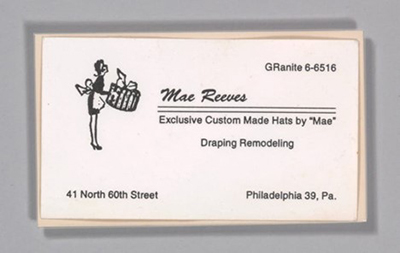
Reeves was proud to tell me how she had secured the loan entirely on her own – with no co-signer – by maintaining a reputation of “good standing” and having sound business plans. She was also extremely proud that she “paid back all of the loan.”
From millinery shop to polling station
To transition her millinery shop to a polling station, Reeves told me that she and her second husband, Joel Reeves, who sold newspaper advertisements, would remove the beautiful furniture and decorative items to accommodate the polling machines.
To get the word out about the designated polling station, the couple distributed handbills and hung posters throughout the neighborhood. Reeves offered plates of food to politicians who stopped by and cake to the voters. She wanted to create a safe and welcoming polling place while also emphasizing the importance that Black Philadelphians exercise their right to vote.
Reeves was also a longtime member of the Freedom Day Association, a group formed in 1941 in Philadelphia to ensure younger African Americans understand the importance of the 13th Amendment, which abolished slavery; the 14th Amendment, which grants citizenship to all people born or naturalized in the U.S; and the 15th Amendment, which prohibits denying any citizen’s right to vote on account of race, color or previous condition of servitude.
The association was started by Maj. Richard Robert Wright Sr., a former U.S. Army paymaster, educator, politician, civil rights advocate and founder of the Citizens and Southern Bank – the bank that had offered May that $500 loan. Reeves admired Wright, who had been born into slavery, and considered him a close friend and business associate. She kept a copy of his portrait photo on display in her millinery shop.
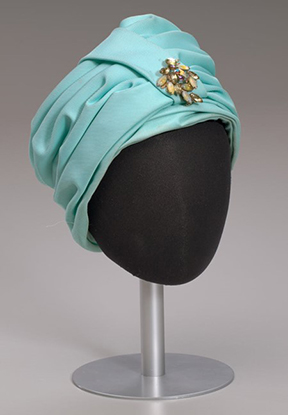
A turquoise turban-style hat with brooch made by Mae Reeves. Collection of the Smithsonian National Museum of African American History and Culture/Gift from Mae Reeves and her children Donna Limerick and William Mincey, Jr.
Barbecues and beach trips
In March 2025, I spoke with Reeves’ daughter, Donna Limerick, by phone. She told me Reeves had been a member and president of the 60th Street Business Association, which promoted good business practices, shared marketing strategies and encouraged support for other businesses in the association.
Reeves was also active in the National Association of Fashion and Accessory Designers, a Black trade group sponsored by the National Council of Negro Women. The group’s purpose was to promote Black women in the fashion industry by developing their business skills and fostering collaboration and access to mainstream fashion. The Philadelphia chapter was formed in 1950.
Despite her many professional and civic commitments, Reeves also took care of those closest to her. Limerick shared with me how her parents would take neighborhood kids to their summer home in Mizpah, New Jersey. They would ply the children with delicious homemade meals and desserts, organize regular barbecues and beach trips, and teach the kids to fish.
Reeves passed away in 2016 at the age of 104. I hope her story encourages others – as it has encouraged me – to be brave enough to dream; to be diligent enough to actualize your dreams; to be mindful to support your community; to be a person of grace; and to be careful to always expect, seek and give joy.