Marching orders for the future
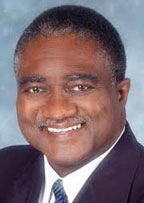
By George E. Curry NNPA Columnist
Now that we’ve had two events at the Lincoln Memorial to commemorate the 50th anniversary of the 1963 March on Washington, it is important to remember a few things about Dr. Martin Luther King, Jr. beyond his “I Have a Dream” speech.
The question is always asked: What happens after the marches are over? Demonstrators left Washington, D.C. in 1963 determined to change the American landscape. Consequently, we had passage of the 1965 Civil Rights Act, the 1965 Voting Rights Act and the 1968 Fair Housing Act. Those laws were passed not because of a speech in the nation’s capital, but because of the hard work and dedication of people at the local, state and national level to bring about change.
While the “I Have a Dream” speech might have been Dr. King’s most popular oration, it was not his most substantive one. In 1963, Dr. King etched a prosaic picture of what America should look like in the future. But a far more important one was his “Mountaintop” speech, delivered in Memphis the night before he was assassinated.
In that speech, Dr. King outlined a plan for economic empowerment and told us how to strengthen our institutions to accomplish that goal. He reminded us, “Always anchor our external direct action with the power of economic withdrawal.”
Dr. King explained, “We don’t have to argue with anybody. We don’t have to curse and go around acting bad with our words. We don’t need any bricks and bottles, we don’t need any Molotov cocktails. We just need to go around to these stores, and to these massive industries in our country, and say, ‘God sent us by here, to say to you that you’re not treating his children right. And we’ve come by here to ask you to make the first item on your agenda—fair treatment, where God’s children are concerned. Now, if you are not prepared to do that, we do have an agenda that we must follow. And our agenda calls for withdrawing economic support from you.”
He urged us to “strengthen our Black institutions” by patronizing them.
Instead of placing so much emphasis on what Dr. King said in 1963, we should look at what he was doing at the time of his death. He wasn’t trying to create a special commission or hold conferences on how to strengthen the middle class. He was organizing a Poor Peoples Campaign, a trek to Washington, D.C. to dramatize the urgent need to help the least among us.
After President Lyndon B. Johnson shifted his focus from the War on Poverty to the war in Vietnam, Dr. King and the Southern Christian Leadership Conference (SCLC) launched an effort in 1968 to seek economic justice for poor Blacks, Whites, Latinos and Native Americans. The idea was to have another March on Washington that would force political leaders to address the issue of poverty.
“We ought to come in mule carts, in old trucks, any kind of transportation people can get their hands on,” King said. “People ought to come to Washington, sit down if necessary in the middle of the street and say, ‘We are here; we are poor; we don’t have any money; you have made us this way… and we’ve come to stay until you do something about it.”
SCLC continued the Poor People’s March after King’s death, erecting a tent city on the Mall. A After six weeks, demonstrators were evicted.
Today, the poor are still suffering. Poverty is defined as a family of four being able to live off of $23,021 a year. Today, a record 46.2 million people –15 percent of the U.S. population – are living in poverty.
One of the goals of the 1963 March on Washington was a minimum wage that could lift a family of four out of poverty. They demanded that the minimum wage of $1.15 an hour be increased to $2 an hour. As a report by the Economic Policy Institute (EPI) titled, “The Unfinished March: An Overview,” noted, “The inflation-adjusted value of the minimum wage today is about $2.00 less than it was at its peak value in 1968.”
Worse than living on below-poverty wages is to have no job at all.
“Even when the national unemployment rate has been low, the African American unemployment rate has been high,” the EPI report stated. “For example, in 2000, when the national unemployment rate was 4.0 percent, and the non-Hispanic white unemployment rate was 3.1 percent, the unemployment rate of non-Hispanic blacks was still 7.6 percent. Put another way, even when the economy was booming in 2000, the black unemployment rate was still higher than the national unemployment rate during recessions.”
When he was assassinated, Dr. King was helping organize garbage workers in Memphis. He was not dreaming because he was not asleep. We honor him by continuing his work, not by merely continuing to recite his “I Have a Dream” speech.