
Republicans’ selective memory on executive orders
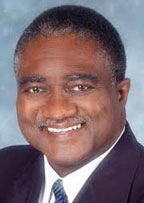
By George E. Curry NNPA Columnist
To paraphrase Ronald Reagan, arguably the most overrated U.S. president in history, there they go again. They, of course, are Republicans in the House of Representatives. And they are going after President Obama yet again, this time over his use of executive orders, presidential directives that have been issued by every president over the past 73 years.
First, let’s brush up on our high school civics.
According to a report by the Congressional Research Service (CRS), “Presidents from Franklin D. Roosevelt through Barack Obama have issued orders that seek to leverage the government’s procurement spending to promote socio-economic policies that some commentators would characterize as extraneous to contractors’ provision of goods or services to the government.”
The report, titled “Presidential Authority to Impose Requirements on Federal Contractors,” explained, “Presidential power to issue executive orders must derive from the Constitution or from an act of Congress. Contractor-related executive orders historically have been issued based upon the President’s powers under Article II of the Constitution or the powers delegated to the President by FPASA,” a reference to the Federal Property and Administrative Services Act of 1949.
The CRS report noted. “FPASA states that its purpose is to ‘provide the Federal Government with an economical and efficient system for … [p]ro-curing and supplying property and nonpersonal services’ and authorizes the President to prescribe any ‘policies and directives’ consistent with the act that he ‘considers necessary to carry out’ the act’s goals of efficiency and economy.”
One of the most significant presidential actions was Executive Order 11246, which was signed by President Lyndon B. Johnson on Sept. 28, 1965. It requires federal contractors to “take affirmative action to ensure that applicants are employed, and that employees are treated during employment, without regard to their race, color, religion, sex or national origin.”
According to CRS, “Under the authority of Executive Order 11246, officials of the Department of Labor issued two orders commonly known as the Philadelphia Plan. The Philadelphia Plan required bidders for federal and federally funded construction contracts in the Philadelphia area valued in excess of $500,000 to submit ‘acceptable affirmative action program[s],’ including ‘specific goals’ for ‘minority manpower utilization’ in six construction trades prior to contract award.”
Of the past 10 presidents, beginning with Franklin D. Roosevelt, President Obama has issued the fewest executive orders per year. According to the American Presidency Project, Obama issued 147 executive orders during his first term, compared to 504 by FDR, 266 by Dwight D. Eisenhower, 247 by Richard M. Nixon, 213 by Ronald Reagan, 200 by Bill Clinton, and 173 by George W. Bush over a similar period.
As of June 20, Obama had issued 35 executive orders during his second term.
His executive actions have stopped the deportation of immigrants who entered the U.S. illegally as children, affected climate change by compelling power plants to reduce their emissions by 30 percent by 2030, raised the minimum wage for federal contractors to $10.10 an hour, extended rights for same-sex couples and impacted gun control with 23 separate executive orders.
Strangely, Republicans, who have voted 54 times over four years to repeal or alter the Affordable Care Act, are not planning to sue President Obama on any of those issues. Instead, House Speaker John A. Boehner (R-Ohio) has asked Congress for permission to sue Obama because he suspended the start date of the employer mandate provision of the health care law.
It doesn’t get more ridiculous than this. Unable to repeal what they call Obamacare, House Republicans are moving faster than the lips of an auctioneer on crack to sue the president because he is making it easier to comply with what everyone except anti-Obama Republicans recognize as the law of the land.
As Sabastian Payne wrote in the Washington Post, “… For all the accusations of abuse of power, his [Obama] actual uses of his executive authority so far aren’t that far-reaching: Not so much the smack of firm government, more nudging in a certain direction. George W. Bush for example managed to gut the Presidential Records Act (greatly reducing access to presidential records), limit federal funding for stem cell research and sidestep the Geneva Convention on interrogation techniques – all through executive orders, even when he had Congress on his side. Interestingly, all of these orders were later rescinded by Obama.”
Payne continued, “Bill Clinton was no stranger to far-reaching orders either. During his two terms in office, he banned the import of 50+ types of semi-automatic assault weapons and assault pistols… In May 1989, George H. W. Bush temporarily halted the importation of some semi-automatic firearms, following a school shooting in Stockton, Calif. This was made permanent a month later. Ronald Reagan also enacted some significant policy initiatives through executive power. The NSA has said that its controversial collection of e-mail and Internet data, for example, was authorized back in 1981 by Reagan’s executive order.”
What Reagan did was far more dangerous than postponing a health care start date. Yet, there wasn’t even talk of taking him to court.
