By Wim Laven
These days it seems like there has been a death of expertise. On social media, virtually everyone is claiming to be an expert. Where does that leave our trust in actual solid, provable, documented information?
We have measurements for time. People watching the Olympics saw small units of time in play when races were won or lost in a tenth or hundredth of second–literal experiences of “don’t blink or you’ll miss it.” The Olympics put the best athletes on display, and the veracity of their achievements could only be established by top-of-the-line instrumentation.
Beyond human speed, we measure in different units or different scales for sound, light, etc.
Some of the sciences deal with absolutes. We know things like the freezing and boiling points of liquids or the location, time, and duration of future solar eclipses. Some sciences deal with fluid dynamics of variable conditions; like the percent chance of rain or a potential prognosis for outcomes in medical treatment.
I am a doctor of peace and conflict, and like other scientists my claims and work are subject to rigorous methodological processes and standards. Claims about climate change and the links between the changes in our global ecosystems and resource conflicts should be alarming to everyone.
I am editor in chief of Peace Chronicle magazine, and we just released an issue on “Food.” But, despite the expertise that warns of food shortages, malnutrition, and starvation, people will continue to deny scientific consensus that has existed for decades.
There are differences between opinions and scientific opinions. The scientific opinion, however, is always open or subject to change as more data emerges. Other opinions are often based on what we wish were true and so, in our arguments, we declare it so, often with no provable evidence. JD Vance knows everything about Haitian immigrants because he wants something to be true.
Expert opinions carry professional liability. People have expectations that they can trust expert opinions. Doctors and psychologists, when treating patients, or engineers when defining building strength, need to be trusted; there is no room for error. But, as we see, expert opinions are increasingly denied or ignored.
Examples:
Pew Research in 2023 showed that 14 percent of Americans say there is “no solid evidence” that climate change is happening, another 14 percent are unsure. The Intergovernmental Panel on Climate Change first expressed the scientific consensus that climate change is real and caused by humans in 2001.
Jan. 28, 1986, NASA space shuttle Challenger exploded, the night before the launch, five engineers tried to stop the launch. “The data showed that the rubber seals on the shuttle’s booster rockets wouldn’t seal properly in cold temperatures and this would be the coldest launch ever.” They were overruled.
In June 1945, two months before Hiroshima and Nagasaki were bombed, a group appointed by President Truman to advise him on the use of atomic weapons advised in the Franck Report:
“If the United States were to be the first to release this new means of indiscriminate destruction upon mankind, she would sacrifice public support throughout the world, precipitate the race for armaments and prejudice the possibility of reaching an international agreement on the future control of such weapons.”
They were ignored, and their predictions all have played out.
Can we start respecting academic and scientific expertise?
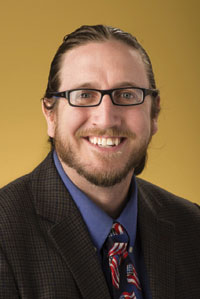
Wim Laven, Ph.D., syndicated by PeaceVoice, teaches courses in political science and conflict resolution.