Supreme Court rejects challenge to Affirmative Action
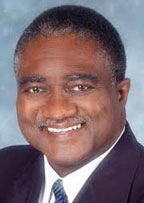
By George E. Curry, George Curry Media Columnist
In many instances, the Supreme Court’s recent affirmative action ruling upholding the University of Texas’s affirmative action program was overshadowed by a same-day order overturning President Obama’s executive order to ease illegal immigrants’ path to U.S. citizenship. World News Tonight With David Muir, while leading its broadcast with the immigration decision, didn’t even mention the affirmative action ruling in that day’s national broadcast.
Even so, affirming the University of Texas admission plan was notable because it squelched an ongoing challenge to affirmative action by well-financed conservative groups. Even more remarkable, the conservative-leaning court rendered the decision shy of its full 9-member participation, with no successor confirmed following the death of conservative Antonin Scalia’s and liberal Elena Kagan recusing herself from deliberation because of her previous involvement in the case as U.S. Solicitor General.
The biggest surprise was that Justice Anthony Kennedy, a Ronald Reagan appointee, joined the other liberals on the court – Stephen G. Breyer, Ruth Bader Ginsburg, and Sonia Sotomayor – to form the 4-3 majority that said race may be used as one factor among many in building a diverse student body. Dissenting were Chief Justice John G. Roberts, Jr., Samuel A. Alito, Jr., and Clarence Thomas.
“A university is in large part defined by those intangible ‘qualities which are incapable of objective measurement but which make for greatness,'” Kennedy wrote, quoting from
Sweatt v. Painter, a landmark 1950 Supreme Court ruling outlawing the University of Texas’ exclusion of African Americans from its law school. “Considerable deference is owed to a university in defining those intangible characteristics, like student body diversity, that are central to its identity and educational mission.”
To conform to earlier Supreme Court rulings, the Texas legislature passed a new plan in 1997 for the University of Texas to admit all high school seniors who ranked in the top 10 percent of their graduating class. But the plan failed to sufficiently diversify the main campus at Austin.
Texas is about 38 percent Latino and 12 percent African American. Under the 10 Percent Plan, 26 percent of the students admitted were Latino and 6 percent Black.
Under challenge was the part of the program that allowed race and ethnicity to be considered along with other factors to fill the slots not taken by the Top 10 Percent, which usually came to about 25 percent of each incoming class. No specific points were given for race.
Abigail Fisher, a White female from Sugar Land, Texas, applied for admission to UT in 2008. She did not rank in the top 10 percent of her class and university officials said even if no affirmative action program had been in place, she still would not have been accepted. Still, she sued saying that race should never be used under any circumstances.
A lower court ruled against her, a ruling that was affirmed upon reaching the appeals court. Her case was appealed to the Supreme Court, remanded to the Fifth Circuit Court of Appeals, and accepted a second time, with the court’s recently ruling against her.
Conservatives were clearly disappointed in Kennedy.
Elizabeth Slattery, a legal fellow at The Heritage Foundation’s Edwin Meese III Center for Legal and Judicial Studies, wrote, “Yesterday’s ruling in Fisher v. University of Texas at Austin was disappointing, to say the least. Justice Anthony Kennedy’s majority opinion, allowing UT to continue using a race-conscious admissions program without sufficiently articulating its ‘diversity goal’ or providing proof that it was meeting that goal, betrays his previous equal protection jurisprudence and the belief that we have a colorblind Constitution.”
But the decision was cheered by University of Texas supporters.
“No decision since Brown v. Board of Education has been as important as Fisher will prove to be in the long history of racial inclusion and educational diversity,” Laurence H. Tribe, a law professor at Harvard, told the New York Times.
Clarence Thomas, a staunch opponent of affirmative action, declared, “I write separately to reaffirm that ‘a State’s use of race in higher education admissions decisions is categorically prohibited by the Equal Protection Clause.’ The Constitution abhors classifications based on race because every time the government places citizens on racial registers and makes race relevant to the provision of burdens or benefits, it demeans us all.”
He added, “That constitutional imperative does not change in the face of a ‘faddish theor[y]’ that racial discrimination may produce educational benefits.'”
This is not likely to be the final word on affirmative from the Supreme Court.
Lawsuits against Harvard University and the University of North Carolina, each prepared by Project on Fair Representation, the same conservative outfit that represented Abigail Fisher in her suit against the University of Texas, are making their way through lower courts and could end up before the Supreme Court.
If those cases reach the High Court, they could well be decided by the results of the November presidential election.
Writing on Scotusblog.com, Lyle Denniston observed: “Depending upon who wins the presidential election in November, a Scalia successor could hold the balance of power on affirmative action in the future, even if Kennedy were to return to his prior skepticism about such uses of race in public policy decisions. Justices Breyer, Ginsburg, and Sotomayor might well have Justice Kagan with them in the future and might form a definite majority when a ninth Justice is on board – depending on presidential politics.”
George E. Curry is President and CEO of George Curry Media, LLC. He is the former editor-in-chief of Emerge magazine and the National Newspaper Publishers Association News Service (NNPA). He is a keynote speaker, moderator, and media coach. Curry can be reached through his Web site, georgecurry.com. You can also follow him at twitter.com/currygeorge, George E. Curry Fan Page on Facebook, and Periscope. See previous columns at http://www.georgecurry.com/columns.